
ACTi A422 vs Hanwha QNO-7082R: Specification Comparison
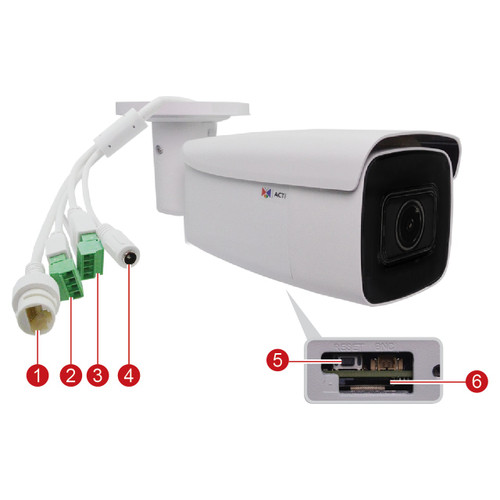
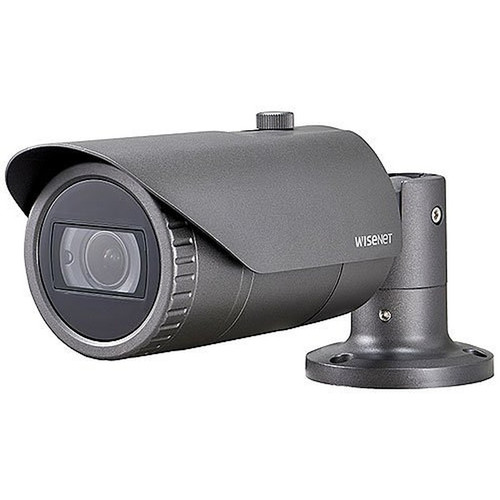
Both the ACTi A422 and Hanwha QNO-7082R are 4MP outdoor bullet cameras with motorized varifocal lenses, PoE power, IR night vision, and IK10 vandal resistance—making them genuine cross-shop candidates for perimeter and exterior fixed-camera deployments. The comparison covers imaging performance, environmental and installation characteristics, and VMS/analytics integration to help installers and IT buyers determine which unit fits their specific site requirements.
In This Guide
How do the imaging specs compare?
Both cameras output 4MP at 2688×1520 and 30 fps, with H.265/H.264/MJPEG compression. The ACTi A422 uses a 1/2.7" sensor with a 2.7–13.5mm motorized lens (5× optical zoom) and a minimum illumination of 0.003 lux in color mode and 0 lux with IR active; its IR emitters operate at 850nm with a specified range of 85m. The Hanwha QNO-7082R uses a motorized varifocal lens specified as a DC auto-iris type with a focal length listed only as 'varifocal' in the provided specs—no minimum focal length, maximum focal length, zoom ratio, minimum illumination figure, or IR range is specified in the provided data.
On WDR, the A422 is specified at 150dB Extreme WDR. The QNO-7082R lists WDR as a feature but no dB rating is provided in the supplied specifications. The A422's 5× zoom range (2.7–13.5mm) is a concrete, confirmed value; the QNO-7082R's lens range cannot be confirmed from the provided specs. Buyers requiring a verified zoom ratio, low-light lux figure, or quantified WDR rating will find those numbers only in the A422 spec sheet as supplied.
What about installation and environment?
The A422 carries an IP68 ingress rating—full dust-tight and continuous submersion protection—versus the QNO-7082R's IP66, which covers dust-tight and high-pressure water jets but not submersion. Both units are IK10 vandal-rated. Operating temperature range for the A422 is –40°C to +60°C; the QNO-7082R is rated –40°C to +55°C, a 5°C narrower upper limit that may matter in unconditioned enclosures or desert climates.
Power input differs: the A422 is specified as PoE++ (802.3bt) Class 3, with DC 12V also listed; the QNO-7082R is PoE (IEEE 802.3af) Class 3, also accepting DC 12V. Despite both being Class 3, the A422's 802.3bt classification indicates a higher-capability standard port—installers should confirm actual wattage draw from the respective datasheets, as the Class 3 designation is the same but the underlying PoE standard differs. The A422 weighs 1,410g (3.11 lb); the QNO-7082R weighs approximately 0.90kg (1.98 lb), making it noticeably lighter for bracket load calculations. The A422 lists pole and corner mount accessories; the QNO-7082R lists optional accessories without specifying mount types in the provided data. The QNO-7082R housing is specified as white; A422 housing color is not stated in the provided specs.
Which fits your VMS and analytics better?
The A422 is ONVIF-compliant with Profiles S, G, T, and M confirmed. The QNO-7082R lists ONVIF Profile S, G, and T via SUNAPI (HTTP API) in the provided specs; Profile M is not mentioned. The A422 also carries UL Taiwan IoT Cybersecurity Certification and HTTPS encryption is not explicitly called out in its provided specs, while the QNO-7082R explicitly lists HTTPS encryption as a feature. The QNO-7082R specifies 512MB RAM and 256MB Flash on-board, and microSD card storage support; no RAM/Flash figures or microSD support are stated in the A422's provided specifications.
On analytics, the A422 specifies Deep Learning (DLPU) and Video Motion Detection (VMD). The QNO-7082R lists defocus detection and directional detection; no deep-learning or DLPU designation appears in the provided QNO-7082R specs. Both cameras include an audio input. The A422 additionally specifies line-in, line-out, and two-way audio; the QNO-7082R lists audio input only—no audio output or two-way capability is stated in the provided data. GPS positioning on the A422 is listed as manual setting; no GPS field appears in the QNO-7082R specs.
Which should you choose: the A422 or the QNO-7082R?
Our take: The A422 is the stronger choice when submersion resistance, longer IR reach, quantified low-light performance, and DLPU-based analytics are priorities. Specifically: the A422's IP68 rating exceeds the QNO-7082R's IP66 for wet or flood-prone environments; its IR range is specified at 85m versus no stated IR range for the QNO-7082R; and its minimum illumination is confirmed at 0.003 lux (color) / 0 lux (IR) versus no lux figure provided for the QNO-7082R. The A422 also covers a wider operating temperature ceiling (+60°C vs +55°C) and supports two-way audio where the QNO-7082R lists input only. The QNO-7082R has an advantage in weight (1.98 lb vs 3.11 lb), includes confirmed microSD on-board storage and explicit HTTPS encryption, and its PoE draw is standard 802.3af—relevant where 802.3bt switches are not deployed. Choose the QNO-7082R where switch compatibility and lighter bracket loads matter more than extended IR range or submersion-grade sealing.
Side-by-Side Comparison
Spec-for-spec, from manufacturer data.
| Specification | ACTi A422 | Hanwha QNO-7082R |
|---|---|---|
| Resolution | 4MP (2688×1520) | 4MP |
| Max Frame Rate | 30 fps @ 2688×1520 | 30 fps |
| Image Sensor Size | 1/2.7" | — |
| Lens / Focal Length | 2.7–13.5mm (5× optical zoom, motorized) | Motorized varifocal (range not specified) |
| Min Illumination | 0.003 lux (color); 0 lux (IR on) | — |
| IR Range | 85m | — |
| IR Wavelength | 850nm | — |
| WDR | 150dB Extreme WDR | WDR (dB not specified) |
| Video Compression | H.265, H.264, MJPEG | H.265, H.264, MJPEG |
| IP Rating | IP68 | IP66 |
| IK / Vandal Rating | IK10 | IK10 |
| Operating Temperature | –40°C to +60°C | –40°C to +55°C |
| Power Input / PoE | PoE++ (802.3bt) Class 3; DC 12V | PoE (802.3af) Class 3; DC 12V |
| ONVIF Profiles | S, G, T, M | S, G, T |
| Edge Storage | — | microSD |
| Audio | Input, line-in, line-out, two-way | Input only |
| Analytics | Deep Learning (DLPU), VMD | Defocus detection, Directional detection |
| Weight | 1,410g (3.11 lb) | ~0.90kg (1.98 lb) |
| Warranty | 3 years | 3 years |
Frequently Asked Questions
Which should you choose: the A422 or the QNO-7082R?
The A422 is the stronger choice when submersion resistance, longer IR reach, quantified low-light performance, and DLPU-based analytics are priorities. Specifically: the A422's IP68 rating exceeds the QNO-7082R's IP66 for wet or flood-prone environments; its IR range is specified at 85m versus no stated IR range for the QNO-7082R; and its minimum illumination is confirmed at 0.003 lux (color) / 0 lux (IR) versus no lux figure provided for the QNO-7082R. The A422 also covers a wider operating temperature ceiling (+60°C vs +55°C) and supports two-way audio where the QNO-7082R lists input only. The QNO-7082R has an advantage in weight (1.98 lb vs 3.11 lb), includes confirmed microSD on-board storage and explicit HTTPS encryption, and its PoE draw is standard 802.3af—relevant where 802.3bt switches are not deployed. Choose the QNO-7082R where switch compatibility and lighter bracket loads matter more than extended IR range or submersion-grade sealing.
Is the A422 or QNO-7082R better for low light?
Based on the provided specifications, only the A422 includes a minimum illumination figure: 0.003 lux in color mode and 0 lux with IR active, with an 85m IR range at 850nm. The QNO-7082R's provided specs list IR as a feature but state no lux value or IR range. Installers requiring a verified low-light threshold should consult the QNO-7082R's full datasheet before specifying it for demanding low-light applications.
Can I power both cameras from a standard 802.3af PoE switch?
The QNO-7082R is specified as IEEE 802.3af Class 3, so a standard 802.3af switch port is sufficient. The A422 is specified as PoE++ (802.3bt) Class 3; while Class 3 draw (up to 15.4W at the port) is within 802.3af limits, the 802.3bt designation on the A422 warrants confirming actual wattage draw from the ACTi datasheet to ensure compatibility with existing 802.3af infrastructure.
Which camera is better suited to a site that requires on-board video backup?
The QNO-7082R explicitly supports microSD card storage in the provided specifications, enabling local edge recording for redundancy or network-outage backup. The A422's provided specifications do not mention microSD or any on-board storage option. If local storage is a firm requirement, the QNO-7082R is the confirmed choice based on the supplied data.
Get a Second Opinion on Your Camera Choice
Share your site layout, coverage goals, and budget. Our team will validate the camera selection, flag anything we would change, and recommend products that match the use case.