
ACTi A422 vs ACTi Z49: Specification Comparison
Both the ACTi A422 and ACTi Z49 are 4MP outdoor motorized-zoom bullet cameras rated IP68/IK10, making them direct cross-shop candidates for perimeter and area-surveillance projects. The comparison covers imaging capability (sensor, lens range, IR, WDR, low-light), installation and environmental fit (power class, temperature, mounting), and systems integration (ONVIF profiles, analytics, audio, storage). Buyers choosing between these two will primarily be weighing extended zoom range and deep-learning analytics against simpler PoE power budget and on-board storage.
In This Guide
How do the imaging specs compare?
Both cameras capture 4MP (2688×1520) at 30 fps. The A422 uses a 1/2.7" sensor with a 2.7–13.5mm motorized lens delivering 5× optical zoom and a horizontal field of view that narrows as the lens extends; minimum illumination is specified at 0.003 lux (color) and 0 lux with IR active. The Z49 uses a motorized 2.8–12mm lens at f/1.6, providing 4.3× optical zoom and a 102.1°–30.7° horizontal field of view; sensor size and minimum illumination figures are not stated in the provided specifications.
WDR is specified as 'Extreme WDR (150 dB)' on the A422 versus a generic 'WDR' designation on the Z49—no dB figure is provided for the Z49, so a direct numeric comparison cannot be made. IR on the A422 uses 850nm LEDs with a rated range of 85m; the Z49 describes 'Adaptive IR' with Day/Night switching but no wavelength or rated range is stated in the provided specifications. Compression on the A422 includes H.265, H.264, and MJPEG; the Z49 supports H.265 and H.264 only.
What about installation and environment?
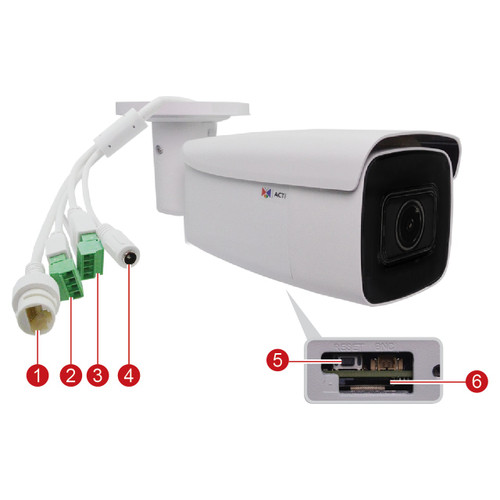
Both cameras carry IP68 ingress protection and IK10 impact resistance, making either suitable for submersion-risk, dusty, or high-vandalism environments. The A422 operates from −40°C to +60°C (−40°F to +140°F); no operating temperature range is stated in the Z49 specifications provided. The A422 is powered by PoE++ (802.3bt, Class 3) or DC 12V via an RJ-45 pigtail connector; the Z49 operates on standard PoE (802.3af), which requires a lower-budget switch port or midspan injector but cannot supply as much power as 802.3bt.
Mounting options differ: the A422 lists pole and corner mount accessories; the Z49 lists wall and eave mounting. The A422 weighs 1,410g (3.11lb); weight for the Z49 is not provided in the supplied specifications.
Which fits your VMS and analytics better?
The A422 is ONVIF-compliant with Profile S, Profile G, Profile T, and Profile M. The Z49 supports ONVIF Profile S, Profile T, and Profile G; Profile M is not listed for the Z49. For analytics, the A422 includes a dedicated Deep Learning Processing Unit (DLPU) enabling deep-learning-based analytics alongside Video Motion Detection (VMD); the Z49 does not list any edge analytics capability in the provided specifications.
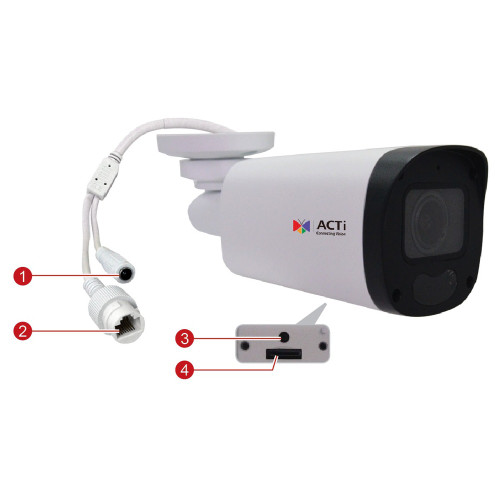
Audio handling differs meaningfully: the A422 provides a dedicated audio input (Line-in) and Line-out for two-way audio, enabling intercom or speaker integration. The Z49 includes only a built-in microphone—no audio output or two-way audio is specified. On-board storage is available on the Z49 via a MicroSD slot; no on-board storage is listed for the A422. The A422 carries a 3-year manufacturer warranty; warranty terms for the Z49 are not stated in the provided specifications.
Which should you choose: the A422 or the Z49?
Our take: The A422 is the stronger choice when the deployment demands longer stand-off distance, deep-learning analytics, or two-way audio integration. Its 5× optical zoom (2.7–13.5mm vs 2.8–12mm / 4.3×) extends usable range, its IR is rated to 85m with a stated 0.003-lux color minimum illumination (no equivalent figure exists for the Z49), and its Extreme WDR is quantified at 150dB versus an unquantified 'WDR' on the Z49. The onboard DLPU adds edge analytics without VMS-side licensing. Conversely, the Z49's standard PoE (802.3af) requirement is an advantage on infrastructure budgets where 802.3bt switches are not installed, its f/1.6 aperture may benefit low-light performance (though no lux figure is provided to confirm), and its MicroSD slot enables edge recording the A422 lacks. Choose the Z49 where PoE budget and local storage are the primary constraints and analytics are handled by the VMS.
Side-by-Side Comparison
Spec-for-spec, from manufacturer data.
| Specification | ACTi A422 | ACTi Z49 |
|---|---|---|
| Resolution | 4MP (2688×1520) | 4MP (2688×1520) |
| Max Frame Rate | 30 fps @ 2688×1520 | 30 fps @ 1440p |
| Image Sensor Size | 1/2.7" | — |
| Lens / Focal Length | 2.7–13.5mm (5× optical zoom) | 2.8–12mm (4.3× optical zoom) |
| Lens Aperture | — | f/1.6 |
| Min. Illumination | 0.003 lux (color); 0 lux (IR on) | — |
| IR Range | 85m | — |
| IR Wavelength | 850nm | — |
| Adaptive IR | — | Yes (Day/Night) |
| WDR | Extreme WDR (150dB) | WDR (dB not specified) |
| Video Compression | H.265; H.264; MJPEG | H.265; H.264 |
| IP Rating | IP68 | IP68 |
| IK / Impact Rating | IK10 | IK10 |
| Operating Temperature | −40°C to +60°C (−40°F to +140°F) | — |
| Power Input / PoE Class | PoE++ (802.3bt Class 3); DC 12V | PoE (802.3af) |
| ONVIF Profiles | Profile S; G; T; M | Profile S; T; G |
| Edge Analytics | Deep Learning (DLPU); VMD | — |
| Audio | Line-in; Line-out (two-way) | Built-in microphone only |
| Edge Storage | — | MicroSD |
| Mounting | Pole; Corner | Wall; Eave |
| Weight | 1,410g (3.11 lb) | — |
| Warranty | 3 years | — |
Frequently Asked Questions
Which should you choose: the A422 or the Z49?
The A422 is the stronger choice when the deployment demands longer stand-off distance, deep-learning analytics, or two-way audio integration. Its 5× optical zoom (2.7–13.5mm vs 2.8–12mm / 4.3×) extends usable range, its IR is rated to 85m with a stated 0.003-lux color minimum illumination (no equivalent figure exists for the Z49), and its Extreme WDR is quantified at 150dB versus an unquantified 'WDR' on the Z49. The onboard DLPU adds edge analytics without VMS-side licensing. Conversely, the Z49's standard PoE (802.3af) requirement is an advantage on infrastructure budgets where 802.3bt switches are not installed, its f/1.6 aperture may benefit low-light performance (though no lux figure is provided to confirm), and its MicroSD slot enables edge recording the A422 lacks. Choose the Z49 where PoE budget and local storage are the primary constraints and analytics are handled by the VMS.
Is the A422 or Z49 better for low-light performance?
Based on the provided specifications, only the A422 states a minimum illumination figure: 0.003 lux in color mode and 0 lux with IR active, with IR rated to 85m at 850nm. The Z49 describes 'Adaptive IR' and Day/Night operation but does not provide a lux rating or IR range in the available specifications, so a direct numeric comparison cannot be made.
Can I use either camera on a standard PoE switch?
The Z49 runs on standard PoE (802.3af), so any 802.3af-capable switch port or midspan injector is sufficient. The A422 requires PoE++ (802.3bt, Class 3); a standard 802.3af port will not supply enough power, so a 802.3bt-capable switch or injector is required. DC 12V is also listed as an alternative power source for the A422.
Does either camera support on-board video storage?
Yes—the Z49 includes a MicroSD card slot for on-board storage. The A422 does not list any on-board storage option in the provided specifications. If edge recording is required without reliance on a NVR or NAS, the Z49 is the only option of the two.
Get a Second Opinion on Your Camera Choice
Share your site layout, coverage goals, and budget. Our team will validate the camera selection, flag anything we would change, and recommend products that match the use case.