
ACTi A422 vs ACTi Z317: Specification Comparison
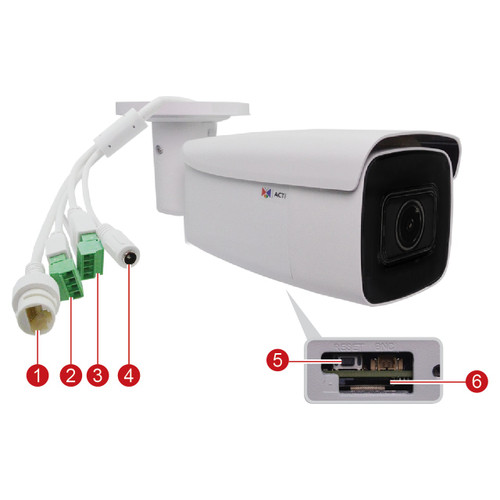
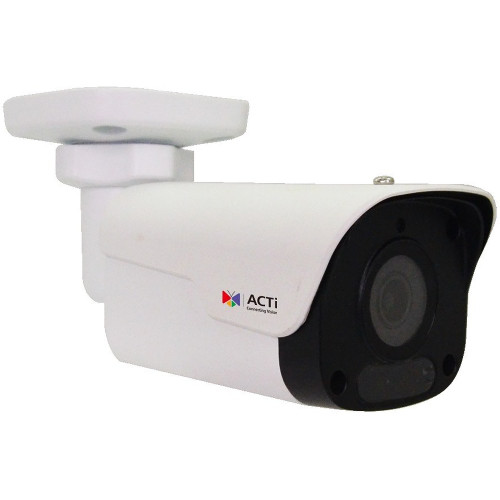
Both the ACTi A422 and Z317 are 4MP outdoor bullet cameras sharing the same resolution class and IP68 weatherproofing, but they target meaningfully different deployment scenarios. The A422 is a full-featured zoom bullet with a motorized 2.7–13.5mm varifocal lens, heavy-duty IK10 impact rating, and a deep analytics suite powered by a dedicated DLPU. The Z317 is a compact mini bullet with a fixed 2.8mm wide-angle lens and a lighter PoE budget under 13W. This comparison helps installers and IT buyers decide which model fits a given scene and infrastructure requirement.
In This Guide
How do the imaging specs compare?
Both cameras output 4MP resolution, but the A422 provides an explicit pixel dimension of 2688 x 1520 at 30 fps, while the Z317 is rated at 1440p (2560 x 1440) at 25 fps — a modest but real frame-rate and resolution advantage for the A422. The most operationally significant lens difference is the A422's motorized 2.7–13.5mm varifocal (5x optical zoom), which allows focal-length adjustment after installation to frame a specific subject distance without physically repositioning the camera. The Z317 uses a fixed 2.8mm F2.0 lens, which delivers a wide field of view appropriate for covering broad scenes at close to medium range but offers no post-install focal adjustment.
On low-light performance, the A422 publishes a minimum illumination of 0.003 lux in color mode and 0 lux with IR active using 850nm LEDs rated to 85 meters. The Z317 lists Adaptive IR and Day/Night capability but does not specify a minimum illumination value, a lux rating, or an IR throw distance, making a direct low-light comparison impossible. The A422 also specifies Extreme WDR at 150dB; the Z317 lists WDR without a dB value, so the dynamic range performance gap cannot be quantified but the A422's spec is demonstrably higher where both have a number. Sensor size for the A422 is 1/2.7 inch; the Z317 does not specify sensor size.
What about installation and environment?
Both cameras carry an IP68 ingress protection rating, meaning both are rated for continuous submersion and are suitable for exposed outdoor environments. The A422 adds an IK10 vandal-resistance rating, indicating it can withstand 20-joule impacts — relevant in publicly accessible or high-risk locations. The Z317 does not publish an IK rating, so impact resistance cannot be confirmed. On operating temperature, the A422 is rated from -40°C to 60°C (-40°F to 140°F), covering extreme cold-weather deployments. The Z317 does not specify an operating temperature range, which is a gap buyers in northern climates or harsh environments should clarify with the manufacturer before specifying.
Power requirements differ significantly. The A422 is listed as PoE++ (802.3bt) in some specs alongside a note referencing PoE Class 3 (802.3af); buyers should verify exact wattage draw with ACTi, as the motorized zoom and IR LEDs rated to 85m are likely to draw more than the 15.4W ceiling of 802.3af. The Z317 is clearly rated at under 13W on standard 802.3af PoE, making it compatible with any 802.3af switch port or injector without budget concerns. For mounting, the A422 supports pole and corner mounts and weighs 1,410g (3.11 lb), while the Z317 supports wall and ceiling mounts; no weight is published for the Z317.
Which fits your VMS and analytics better?
The A422 supports ONVIF Profile S, Profile G, Profile T, and Profile M, providing broad compatibility with modern VMS platforms including those requiring Profile T (H.265 streaming) and Profile G (edge recording). The Z317 supports ONVIF Profile S and is listed as compatible with mainstream NVR platforms; no additional ONVIF profiles are stated, which may limit integration depth on platforms requiring Profile T or G functionality.
On analytics, the A422 includes a dedicated Deep Learning Processing Unit (DLPU) supporting deep learning analytics alongside Video Motion Detection, which is a hardware-level commitment to on-camera AI inference. The Z317 does not list any analytics capabilities. For audio, the A422 offers a full two-way audio setup with a dedicated line-in and line-out, suitable for active intercommunication or audio recording with external microphones and speakers. The Z317 includes only a built-in microphone, with no mention of a speaker output or two-way capability. Neither camera's edge storage capability is specified in the provided data for either model.
Which should you choose: the A422 or the Z317?
Our take: The A422 is the stronger choice when the deployment demands variable scene framing, extreme-environment durability, or deep VMS and analytics integration. Specifically, the A422's motorized 5x optical zoom (2.7–13.5mm vs. the Z317's fixed 2.8mm) allows post-installation focal adjustment that can be critical in high-mount or hard-to-access positions. Its IR throw of 85m versus an unspecified distance on the Z317 is a concrete advantage in large outdoor perimeters. The IK10 vandal resistance and -40°C to 60°C temperature range add physical resilience the Z317 cannot confirm. The Z317 is appropriate where scene coverage is wide and fixed, power budgets are constrained to 802.3af under 13W, and the installation site is a standard indoor-outdoor environment without vandalism risk — in those conditions it is a simpler and likely more cost-effective platform. Analytics and multi-profile ONVIF requirements consistently favor the A422.
Side-by-Side Comparison
Spec-for-spec, from manufacturer data.
| Specification | ACTi A422 | ACTi Z317 |
|---|---|---|
| Resolution | 4MP — 2688 x 1520 | 4MP — 1440p (2560 x 1440) |
| Max Frame Rate | 30 fps | 25 fps |
| Lens | 2.7–13.5mm motorized varifocal (5x optical zoom) | 2.8mm fixed, F2.0 |
| IR Range | 85m (850nm LEDs) | — |
| Min Illumination | 0.003 lux color; 0 lux IR on | — |
| WDR | Extreme WDR — 150dB | WDR — dB not specified |
| Sensor Size | 1/2.7" | — |
| IP Rating | IP68 | IP68 |
| IK Rating | IK10 | — |
| PoE Standard | PoE++ (802.3bt) — verify draw with ACTi | 802.3af — under 13W |
| Operating Temp | -40°C to 60°C | — |
| ONVIF Profiles | Profile S, G, T, M | Profile S |
| Analytics | Deep Learning (DLPU); VMD | — |
| Audio | Two-way — line-in and line-out | Built-in microphone only |
| Mount Types | Pole; Corner | Wall; Ceiling |
| Weight | 1,410g (3.11 lb) | — |
Frequently Asked Questions
Which should you choose: the A422 or the Z317?
The A422 is the stronger choice when the deployment demands variable scene framing, extreme-environment durability, or deep VMS and analytics integration. Specifically, the A422's motorized 5x optical zoom (2.7–13.5mm vs. the Z317's fixed 2.8mm) allows post-installation focal adjustment that can be critical in high-mount or hard-to-access positions. Its IR throw of 85m versus an unspecified distance on the Z317 is a concrete advantage in large outdoor perimeters. The IK10 vandal resistance and -40°C to 60°C temperature range add physical resilience the Z317 cannot confirm. The Z317 is appropriate where scene coverage is wide and fixed, power budgets are constrained to 802.3af under 13W, and the installation site is a standard indoor-outdoor environment without vandalism risk — in those conditions it is a simpler and likely more cost-effective platform. Analytics and multi-profile ONVIF requirements consistently favor the A422.
Can the Z317 be powered by a standard 802.3af PoE switch port?
Yes. The Z317 is rated at under 13W, which falls within the 15.4W ceiling of standard 802.3af PoE. No PoE+ or PoE++ switch is required. The A422 is listed as PoE++ (802.3bt) in its headline spec alongside a Class 3 (802.3af) reference note; buyers should confirm the actual draw with ACTi to ensure the correct PoE budget is allocated.
Does the A422 support remote zoom adjustment after installation, or does the lens need to be set physically on site?
The A422's 2.7–13.5mm lens is motorized, meaning zoom and focus can be adjusted remotely through the camera's web interface or a compatible VMS without physical access to the unit. This is particularly useful when the camera is pole- or corner-mounted at height, allowing field-of-view tuning during commissioning or after a scene change without requiring a lift or ladder.
If I need on-camera video analytics for intrusion detection, which camera supports that out of the box?
Only the A422 lists on-camera analytics capabilities — specifically Deep Learning analytics via a dedicated DLPU and Video Motion Detection. The Z317 does not specify any analytics features in the provided specifications. Buyers requiring edge-based intrusion detection, object classification, or VMD should select the A422 or confirm analytics support directly with ACTi for the Z317 before specifying it.
Get a Second Opinion on Your Camera Choice
Share your site layout, coverage goals, and budget. Our team will validate the camera selection, flag anything we would change, and recommend products that match the use case.