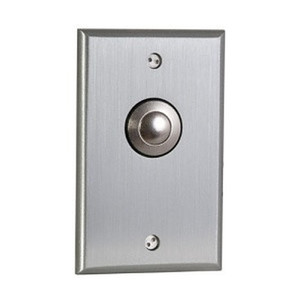
Camden CM-9000/15N Steel Flush Maintained Strike
The Camden CM-9000/15N is a 30VDC steel flush-mounted strike engineered for networked access control deployments managing up to 45 door positions. Unlike momentary strikes that release the bolt briefly, the CM-9000/15N maintains continuous bolt retention when energized—essential for high-security entry points where unauthorized egress must be prevented without mechanical latching. Heavy-duty steel construction withstands mechanical stress at institutional, commercial, and public-facing doors. Flush-mounted design minimizes protrusion and reduces tampering vectors in high-traffic areas.
Key Features
- Maintained Strike Operation: 30VDC energization holds bolt continuously. Denies egress until power is removed—critical control point in access denial workflows.
- Multi-Door Capacity: Rated for up to 45 door positions per control panel. Typical in small-to-medium office buildings, apartment complexes, and distributed campus access control architectures.
- Flush-Mounted Profile: Recessed into door frame, minimizing external protrusion. Reduces mechanical tampering and improves aesthetics in finished installations.
- Steel Construction: Heavy-duty steel body tolerates high-cycle door use and mechanical stress without deformation or failure.
- 30VDC Supply: Standard low-voltage control panel output. Direct relay connection—no intermediate power conversion required.
- Wall Mount Form Factor: Mounts to standard wood or metal door frame. Verify frame geometry accepts flush strike profile before retrofit installation.
- HID Credential Integration: Works with HID card readers, keypads, and biometric readers wired to the same access control panel. Strike is the electromechanical output; credential interface resides at the reader.
- TCP/IP Network Support: Integrates with IP-addressable access control platforms for centralized door status monitoring and unlock command delivery across facility networks.
The CM-9000/15N fits multi-door deployments where you need positive bolt retention across dozens of entry points without individual strike modules at each door. Centralized 45-door control panel architecture reduces wiring complexity and consolidates credential management in a single pane of glass. This is the infrastructure choice for apartment buildings, office parks, or secured campus environments where perimeter and internal door access must be synchronized under one authentication system.
Maintained strikes draw continuous current while energized—factor this into your control panel's power supply budget, particularly in multi-door configurations where 5–15 doors may be unlocked simultaneously during peak egress. A 45-door panel typically supplies 500–1000W capacity; verify your PSU can sustain simultaneous multi-strike unlock without voltage sag. If peak loads exceed panel capacity, stage unlocks via firmware timers or add auxiliary 30VDC supplies controlled by panel relays. Wire strikes directly to panel relay outputs using appropriately sized conductors (typically 18–14 AWG for short runs under 100 feet).
The strike itself is the electromechanical output device—it does not process credentials or communicate directly with readers. All access logic, credential verification, and unlock commands flow through the access control panel. Credential readers (HID card, keypad, biometric) are wired to the panel's input terminals; the panel evaluates the credential and energizes the strike relay accordingly. This separation of concern simplifies diagnostics: if the strike fails to unlock, the issue is either a dead relay output or loss of 30VDC supply—not a reader communication error.
The CM-9000/15N is shipped with a 1-year manufacturer warranty covering defects in materials and workmanship. It does not include door frame templates, installation hardware, or strike keeper plates—source these from your door frame supplier or general hardware stock. Flush strike retrofit may require frame routing or mortising; coordinate with your door contractor before finalizing specifications.
Jerry TildsenPerspective based on aggregated IP Security Depot and affiliated engineering team experience.
We've deployed the CM-9000/15N across mid-size multi-tenant and institutional campuses where centralized access control trumps per-door intelligence. The maintained strike model is the operational workhorse in access denial scenarios—you energize to lock, de-energize to release. It sounds simple, but it's fundamentally different from momentary strikes, which pulse power and rely on mechanical latch engagement. In our experience, maintained strikes are more forgiving in retrofit installations where frame tolerances are loose or door alignment shifts seasonally. The continuous hold eliminates the margin-of-error problem you hit with momentary strikes in worn door frames. The 45-door capacity is realistic for office buildings, apartment complexes, and campus perimeter control where you're wiring 30–40 doors back to a single panel in a main control room. The TCP/IP integration means you can feed unlock commands from a cloud access control platform (like Salto, Kaba Loxone, or on-premises Milestone integration middleware) without retrofitting hardwired relay lines. That's a real capex win if you're consolidating legacy hardwired systems into IP-addressable architecture. The trade-off is power budget: maintained strikes hog current continuously—a 45-door panel unlocking even 8–10 doors simultaneously can strain a 500W PSU. We always size power supplies one tier up for multi-strike facilities, and we stage unlock sequences via firmware to avoid inrush current spikes. In outdoor or high-vandalism environments, the flush-mounted profile is a plus—there's no protruding keeper or strike lip to pry or hammer. Steel construction is solid, though we've seen weather-exposed strikes corrode if they're not finished or sealed post-installation; if you're deploying in coastal or high-humidity regions, factor in annual inspection and touch-up paint.
Technical Highlights:
- Maintained Energization Model: Continuous 30VDC supply holds bolt; loss of power = automatic release. Eliminates mechanical latch engagement risk and simplifies egress control logic in emergency-unlock scenarios (power loss triggers controlled release, not lockdown).
- 45-Door System Capacity: Designed for multi-door centralized panels typical in apartment buildings and office parks. One panel, one credential system, one unlock logic engine—lower integration overhead than per-door intelligent strikes.
- Flush-Mounted Steel Form Factor: Minimizes frame protrusion and weathering risk. Steel construction tolerates high-cycle use—suitable for building entrances and common corridors with 500+ daily passages. Retrofit installations require frame assessment; new construction integrates seamlessly.
- TCP/IP Network Integration: Bridges 30VDC hardwired panel to IP-based access control platforms (Salto, Genetec, Milestone, Kaba). Unlock commands flow through IP middleware—no additional relay wiring if your panel supports network-addressable outputs.
- Direct Panel Wiring: No intermediate power conversion or communication protocol translation. Connects directly to panel 30VDC relay output. Reduces points of failure and simplifies troubleshooting in field diagnostics.
Deployment Considerations:
- Power Supply Sizing: Maintained strikes draw continuous current. A 45-door panel with 8–10 simultaneous unlocks can exceed 500W capacity. Size PSU one tier up (750–1000W) and confirm with panel manufacturer. Stage unlocks via firmware timers if load budgeting is critical.
- Frame Geometry Verification: Flush-mounted design requires mortise or routing in door frame. Retrofit installations may need frame modification. Confirm frame depth and material (wood vs. metal) before ordering; some aluminum frames cannot accommodate flush strikes without structural compromise.
- Wiring and Voltage Drop: Use appropriately sized conductors (18–14 AWG typical for sub-100-foot runs). Long runs (>150 feet) from panel to remote strike may experience voltage sag; validate 30VDC at the strike terminals under load, not at the panel output.
- Corrosion in Exposed Environments: Steel construction is vulnerable to salt spray and high humidity without protective finish. In coastal or outdoor deployments, apply corrosion-resistant coating or enclosure. Inspect annually and touch up finish as needed.
- Credential Reader Independence: The strike is output only—credential readers (HID card, biometric, keypad) are wired separately to the panel input. If a strike fails to energize, verify relay continuity and 30VDC supply at the strike terminals; reader troubleshooting is a separate diagnostic path.
The CM-9000/15N is the right choice for integrators building multi-door centralized access control systems in institutional or multi-tenant environments where maintained-strike logic simplifies egress denial workflows. It's not the right fit for single-door applications or environments requiring per-strike intelligence (occupancy detection, forced-door alarms) — those warrant networked smart locks. For apartment complexes, office parks, and campus perimeter control, this is a proven, cost-effective workhorse. Review the full spec sheet and coordinate with your panel manufacturer on power sizing. Explore the Camden catalog for compatible multi-door panels and credential readers.