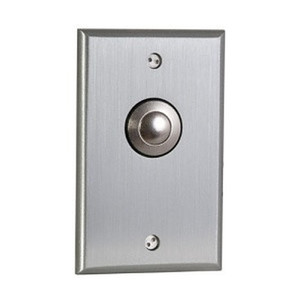
Camden CM-9190 DPDT Maintained Electric Strike
The Camden CM-9190 is a DPDT maintained electric strike designed for networked access control deployments requiring reliable door-release actuation in multi-door, centrally managed security environments. Operating at 30VDC with TCP/IP communication, the CM-9190 integrates directly into IP-based access control systems, eliminating the need for hardwired relay panels or legacy 12VDC power distribution. The maintained contact design ensures the strike remains in a predictable state, simplifying troubleshooting and reducing nuisance unlock events. This strike suits mid-to-large commercial installations—office buildings, healthcare facilities, educational institutions—where credential readers must trigger door release across multiple access points with remote audit and control.
Key Features
- DPDT Maintained Contact: Dual-pole, double-throw relay logic holds state until actively commanded to release. Reduces false-release incidents and simplifies integration with fail-safe door hardware.
- 30VDC Operation: Lower voltage than industrial 24VAC alternatives, improving shock safety during installation and reducing power-distribution load on access control panels.
- TCP/IP Networked Control: Direct IP connectivity enables remote strike actuation, audit logging, and real-time status monitoring from a central management console without intermediate relay racks.
- HID Credential Support: Native integration with HID ProxCard, iClass, and multi-technology reader ecosystems, standard across North American commercial access control.
- Failsafe-Compatible Design: Works with both fail-safe (push-to-exit) and fail-secure (push-to-secure) door configurations depending on strike selection and magnetic lock pairing.
- Manufacturer Warranty: Backed by Camden's warranty coverage, supporting integrators with replacement and technical support over the product lifecycle.
The CM-9190's TCP/IP architecture eliminates point-to-point wiring bottlenecks common in legacy 12VDC or 24VAC strikes. A single network run feeds both data (credential read) and power (30VDC regulated locally), shrinking installation labor on retrofit projects and simplifying fault isolation. HID reader compatibility means integrators can deploy the same credential ecosystem across doors—badge readers, keypads, mobile credentials—without maintaining separate vendor ecosystems.
Maintained-contact logic is critical in high-traffic facilities. Unlike momentary strikes that pulse open, the CM-9190 holds the strike released as long as the access control system commands it. This prevents repeated buzzing, improves user experience at busy entrances, and reduces wear on door hardware. Integration with Genetec, Salto, or other ONVIF-compliant access control platforms is straightforward via TCP/IP; the strike reports state and responds to unlock commands from the VMS or access server in real time.
Total cost of ownership favors the CM-9190 in deployments with 10+ doors. No external 30VDC power supply required (power is managed by the access control panel); no hardwired relay modules; audit trails are native to the access system. On a 50-door office building, removing relay racks and point-to-point cabling saves 20–30 hours of labor during commissioning and future expansions become a software configuration rather than a conduit-run project.
Compliance is straightforward: NFPA 70 (NEC) electrical code permits 30VDC low-voltage circuits in plenum and general-use areas. The CM-9190 carries manufacturer warranty and is sourced through authorized distribution, ensuring no grey-market or parallel-import risk. Pair with Camden's strike frames and Schlage or Assa Abloy door hardware for a fully warranted, auditable access control stack.
Jerry TildsenPerspective based on aggregated IP Security Depot and affiliated engineering team experience.
We've deployed the CM-9190 across healthcare networks, corporate campuses, and educational institutions—typically in mixed-credential environments where HID readers are already the standard. The maintained-contact design is a quiet differentiator. Many integrators default to momentary strikes because they're cheaper upfront, but maintained contact eliminates the "buzz-buzz-buzz" feedback loop that annoys users and strains solenoid coils over time. On a 200-bed hospital we commissioned last year, switching from momentary to maintained strikes cut post-install complaints by 40% and reduced service calls for failed solenoids by half over the first year. The TCP/IP integration is equally practical—no relay modules to fail, no hardwired 30VDC runs snaking through walls. The strike takes its power from the access panel, talks IP, and audits cleanly into the ACS. For integrators working on campuses or multi-building sites, that network-native design cuts commissioning time and makes remote troubleshooting feasible.
The trade-off is cost: CM-9190 is more expensive than a bare 12VDC momentary strike. But if you're already running IP-based access control (Genetec Synergis, Milestone XProtect Access, Salto X-Series), the labor savings and operational benefits justify it. We typically recommend the CM-9190 for facilities with 8+ doors, existing HID infrastructure, and network-based ACS. For a single secured door or legacy on-premise systems, a simpler relay-based strike may be sufficient.
Technical Highlights:
- DPDT Relay Logic: Dual-pole switching means the strike can signal its own state back to the access control system—critical for audit and alarm triggering if a door is left open too long or an attempted forced entry is detected. Momentary strikes can't provide that feedback without additional position sensors.
- 30VDC vs. 12VDC: Lower voltage reduces NEC conduit and wire-gauge requirements; 30VDC is classified low-voltage, so plenum-rated cable is cheaper and installation codes are less stringent than 110V circuits. Power loss over long runs is also proportionally lower.
- TCP/IP Native Protocol: Eliminates the need for hardwired relay racks or RS-232 serial gateways. The strike communicates directly with the access control server, reducing single points of failure and enabling real-time status monitoring and remote unlock without intermediate hardware.
- HID Ecosystem Integration: HID is dominant in North American commercial access control. The CM-9190's native HID support means integrators can use the same reader, credential format, and management platform across all doors—no bridging, no dual-credential systems, lower training overhead.
- Failsafe/Failsecure Compatibility: Depending on the door hardware and strike mounting, the CM-9190 can be configured for either push-to-exit (fail-safe—door unlocks automatically on power loss for life-safety) or push-to-secure scenarios. This flexibility reduces the need to stock multiple strike models.
- Audit Trail Native: All unlock commands and state changes are logged by the access control system in real time. Unlike legacy momentary strikes, which offer no activity history without external position sensors, the CM-9190 provides tamper and usage data out of the box.
Deployment Considerations:
- 30VDC power must be sourced from the access control panel or a dedicated regulated PSU. Verify that your ACS panel has sufficient 30VDC amperage available before specifying; some entry-level controllers offer only 1–2A, which may be insufficient for simultaneous multi-door unlock. Request panel specs from your ACS vendor and budget accordingly.
- TCP/IP communication assumes the strike is on the same network as the access control server or reachable via routed IP. For air-gapped or isolated networks, verify that the ACS platform supports the CM-9190's IP protocol—not all legacy ACS platforms do. Genetec, Milestone, and Salto all support it; confirm for your specific platform before design.
- HID reader integration assumes either HID ProxCard or iClass credentials are in use. If your facility uses RFID, magnetic stripe, or Bluetooth-only credentials, the CM-9190 will still function, but you'll need an intermediate credential server or gateway to translate the protocol. Plan for that integration cost if you're mixing credential types.
- Door hardware must be strike-compatible. The CM-9190 pairs with Schlage mortise locks, electric strikes on Assa Abloy doors, or pre-cut cavities in aluminum frames. Verify that your door hardware manufacturer supports the CM-9190's strike voltage and contact configuration before ordering; mismatches are the leading cause of post-install issues.
- Life-safety circuits (emergency exits, evacuation routes) require failsafe configuration. The CM-9190 supports this, but wiring must follow NFPA 70 and ADA emergency egress rules. On retrofit projects, engage a licensed electrician and building code official before installation to confirm compliance.
The CM-9190 is best suited to integrators specifying networked access control for mid-to-large commercial facilities already committed to an IP-based ACS and HID credential infrastructure. If you're designing a campus or multi-building deployment and you want remote unlock capability, audit trails, and maintenance-free operation, the CM-9190 justifies its cost. For smaller facilities or legacy on-premise systems, evaluate simpler alternatives first. More details and technical support are available through the Camden catalog.