
Best Access Control Readers for Healthcare Facilities
Access readers for hospitals and clinics — touchless mobile credentials for clean areas, flexible multi-tech support for med rooms and records, and OSDP encryption.

Jerry Tildsen
Access Control & Intercoms Specialist · Working integrator
Bottom line
Healthcare facilities need readers that balance infection control (touchless credentials), regulatory compliance (OSDP encryption), and operational flexibility across clean rooms, med bays, and records areas. Mobile/BLE readers handle high-traffic touchless zones; multi-tech readers with IP65+ ratings serve damp or high-touch environments where card, PIN, or mobile fallback is essential.
What This Setup Needs
Access reader selection in healthcare hinges on infection prevention, credential flexibility, and environmental durability. Unlike office environments, hospital workflows demand seamless fallback when staff are gloved or masked, plus resilience in wet or chemically intensive spaces.
- Touchless vs. Touch-Required Trade-Off: Mobile/BLE readers eliminate hand contact but require smartphone provisioning and coverage; multi-tech readers with keypads or cards work when devices fail or are not carried, critical in high-stakes med-room access.
- Environmental Rating and Cleaning Chemicals: IP65 and IP66 readers resist moisture and alcohol-based sanitizers; wall-mounted form factors in clean areas tolerate standard disinfection protocols, while housing-only components in prep rooms need integration into larger enclosures to manage spray.
- OSDP Encryption and Audit Trail: Wired, encrypted readers (AC/DC powered) log every credential use and system interaction, fulfilling HIPAA and Joint Commission audit demands; wireless or battery-dependent options risk data gaps during power events.
- Credential Redundancy: Single-tech readers (mobile-only or card-only) create bottlenecks when one method fails; multi-tech support for mobile, card, PIN, and biometric reduces staff workarounds that compromise security or throughput.
- Network Integration and Real-Time Sync: GbE-wired readers sync instantly with access control software, enabling rapid revocation (e.g., staff termination mid-shift); edge processing and local caching prevent lockouts during network blips in critical care areas.
- Installation Footprint: Single-gang readers and spacers fit existing conduit in retrofit workflows; standalone wall-mounted terminals require new rough-in, impacting renovation cost and downtime in occupied patient zones.
- Compliance and Service Support: Channel-direct factory-new readers include full OEM warranty and datasheet verification; avoid gray-market or refurbished units in regulated healthcare where credential audit trails and firmware provenance matter.
Our Picks
Selected from our catalog by spec-fit. All channel-direct and factory-new — not ranked by price.

Ubiquiti UA-G3-PRO-W
Mobile/BLE
Wall-mounted mobile/BLE terminal well-suited for high-traffic, touchless entry points in clean corridors and public-facing clinic areas where staff carry smartphones and infection control is paramount. IP55 rating and GbE connectivity support real-time credential sync; lacks integrated PIN/card fallback, so pairing with a mobile credential platform and offline badge reader nearby is prudent for med-room access failover.
View product →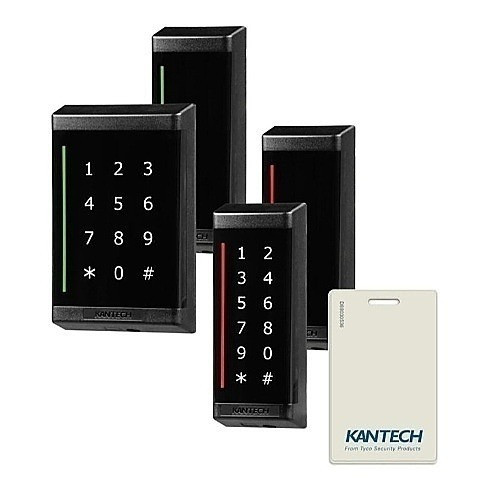
Kantech P345-SPACER
Multi-Tech
Kantech multi-tech spacer component that adapts existing single-gang conduit and rough-in to support flexible card/mobile/PIN reader combinations in retrofit hospital renovations. IP65-rated housing accommodates standard wiring without re-drilling; reduces installation lead time and cost when upgrading older med-room or records-area access points to modern multi-credential support.
View product →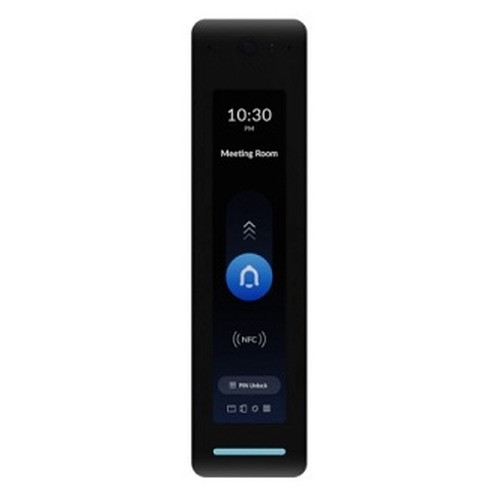
Ubiquiti UA-G3-PRO-B
Mobile/BLE
Compact mobile/BLE access terminal designed for touchless credential in confined spaces—fitting above med-room sinks, lab entry doors, or hallway alcoves where dedicated wall real estate is limited. IP55 durability and GbE wired power/data keep cleaning chemical splash from disrupting authentication; mobile-only architecture requires paired card or PIN reader for gloved or device-less staff workflows.
View product →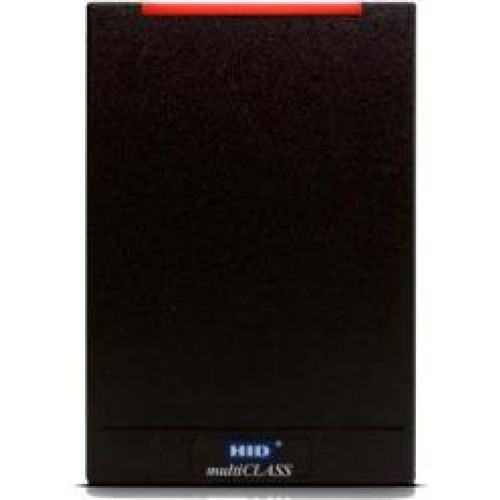
HID 920PHRNEK00203
Multi-Tech
HID multi-tech reader housing engineered for IP65 durability in damp or high-sanitizer-exposure zones such as pre-op scrub areas, pharmacy prep rooms, and clinical washing stations. Supports card, mobile, and biometric credential integration within a sealed enclosure; wired power (AC/DC) and OSDP encryption ensure audit compliance and zero credential data loss during facility network events.
View product →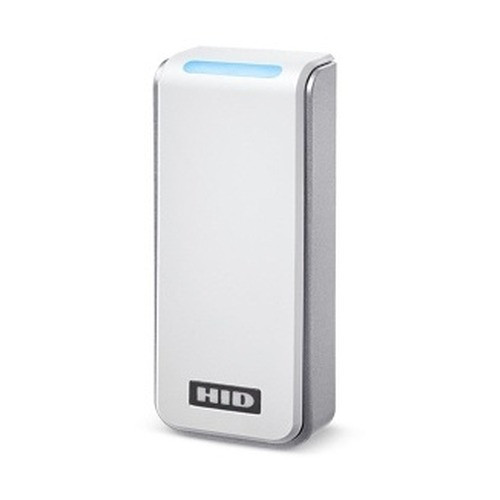
HID HID-920-PTNN
Multi-Tech
Wired AC/DC multi-tech reader delivering OSDP-encrypted, hardened access control for high-security med-room, pharmacy, and blood-bank entry where credential failover and tamper-proof logging are non-negotiable. Persistent AC/DC power eliminates battery dependency; ideal for central control rooms and critical-access corridors where every denial or grant event must be audited and reviewed for Joint Commission compliance.
View product →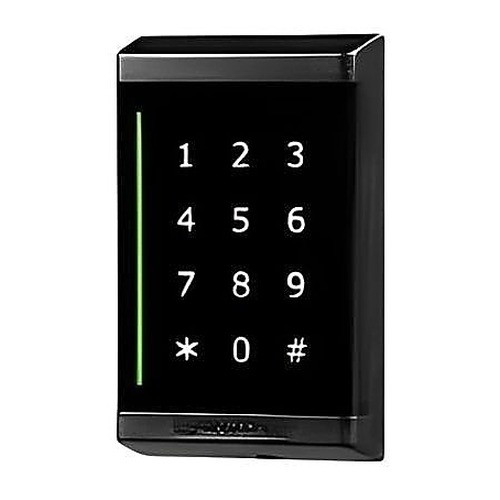
Kantech KT-SG-MT-KP2
Multi-Tech
Single-gang multi-tech reader with integrated keypad, IP66-rated for wet-environment healthcare access—operating rooms adjacent to sinks, dialysis units, and lab areas subject to frequent water spray and chemical sanitizers. Hybrid card+PIN+mobile support ensures staff entry even when smartphones are left in lockers; compact footprint fits into existing institutional electrical boxes during retrofit without extensive wall re-work.
View product →Frequently Asked Questions
Why do healthcare facilities need both mobile/BLE and multi-tech readers?
Mobile credentials eliminate hand contact—critical during infection surges or pandemic protocols—but only work when staff carry charged phones and networks are stable. Multi-tech readers (card+PIN+mobile) serve as essential fallback in med-rooms, operating theaters, and high-turnover areas where gloved staff, device loss, or network outages can't block access. A hybrid deployment—touchless gates for low-risk zones, multi-tech for critical areas—balances infection control with operational resilience.
What does OSDP encryption do, and why does healthcare require it?
OSDP (Open Supervised Device Protocol) encrypts all credential data and access events between the reader and control panel, preventing interception or replay attacks. Healthcare facilities face HIPAA audit requirements and Joint Commission standards that demand tamper-proof, auditable access logs; unencrypted or proprietary protocols create compliance gaps and expose patient-care areas to unauthorized entry. Wired AC/DC readers with OSDP are the standard for med-room, pharmacy, and records access.
How do I choose between wall-mounted terminals and spacer-based readers in a retrofit?
Wall-mounted terminals (Ubiquiti G3-PRO models) are faster to install if you have available wall real estate and power/network runs; they're ideal for new corridors or public-facing clinic entry. Spacers and multi-tech housings (Kantech, HID) adapt to existing single-gang conduit and electrical boxes, cutting renovation cost and floor downtime in occupied med-rooms or records areas. If your facility already has rough-in wiring, spacer-based solutions typically save 2–4 weeks and $3–6K per entry point versus new wall runs.
What IP rating should I specify for med-room and pharmacy readers?
IP65 is the minimum for areas subject to routine spray or splash (sinks, dispensary prep zones); IP66 is preferred where high-pressure washdown or chemical spray is common (pre-op, dialysis, lab). Wall-mounted terminals rated IP55 handle ambient moisture and alcohol-based hand sanitizer but aren't designed for direct spray. Check your facility's daily sanitation protocol—if staff spray or wipe readers with 70% isopropyl, IP65–66 housings prevent corrosion and credential read failures.
Do mobile/BLE readers work offline, and what happens when network fails?
Most mobile/BLE readers require active network connectivity to validate credentials in real time; they don't store enrollment data locally, so a network outage blocks access even with valid credentials on staff phones. Multi-tech readers with wired AC/DC power and local caching can operate in degraded-network mode, validating cached credentials and logging denials for later sync. For critical-care areas, pair mobile readers with offline card readers or keypads to ensure staff can always reach med-rooms and medication dispensaries during network events.
What's the difference between these HID and Ubiquiti readers in terms of maintenance and support?
Ubiquiti readers are network-native, managed through their UniFi ecosystem and firmware updates; they're lightweight on IT infrastructure but require smartphone provisioning and network planning. HID readers are legacy-compatible, integrating with most access control panels and door controllers via OSDP or Wiegand, with deep audit logging for healthcare compliance. HID readers are typically recommended for hospitals with existing access control infrastructure; Ubiquiti shines in modern, unified IT/security environments. Both are factory-new and channel-direct sourced from qualified integrators.
Related Resources
- Access Control Reader comparisons — head-to-head spec matchups
- Access Control Reader Buying Guide
- Best Access Control Reader for Multi-Tenant Buildings
- Best Mobile Credential Access Control Readers
- All product comparisons
Speccing this for a project?
Send us your requirements and our senior specialists will confirm specs, compatibility, availability and pricing — free, usually within one business day. Channel-direct, factory-new, serving commercial integrators since 2014.
Get a Free QuoteComparing for a project?
Send us the models you are weighing and our team will confirm specs, compatibility, availability, and pricing — free, usually within one business day.