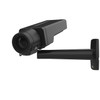
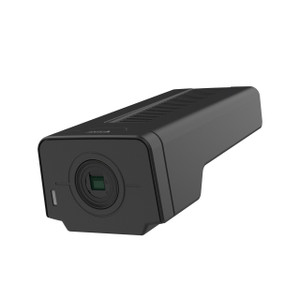
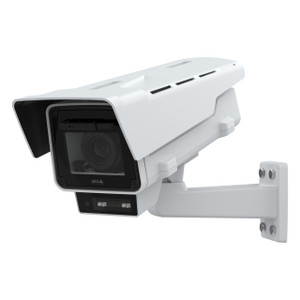
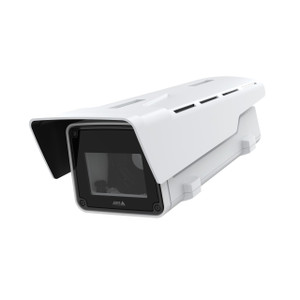
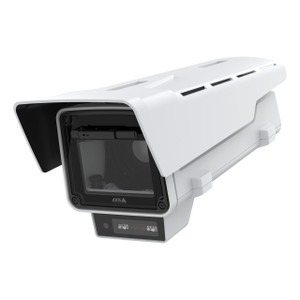
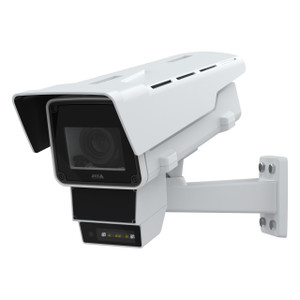
Axis 02164-001 Q1656 4MP Varifocal Lightfinder Box Camera
The Axis Q1656 (model 02164-001) is a professional 4MP box camera engineered for outdoor surveillance where low-light color performance and flexible framing are mandatory. Built around a 1/1.8" CMOS sensor paired with Lightfinder 2.0 technology, this camera maintains usable color detail down to 0.05 lux—a meaningful advantage in twilight dock operations, parking perimeters, and entry/exit zones where competitive fixed-lens alternatives default to grayscale or thermal fallback. The varifocal lens (3.9–10mm) eliminates the need to stock multiple focal-length SKUs; operators adjust field-of-view remotely from 120° horizontal down to 47° without site revisits.
Key Features
- 4MP Resolution (2688×1512) at 50/60fps: Sufficient resolution for forensic facial detail and license-plate legibility in retail, warehouse, and infrastructure perimeters. 50/60fps frame rate ensures smooth motion capture without motion blur, critical when reviewing incident footage or live monitoring dock activity.
- Lightfinder 2.0 technology: Sensor technology that preserves color saturation in near-darkness. This directly reduces forensic review time—investigators see usable color rather than colorless thermal or low-contrast B&W, improving identification accuracy and evidence defensibility.
- Forensic WDR processing: Balances exposure across bright and shadowed zones simultaneously. In mixed-lighting scenes (doorway with bright exterior + dark interior, or sun-glare across a dock), this delivers usable detail in both zones without blown-out highlights or crushed shadows—essential for liability investigations and post-incident claim support.
- Varifocal lens with remote zoom and focus: Adjust field-of-view over the network without physical camera access. Saves technician truck rolls and enables rapid scene reframing when camera placement cannot be relocated.
- PoE+ (Class 3) powered; 4.6W average, 7.7W peak consumption: Draws minimal power from your PoE switch. Standard 802.3at or better PoE+ infrastructure supports full zoom/focus operation. No separate power supply or control wiring required, simplifying outdoor cable runs and reducing installation cost.
- H.264 with Zipstream bandwidth optimization: Axis Zipstream compression reduces storage and transmission bandwidth by up to 50% versus standard H.264—a tangible savings on 24/7 recording across multi-camera sites. Bandwidth constraint in remote locations or slow uplinks become manageable.
- CS-mount lens interface: Accepts interchangeable optics. If the 3.9–10mm varifocal doesn't match a specific scene, substitute a fixed focal-length lens without replacing the camera body.
- Outdoor-rated design; -20 to 55°C operating range: Sealed enclosure and thermal management support seasonal extremes. Suitable for unheated warehouses, rooftop perimeters, and vehicle-bay overspray zones.
- Integrated audio support: Two-way communication enables remote speaker notifications from a control center or direct operator interaction without site presence.
- Secure boot and signed firmware: Mitigates unauthorized firmware injection and tampering. Mandatory for critical infrastructure and compliance-sensitive deployments (utilities, transportation, healthcare).
Integration & Compatibility
The 02164-001 outputs ONVIF-compliant video streams and integrates with industry-standard VMS platforms. Remote zoom and focus are controlled directly via network protocols—no separate PTZ controller required. Zipstream technology is native and transparent; most NVRs and VMS software recognize and optimize bandwidth automatically. The camera is compatible with outdoor IP camera infrastructure including PoE switches, weatherproof cable connectors, and outdoor mounting brackets such as the Axis T92E20 wall/ceiling bracket, enabling retrofit into existing surveillance housings.
For large multi-site deployments, consider network video recorders or management platforms that support dynamic bitrate control to maximize the Zipstream savings across dozens of cameras. A PoE power planning guide helps validate switch capacity when scaling beyond a handful of cameras.
When to Choose a Different Model
If your scene demands extreme low-light sensitivity and thermal imaging as a fallback, evaluate higher-end Axis thermal cameras. If fixed-focal 4MP is acceptable and cost is paramount, consider a lower-cost box variant with standard (non-varifocal) optics. For indoor or daylight-only applications, smaller form-factor or dome-style options may offer better aesthetics and simplified mounting.
Frequently Asked Questions
Q: Is the Axis 02164-001 NDAA Section 889 compliant?
A: Axis does not publish blanket NDAA compliance certifications at the model level. Verify directly with the manufacturer or your procurement authority if government sales are required.
Q: What is the warranty coverage on the Q1656?
A: Standard Axis hardware products typically carry a 3-year limited warranty. Confirm the exact warranty terms with your authorized vendor at the time of purchase.
Q: Can I use a standard PoE switch (802.3af) to power the Q1656, or do I need PoE+?
A: The camera draws 4.6W average and up to 7.7W peak consumption. Both standard PoE (802.3af, 15.4W max) and PoE+ (802.3at, 30W max) supply sufficient power. No PoE++ (802.3bt) required. However, if you are operating the varifocal lens continuously with active zoom/focus and integrated audio simultaneously, PoE+ headroom is recommended to prevent brownout conditions.
Q: Does the Q1656 support edge storage?
A: The camera does not include built-in microSD storage. It is designed for network-based recording to an NVR, VMS server, or edge appliance. Local fallback storage requires an external SSD or network-attached storage solution.
Q: What is the maximum cable run from a PoE switch to the Q1656?
A: Standard Ethernet cable specifications support up to 100 meters (~328 feet) at Cat5e or better. PoE voltage drop over long runs can reduce available power; if your run exceeds 60 meters with significant power draw, validate switch output voltage under load or use a midspan PoE injector closer to the camera.
Q: Is the varifocal lens zoom motorized and remotely controllable?
A: Yes. The 3.9–10mm varifocal lens features motorized focus and zoom, both controlled over the network via PoE. No manual focus ring adjustment or external controller is required.
James EverettPerspective based on aggregated IP Security Depot and affiliated engineering team experience.
The Axis Q1656 (02164-001) occupies a well-established niche: the midrange outdoor compact box camera that balances sensor sensitivity, lens flexibility, and cost discipline. The 1/1.8" sensor with Lightfinder 2.0 is a proven pairing that consistently delivers usable color saturation in twilight conditions—roughly one to two stops better than budget fixed-lens alternatives. It's the difference between a usable facial feature and a silhouette in a warehouse loading dock at dusk.
Technical Highlights:
- Lightfinder 2.0 + Forensic WDR combination: The camera preserves color down to 0.05 lux while simultaneously managing mixed-light scenes (bright sky + dark doorway). This dual capability reduces the need for separate thermal or specialized low-light cameras in applications where color forensics matter—retail loss prevention, dock access, perimeter gates.
- Varifocal 3.9–10mm with motorized remote control: Eliminates inventory complexity. One SKU covers wide to telephoto framing. No truck roll needed to swap a lens or refocus; operators adjust coverage from a workstation. In multi-site integrator workflows, this cuts field labor significantly.
- PoE+ (7.7W max) over standard Ethernet: Minimal power footprint. A 48-port PoE+ switch can power dozens of these cameras without oversubscription. No separate power infrastructure, no conduit congestion, simplified outdoor cable runs.
- H.264 + Zipstream (up to 50% bandwidth savings): Real bandwidth savings on 24/7 recording. A site recording 16 cameras for 90-day retention will see measurable storage and WAN uplink savings—often 5–10 TB over three months depending on scene complexity and motion.
Deployment Considerations:
- No onboard storage fallback: This is a network camera. If your site experiences prolonged NVR/network outages, local edge buffer is missing. Plan for redundant NVR connectivity or edge appliances if continuous recording is non-negotiable.
- CS-mount flexibility is a feature, not a gotcha: The varifocal works out of box, but if you need an ultrawide or ultra-narrow focal length, the interchangeable mount is your escape hatch. Most integrators won't need it, but it's valuable in retrofit scenarios where a fixed focal-length predecessor occupied the same housing.
- PoE voltage drop over distance: If your PoE run exceeds 60 meters and you're also driving active zoom/focus and audio, validate switch output voltage under load. 7.7W peak is low, but long cable runs can sag the 48V supply. Test before final deployment.
The Q1656 is a natural fit for warehouse perimeters, parking access gates, outdoor retail entries, and utility substations where Lightfinder color sensitivity and flexible framing eliminate the need for multiple camera types. It trades extreme specialization (thermal, 360°, ultra-macro) for broad competence—and that generalism is exactly what most integrators need in a workhorse outdoor box.