
Showing Results for Weatherproof Cabinets
-
Save $0.17
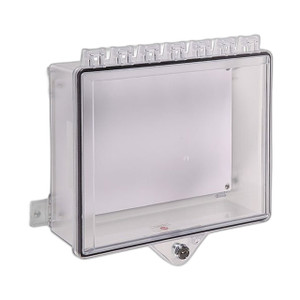
STI Protective Cabinet with Siren/Strobe Alarm Key - STI-7524
Transparent polycarbonate protective enclosure designed to shield fire and security control panels from vandalism and accidental damage in indoor and
- NEMA 4X polycarbonate housing rated for outdoor use from −40°C to 121°C.
- Integrated 100dB siren/strobe alarm triggers immediately on unauthorized entry.
- 9V battery-powered standalone unit requires no wiring or network infrastructure.
Usually Ships in 2-3 Weeks Free shipping over $499$268.16 $267.99 Save $0.17 -
Save $163.03

STI Protective Cabinet with Siren/Strobe Alarm Key - STI-7534
Transparent polycarbonate protective enclosure designed to safeguard fire and security control panels from vandalism and accidental damage while
- Transparent polycarbonate keeps panel LEDs visible without opening the enclosure.
- Integrated 100dB siren/strobe activates on tamper; powered by 9V PP3 battery.
- Key lock with tamperproof screws; rated for -40°C to 121°C indoor operation.
Usually Ships in 2-3 Weeks Free shipping over $499$413.02 $249.99 Save $163.03 -
Save $0.17

STI Protective Cabinet with Siren/Strobe Alarm, Thumb Lock
NEMA 4X protective cabinet with thumb lock and siren/strobe alarm
- Thumb lock access control with integrated siren and strobe alarm system
- NEMA 4X steel construction rated for indoor and outdoor environments
- Wall-mounted design for secure storage of access control equipment
Usually Ships in 2-3 Weeks Free shipping over $499$268.16 $267.99 Save $0.17 -
Save $0.51
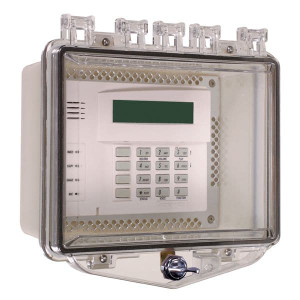
STI STI-7510A-HTR Heated Polycarbonate Enclosure with Key Lock
Heated polycarbonate enclosure rated NEMA 4—meaning it resists water spray and corrosion without submersion
- NEMA 4-rated polycarbonate shell blocks water spray and corrosion in outdoor deployments.
- Integrated heating plate keeps internals above freezing at 12, 16.5, or 24 VAC/VDC input.
- Key lock strike deters unauthorized removal of enclosed readers or access control hardware.
Usually Ships in 2-3 Weeks Free shipping over $499$258.50 $257.99 Save $0.51 -
Save $0.62
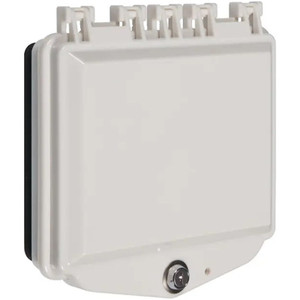
STI STI-7510E Polycarbonate Flush-Mount Lock/Strike Enclosure
Polycarbonate flush-mount enclosure for recessed door strike installation
- Open-back box design recesses fully into wall for clean, seamless appearance
- Polycarbonate construction resists impact damage in high-traffic access points
- Integrates with standard door frame and strike assemblies, thumb or key lock
Usually Ships in 2-3 Weeks Free shipping over $499$76.61 $75.99 Save $0.62 -
Save $0.41

STI STI-7510F Access Control Enclosure - Key Lock
Polycarbonate access control enclosure with key-lock strike for door integration
- Enclosed back box consolidates lock strike and reader wiring in one unit
- Exterior key-operated strike enables manual override without electrical power
- IP59-rated polycarbonate housing resists impact and weather on glass or frame mounts
Usually Ships in 2-3 Weeks Free shipping over $499$89.40 $88.99 Save $0.41 -
Save $0.51

STI STI-7510F-HTR Heated Polycarbonate Enclosure Key Lock
Heated polycarbonate enclosure rated NEMA 4X, designed to protect access control hardware—readers, strikes, keypads, and wiring—in outdoor, freezing
- NEMA 4X-rated polycarbonate enclosure withstands outdoor, corrosive, and wet environments.
- Integrated heating element accepts 12, 16.5, or 24 VAC/VDC to prevent freeze-related failures.
- Mechanical key lock credential operates independently of any electronic access control system.
Usually Ships in 2-3 Weeks Free shipping over $499$258.50 $257.99 Save $0.51 -
Save $0.51
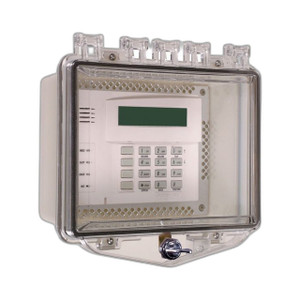
STI STI-7511A-HTR Heated Polycarbonate Enclosure Thumb Lock
Heated polycarbonate thumb lock, NEMA 4 rated for frozen climates
- Built-in heating maintains operation in freezing conditions for year-round access
- Polycarbonate enclosure with NEMA 4 rating withstands wet, corrosive, dusty sites
- Thumb lock activation integrates into standard door frame security installations
Usually Ships in 2-3 Weeks Free shipping over $499$258.50 $257.99 Save $0.51 -
Save $0.75
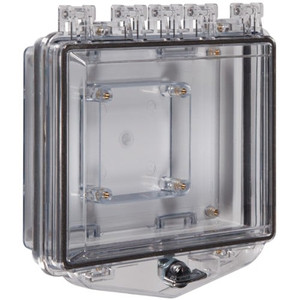
STI STI-7511B Enclosure
Clear polycarbonate enclosure with an enclosed back box designed to mount over double-gang access control readers, keypads, and electronic entry
- UV-stabilized polycarbonate housing rated for −40°F to 250°F suits indoor and outdoor installs.
- Enclosed back box provides dedicated cable routing depth for clean wiring on double-gang readers.
- Tamperproof mounting screws and clear visibility protect credential readers from vandalism.
Usually Ships in 2-3 Weeks Free shipping over $499$81.74 $80.99 Save $0.75 -
Save $0.75
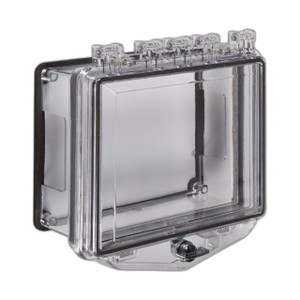
STI STI-7511D Lock/Strike Enclosure
Surface-mount polycarbonate enclosure for strike and reader retrofit
- No recessing required—installs directly to frames without structural cuts
- Polycarbonate housing resists impact, UV, and moisture in interior/covered exterior
- Open conduit back box supports 24VDC fail-secure and 12VDC fail-safe wiring
Usually Ships in 2-3 Weeks Free shipping over $499$81.74 $80.99 Save $0.75 -
Save $0.51

STI STI-7511F-HTR Heated Polycarbonate Enclosure
Heated polycarbonate enclosure rated NEMA 4X, designed to protect access control hardware, readers, and strike mechanisms in harsh outdoor, freezing
- NEMA 4X polycarbonate shell seals out water, dust, and salt spray in outdoor deployments.
- Integrated heating element prevents sub-freezing damage to readers, strikes, and control boards.
- Accepts 12, 16.5, or 24 VAC/VDC input, matching most commercial access control supply voltages.
Usually Ships in 2-3 Weeks Free shipping over $499$258.50 $257.99 Save $0.51 -
Save $0.06

STI STI-7515A Access Control Housing
Lock/strike housing designed for access control system installations
- Dedicated lock/strike housing simplifies strike mechanism deployment in access control installs.
- Pre-marked hole locations streamline door frame modifications and electrical routing planning.
- Compatible with standard commercial lock/strike configurations for hardwired strike activation.
Usually Ships in 2-3 Weeks Free shipping over $499$148.05 $147.99 Save $0.06 -
Save $0.06

STI STI-7515F Access Control Housing
Lockable polycarbonate enclosure designed to protect access control lock, strike, and keypad assemblies from vandalism, accidental damage, and
- 94V-2 rated polycarbonate resists impact while keeping the protected device visible.
- Operates from -40°C to +121°C, covering outdoor and unheated industrial installs.
- Ships with mounting hardware and gaskets; integrates with STI-7510/7511 housings.
Usually Ships in 2-3 Weeks Free shipping over $499$148.05 $147.99 Save $0.06 -
Save $118.51
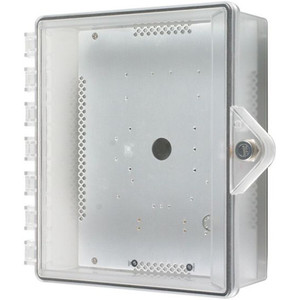
STI STI-7520-HTR Heated Type 4X Polycarbonate Enclosure
Heated NEMA 4X polycarbonate enclosure for outdoor access control in cold climates
- Integrated heating element with thermostat maintains operation in sub-freezing temperatures
- NEMA 4X rating resists dust, rain, salt-air corrosion for coastal and washdown environments
- Impact-resistant polycarbonate with optical transparency enables visual monitoring without opening
Usually Ships in 2-3 Weeks Free shipping over $499$305.50 $186.99 Save $118.51 -
Save $127.26

STI STI-7520-OWHTR Heated Type 4X Protective Cabinet
NEMA 4X heated polycarbonate enclosure designed to protect access control readers, processors, and strike mechanisms in outdoor and unheated
- NEMA 4X polycarbonate housing protects outdoor readers down to −40°F.
- Integrated radiant heater runs on 12, 16.5, or 24 VAC/VDC power supplies.
- Three-thermostat system includes overheat cutoff and audible warning alert.
Usually Ships in 2-3 Weeks Free shipping over $499$364.25 $236.99 Save $127.26 -
Save $0.12

STI STI-7520OB Protective Cabinet - Key Lock
Key-lock protective cabinet with open backbox for access control hardware
- Open backbox design accommodates flexible wiring and component placement
- Key lock security mechanism protects mounted readers and strike plates
- Wall-mounted enclosure for entry points and controlled access zones
Usually Ships in 2-3 Weeks Free shipping over $499$173.11 $172.99 Save $0.12 -
Save $118.51
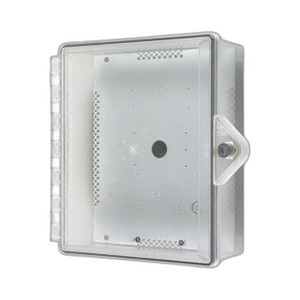
STI STI-7521-HTR Heated Enclosure
NEMA 4X heated polycarbonate enclosure with thumb lock for frozen climates
- Integrated thermostat-controlled heating prevents condensation and ice formation
- NEMA 4 rating with IP59 sealing stops water, dust, and weather ingress
- Thumb lock strike provides mechanical backup on outdoor access control doors
Usually Ships in 2-3 Weeks Free shipping over $499$305.50 $186.99 Save $118.51 -
Save $0.18

STI STI-7521-OW Cabinet - White
Type 4X protective cabinet engineered to shield access control hardware from environmental exposure and physical tampering
- Type 4X-rated enclosure protects access control hardware from environmental exposure.
- Thumb lock strike enables straightforward manual access without tools or key hardware.
- Integrated backplate and 3/4" NPT access hole simplify standard rough-in wall mounting.
Usually Ships in 2-3 Weeks Free shipping over $499$224.17 $223.99 Save $0.18 -
Save $190.53

STI STI-7533MED Protective Cabinet - Polycarbonate
Polycarbonate protective cabinet with siren alarm for medical facilities
- Polycarbonate construction with integrated wire rack for organized mounting
- 9VDC siren alarm function for integrated audible alerting capability
- Wall and panel mountable enclosure for access control equipment protection
Usually Ships in 2-3 Weeks Free shipping over $499$544.52 $353.99 Save $190.53 -
Save $163.03
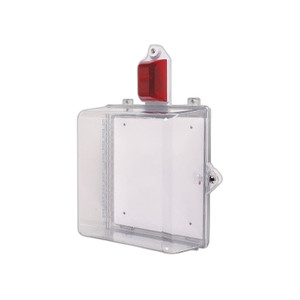
STI STI-7535 Protective Cabinet with Siren/Strobe Alarm Thumb
Transparent UV-stabilised polycarbonate protective cabinet designed to shield fire and security control panels, electrical cabinets, and other
- UV-stabilised polycarbonate housing provides transparent visibility while blocking vandal access.
- Integrated 100dB siren/strobe alarm delivers immediate audible and visual tamper detection.
- Single 9V battery powers the standalone unit — no network or AC wiring required.
Usually Ships in 2-3 Weeks Free shipping over $499$413.02 $249.99 Save $163.03 -
Save $0.66

STI STI-7700 Polycarbonate Keypad Cover with Open Back Box
Molded polycarbonate protective cover designed to shield keypad readers and similar access control devices from accidental or intentional physical
- Polycarbonate shell rated −40°F to 250°F sustains impact resistance across full range.
- Open back box fits existing reader assemblies without modifying wiring or mounting hardware.
- Protects keypads in high-traffic, outdoor, or washdown environments, extending reader lifespan.
Usually Ships in 2-3 Weeks Free shipping over $499$53.65 $52.99 Save $0.66 -
Save $0.86

STI STI-7710 Polycarbonate Keypad Reader Cover with Lock
Molded polycarbonate protective cover with integrated key lock, designed to shield keypad readers from accidental or intentional damage
- Polycarbonate shell withstands -40°F to 250°F for outdoor and industrial deployments.
- Integrated key lock blocks unauthorized removal or tampering at the reader.
- Includes mounting anchors and screws for straightforward field installation.
Usually Ships in 2-3 Weeks Free shipping over $499$63.85 $62.99 Save $0.86 -
Save $0.76

STI STI-7720 Polycarbonate Keypad Cover with Enclosed Back Box
Molded polycarbonate protective cover with an enclosed back box designed to shield keypad-type access control readers from physical damage
- Molded polycarbonate shell shields keypad wiring and connections from moisture and tampering.
- Enclosed back box protects mounting hardware and internal connections in exposed environments.
- Includes anchors and screws for direct mounting to door frames in retrofit or new installs.
Usually Ships in 2-3 Weeks Free shipping over $499$58.75 $57.99 Save $0.76 -
Save $0.62

STI STI-7730 Polycarbonate Keypad Cover with Enclosed Back Box
Polycarbonate keypad cover with enclosed back box for outdoor access control
- IP-rated weatherproof enclosure protects keypads in outdoor and high-traffic indoor zones
- Enclosed back box simplifies wiring and provides integrated wall-mount support structure
- Polycarbonate construction resists moisture, dust, and temperature fluctuations at entry points
Usually Ships in 2-3 Weeks Free shipping over $499$76.61 $75.99 Save $0.62 -
Save $0.59

STI STI-7730-OW Keypad Reader Cover
Molded polycarbonate protective enclosure designed to shield keypad readers from environmental degradation, accidental impact, and intentional
- Polycarbonate enclosure shields outdoor keypads from impact, moisture, and grime.
- Rated −40°F to +250°F, supporting reliable deployment in harsh outdoor environments.
- Includes foil heater pad with thermostat to prevent keypad freeze-up in cold climates.
Usually Ships in 2-3 Weeks Free shipping over $499$122.58 $121.99 Save $0.59 -
Save $0.18

STI Type 4X Protective Cabinet with Backplate and - STI-7520-OW
Polycarbonate protective cabinet designed to shield access control readers, keypads, and credential devices in environments where vandalism
- Type 4X polycarbonate housing rated for −40°C to 121°C suits outdoor deployments.
- Key lock access restricts cabinet opening to authorized service personnel only.
- Included backplate and tamper-proof fasteners enable quick mounting on any flat wall.
Usually Ships in 2-3 Weeks Free shipping over $499$224.17 $223.99 Save $0.18 -
Save $230.76

Transition Networks OCA-P181610 8-Port Gigabit Outdoor Cabinet
Unmanaged 8-port Gigabit switch for outdoor cabinets, zero config
- 8 Gigabit ports deliver full-duplex 1 Gbps forwarding for outdoor surveillance sites.
- Single-mode fiber module support eliminates EMI and ground loops in field enclosures.
- DIN rail mount and zero-config unmanaged design enable fast deployment in remote cabinets.
Usually Ships in 2-3 Weeks Free shipping over $499$948.75 $717.99 Save $230.76 -
Save $0.01
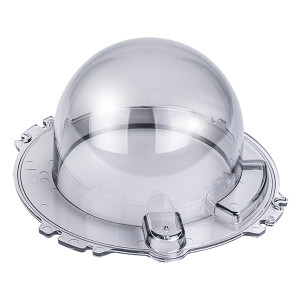
Vivotek AC-22C Hydrophobic Dome Cover
Hydrophobic dome cover for fisheye cameras in wet outdoor settings
- Water-repellent coating blocks rain, condensation, and moisture buildup
- Compatible with FD9367, FD9365, FD9387, and FD9391 Vivotek models
- Maintains lens clarity while reducing maintenance in coastal/industrial sites
Usually Ships in 2-3 Weeks Free shipping over $499$106.00 $105.99 Save $0.01 -
Save $116.01

Vivotek AT-CAS-001 Speed Dome Weatherproof Cabinet
IP66 weatherproof cabinet with IK10 vandal protection for outdoor cameras
- Works with all Vivotek network cameras including speed domes and bullet models
- Operates -40°C to 75°C with 90% humidity rating for extreme climates
- Built-in AC and PoE surge protection shields equipment from lightning strikes
Usually Ships in 2-3 Weeks Free shipping over $499$382.00 $265.99 Save $116.01 -
Save $0.01
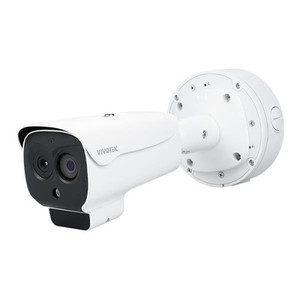
Vivotek BLACK PANEL Replacement Surface for CC8130HS
Black replacement panel for CC8130(HS) series—quick swap, zero reconfiguration
- Drop-in replacement with no camera reconfiguration or performance loss
- Professional black finish for color-matched multi-camera deployments
- Tool-free quick-replacement design for rapid field installation
Usually Ships in 2-3 Weeks Free shipping over $499$50.00 $49.99 Save $0.01