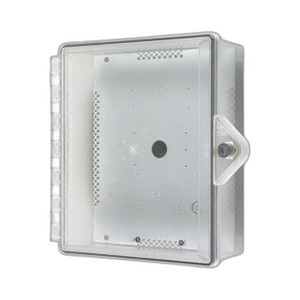
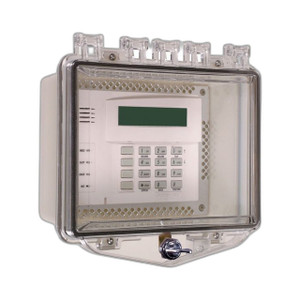
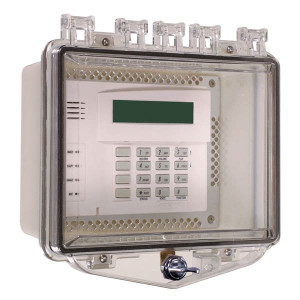
STI STI-7520-HTR Heated Type 4X Polycarbonate Enclosure
Overview
The STI STI-7520-HTR is a heated polycarbonate enclosure purpose-built for outdoor access control, electronic lock, and credential reader installations in cold-weather environments. The integrated heating element actively maintains operating temperature, preventing condensation and equipment freeze-up during extended sub-zero deployments — a critical consideration for facilities in northern climates or high-altitude regions where temperature swings exceed equipment tolerances. Polycarbonate construction provides impact resistance and optical transparency, allowing visual monitoring of internal component status without opening the enclosure. This reduces service calls and speeds troubleshooting in field conditions.
Key Features
- NEMA 4X Environmental Rating: Protects against dust, rain, and corrosion. NEMA 4X (also called Type 4X) means the enclosure resists washdown spray and salt-air corrosion, making it suitable for coastal installations or facilities subject to regular water exposure. Unlike NEMA 4 (non-stainless), the 4X designation supports corrosion-prone outdoor environments without rust degradation of hinges or fasteners.
- Integrated Heating System: Maintains internal temperature stability in sub-freezing conditions. Without heating, electronic locks and readers become sluggish or inoperable below 0°C. The STI-7520-HTR eliminates this failure mode, ensuring consistent strike solenoid response and reader function through winter months. Reduces warranty claims and emergency service calls tied to cold-weather lockouts.
- Polycarbonate Enclosure Body: Delivers impact resistance superior to sheet metal or ABS plastic, resisting breakage from physical abuse or falling debris. The transparent material allows facility staff to visually inspect heater operation and internal wiring status without opening the cabinet, reducing exposure of internal electronics to dust or moisture during inspection.
- Standard 12V DC Power Compatibility: The STI-7520-HTR integrates with existing 12V DC power supplies and standard heating control circuits. No custom power infrastructure or exotic power conditioning required. This simplifies retrofit installations and reduces BOM cost when deploying across multi-door access control systems already provisioned with 12V distribution.
- Single and Multi-Door Mounting: Designed to mount on single-door magnetic locks, electronic strikes, and credential readers, as well as on multi-door access control panels. The compact form factor fits standard electrical boxes and consolidates heating, locking, and reader components in weather-sealed proximity, reducing point-of-failure dispersion across the perimeter.
- Weather-Sealed Component Protection: Polycarbonate housing and gasket sealing protect internal wiring, transformer terminals, and solenoid coils from rain ingress, salt spray, and dust accumulation. Reduces corrosion of relay contacts and reader interface circuits, extending equipment lifecycle and reducing field replacement rates.
Integration & Compatibility
The STI-7520-HTR is engineered for integration with access control systems and electronic lock deployments requiring cold-weather operation. It accepts standard 12V DC input from facility power supplies and heating control relays. Polycarbonate transparency supports visual status checks without dismounting the enclosure, reducing service overhead on outdoor installations. Compatible with strike plates, magnetic locks, and credential readers from multiple manufacturers using standard mounting geometry.
Typical Deployment Scenarios
Northern Warehouse Perimeter: Multi-bay loading docks in Minnesota, Wisconsin, or similar climates experience sub-zero temperatures from November through March. An unheated strike enclosure may fail to release during peak cold hours, creating access delays and safety hazards. The STI-7520-HTR maintains strike response throughout the season, eliminating emergency unlock calls.
Coastal Industrial Facility: Salt-air corrosion accelerates failure of unprotected electronics. NEMA 4X polycarbonate resists salt-spray degradation, extending component lifespan and reducing replacement frequency compared to standard outdoor enclosures.
High-Altitude Mountain Installation: Thin air and rapid temperature swings stress unheated locks. The heating element provides thermal buffering, maintaining stable internal conditions even when ambient temperature fluctuates 30–40°C in a single day.
Frequently Asked Questions
Q: Is the STI-7520-HTR suitable for submersion or continuous spray environments?
A: NEMA 4X provides resistance to spray and washdown; it does not protect against submersion. If the installation requires full immersion or high-pressure spray jets, consult the manufacturer for IP-rated or NEMA 6P alternatives.
Q: Does the heating element cycle automatically or require manual control?
A: The STI-7520-HTR accepts input from standard heating control circuits. Deployment typically integrates a thermostat relay that energizes the heater when internal temperature drops below a setpoint (e.g., 5°C). Configuration depends on your existing access control power distribution and control logic.
Q: What is the maximum operating altitude for the heated enclosure?
A: Polycarbonate and heating elements operate across standard industrial altitude ranges (up to 2,000 m / 6,500 ft without derating). At higher elevations, consult with the manufacturer regarding thermal performance and heater sizing.
Q: Can I retrofit the STI-7520-HTR onto existing non-heated strike installations?
A: Yes, provided the existing mounting geometry and power infrastructure support 12V DC input. Standard strike and reader mounting points align with the enclosure form factor, allowing retrofit without re-wiring the access control panel.
Q: What maintenance does the heating system require?
A: Inspect the heater element and gaskets annually in deployments with heavy washdown or salt exposure. Clear any moisture or salt spray buildup on the polycarbonate window to maintain optical transparency for status inspection.
Q: Is the STI-7520-HTR NDAA or TAA compliant?
A: Consult the manufacturer datasheet or your distributor for domestic sourcing and compliance certifications. Standard access control enclosures are typically not subject to NDAA Section 889 restrictions, but verify your specific federal or state procurement requirements.
Ted PerryPerspective based on aggregated IP Security Depot and affiliated engineering team experience.
The STI STI-7520-HTR solves a real problem that integrators encounter year after year: electronic locks failing in sub-zero temperatures. I've seen facilities force-unlock doors or call emergency services at 3 a.m. because an unheated strike solenoid became unresponsive overnight. The heating element in the STI-7520-HTR isn't a luxury — it's a failure-prevention mechanism. When you deploy this enclosure in a northern climate, you eliminate an entire class of cold-weather lockouts and reduce your service callback rate immediately.
Technical Highlights:
- NEMA 4X Polycarbonate Construction: Corrosion resistance for coastal and salt-spray environments, combined with optical transparency that eliminates the need to open the enclosure for visual inspection. This means less moisture ingress per maintenance event and longer component lifespan compared to painted steel or unrated plastic enclosures.
- Integrated 12V DC Heating System: Works with standard facility power supplies and thermostat control circuits. No exotic power conditioning or UPS integration required. Heater energizes only when temperature drops below setpoint, so you're not paying for continuous heating in mild seasons.
- Multi-Door Compatibility: Mounts on single strikes, magnetic locks, and multi-door access control panels. The compact form factor lets you consolidate heating, locking, and reader electronics in one weather-sealed assembly, reducing point-of-failure dispersion across the perimeter.
Deployment Considerations:
- NEMA 4X is washdown-resistant but not submersion-rated. If your facility requires IP67 or NEMA 6P (full immersion protection), request a different enclosure variant. This is especially critical for facilities with high-pressure spray washdown systems or flood-prone loading docks.
- Heater cycling is relay-controlled, not built-in thermostat auto-regulation. You must provision a thermostat relay on the access control power supply side. Verify your facility's 12V distribution panel has spare relay slots before commissioning the STI-7520-HTR.
- Polycarbonate becomes brittle in extreme UV exposure over many years. If the installation is in direct unshaded sunlight on a south-facing wall, plan for polycarbonate degradation after 5–7 years. Consider UV-protective overshading or periodic replacement as part of your maintenance budget.
Best fit: outdoor perimeter access control in northern warehouses, manufacturing plants, and cold-storage facilities where strike response reliability is mission-critical and temperature swings are routine. If your deployment is in moderate climates (year-round temps above 10°C), an unheated NEMA 4 enclosure may suffice and reduce cost. But in any facility where winter lock failures have triggered emergency calls, the STI-7520-HTR is insurance against a predictable failure mode.