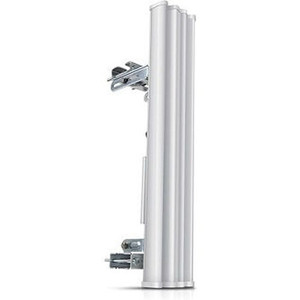
Ubiquiti AM-5G17-90 5GHz Sector Antenna
The AM-5G17-90 is a 5GHz directional sector antenna engineered for point-to-multipoint airMAX base station deployments. At 17 dBi gain across a 90-degree horizontal coverage pattern, this antenna focuses RF energy toward client locations while suppressing radiation in non-target directions—meaning longer effective range and cleaner spectrum reuse in multi-sector tower configurations. Weighing just 0.35 pounds, the AM-5G17-90 minimizes mechanical load on mounting structures, simplifying tower engineering and reducing wind-induced stress on masts.
Key Features
- 17 dBi Directional Gain: Focused RF energy extends service range in your target azimuth without wasting power on sidelobe radiation. For rural deployments, this translates to fewer base stations needed to cover equivalent geography compared to omnidirectional antennas—a direct cost and complexity reduction.
- 90-Degree Sector Pattern: The 90-degree beamwidth suits both sparse rural topologies (where subscribers are spread across a wide area) and dense urban multi-sector layouts (where you can stack three or four AM-5G17-90 units orthogonally to achieve 360-degree coverage). This flexibility avoids overbuilding with narrower-beam antennas in low-density areas.
- 5GHz Operation: Supports 802.11ac and 802.11ax waveforms across licensed and unlicensed spectrum bands. Modern encoding standards mean higher capacity and spectral efficiency per MHz of bandwidth, particularly important if you're operating in congested unlicensed bands or upgrading existing networks to Wi-Fi 6 performance.
- Lightweight Design (0.35 lbs): Reduces tower load calculations and simplifies mechanical design. On pole-mounted or rooftop installations, lower weight translates to simpler brackets, smaller mast diameter, and lower installation labor. Wind loading is also proportionally reduced, improving structural margin in high-wind environments.
- N-Type Connector Interface: Standard connector type pairs with all Ubiquiti airMAX radios and base station equipment. Impedance matched for low VSWR across the 5GHz band, ensuring efficient power transfer and minimal reflection losses. Use low-loss cable runs to preserve the antenna's gain advantage at distance.
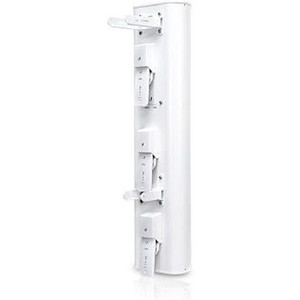
- Field-Ready Mounting Hardware: Ships with bracket provisions for horizontal or vertical mast mounting. Clear documentation on orientation and line-of-sight requirements helps installers avoid common mistakes—misalignment and metal obstacles within the main lobe are the most frequent causes of disappointing range in the field.
Integration with airMAX Networks
The AM-5G17-90 integrates within the Ubiquiti UISP Wireless ecosystem. Network planning tools can ingest published antenna gain and pattern data to model coverage footprints, predict signal strength at client locations, and optimize sector orientation before field deployment. This planning step is not optional if you're building multi-sector infrastructure—modeling avoids costly rework after installation.
Typical Deployment Scenarios
Regional broadband carriers often use three or four AM-5G17-90 antennas mounted orthogonally on a single base station mast to serve 360-degree coverage across rural villages or sparse suburban zones. Backhaul aggregation points feeding regional networks benefit from the directional gain, which suppresses co-channel interference from adjacent sectors or neighboring operators. Enterprise campus links also use the AM-5G17-90 to connect buildings across property boundaries while minimizing radiation into adjacent spectrum licenses.
Installation Considerations
Mount the antenna on clear mast structure with unobstructed line-of-sight to client locations. Avoid large metal obstacles within the main lobe—RF energy follows electrical line-of-sight, so metal roofs, water tanks, or utility poles in the coverage zone will degrade performance. Seal all N-type connectors with weatherproof caps or boots to prevent moisture ingress, which causes impedance mismatches and connector corrosion over time.
Frequently Asked Questions
Q: What is the maximum transmission distance the AM-5G17-90 supports?
A: Distance depends on radio transmit power, cable loss, and receiver sensitivity—not the antenna alone. The 17 dBi gain allows typical 5GHz airMAX radios to serve clients 3–5 km in clear line-of-sight conditions. Beyond 5 km, Fresnel zone clearance and atmospheric attenuation become limiting factors; use network planning software with your specific radio specs to predict actual coverage.
Q: Can I use the AM-5G17-90 indoors?
A: No. This is an outdoor sector antenna. It is not weatherproof for indoor use, and the directional 90-degree pattern is designed for tower or pole mounting in open-air environments. Indoor deployments require purpose-built indoor access points or smaller omnidirectional antennas.
Q: How many AM-5G17-90 antennas do I need for 360-degree coverage?
A: Four antennas mounted orthogonally (90 degrees apart) on a single mast provide seamless 360-degree coverage with each unit serving a quadrant. Three-antenna setups are common in sparse rural areas where directional overlap is acceptable; five or six units are rarely needed unless you're managing very high subscriber density in a small footprint.
Q: Is the AM-5G17-90 compatible with non-Ubiquiti radios?
A: The antenna uses a standard N-type connector, so it can physically attach to any 5GHz radio with N-type RF ports. However, Ubiquiti's network management, UISP software, and airMAX optimization features are specific to Ubiquiti radio hardware. Mixing brands reduces support quality and complicates troubleshooting.
Q: What mounting options are available?
A: The AM-5G17-90 ships with standard bracket hardware suitable for horizontal or vertical mast mounting. Ensure your tower or pole structure can safely accommodate the antenna weight, wind loading, and the moment arm created by the mounting height. Consult structural engineering if the antenna is more than 10–15 feet above the mast top.
Q: What cable should I use between the antenna and the radio?
A: Low-loss LMR-400 or equivalent 5GHz-rated coaxial cable is standard. Cable loss reduces the effective gain of the antenna—every 3 dB of cable loss cuts your range in half. For runs longer than 50 feet, consider LMR-600 or upgrade to heavier-gauge cable. Seal all connectors with weatherproof boots.
Ted PerryPerspective based on aggregated IP Security Depot and affiliated engineering team experience.
The Ubiquiti AM-5G17-90 remains a reliable foundation for regional broadband builds where cost-per-sector and mechanical simplicity matter. The 17 dBi gain is a real productivity multiplier—it lets you cover rural subscriber clusters with fewer base stations, which cuts tower infrastructure and fiber backhaul costs. The 0.35 lb weight is a practical detail that often gets overlooked: it keeps mechanical engineering simple and avoids the need for heavy-duty mast reinforcement on existing pole structures.
Technical Highlights:
- 17 dBi Directional Gain: Extends service range 3–5 km in clear line-of-sight with typical 5GHz airMAX radios. Suppresses sidelobe radiation, enabling tight multi-sector reuse on shared towers without co-channel interference bleed.
- 90-Degree Sector Pattern: Accommodates both sparse rural deployments (single sector covers a wide area) and dense multi-sector urban setups (four units orthogonally mounted for 360° coverage). Avoids overbuilding with narrow-beam antennas in low-density zones.
- 5GHz 802.11ac/ax Support: Modern waveform encoding delivers higher spectral efficiency. Critical if you're operating in congested unlicensed bands or planning Wi-Fi 6 capacity upgrades.
Deployment Considerations:
- Cable loss directly erodes antenna gain—use LMR-400 minimum for runs under 50 feet; upgrade to LMR-600 for longer distances. Every 3 dB of cable loss halves your effective range.
- Line-of-sight is mandatory. Metal obstacles within the main lobe (rooftops, utility poles, water tanks) degrade coverage more than you'd expect. Always model Fresnel zone clearance before installation.
- Mount orientation matters. Misalignment by just 10–15 degrees can cost you 2–3 dB of gain. Use compass and inclinometer to verify orientation before final tightening.
Best suited for startups and regional carriers building their first airMAX clusters in underserved rural or suburban markets. The AM-5G17-90 scales efficiently to three or four sectors per tower, delivering cost-effective coverage over 3–5 km range. Not the right fit for ultra-dense urban environments (where narrower-beam directional antennas matter more) or for applications requiring IP-transparent backhaul where low latency is critical.