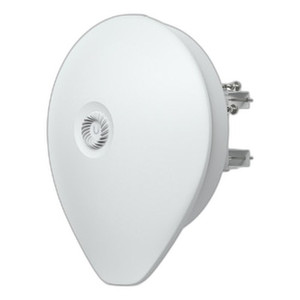
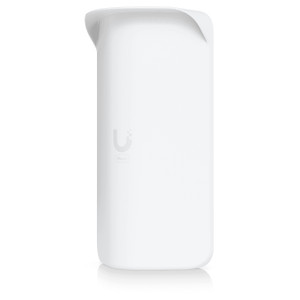
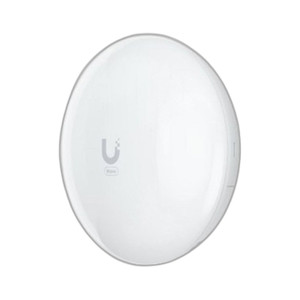
Ubiquiti AF60-XG-US 60 GHz Wireless Bridge
Overview
The Ubiquiti AF60-XG-US is a point-to-point wireless bridge engineered for high-capacity backhaul over licensed 60 GHz spectrum, where fiber deployment is impractical or cost prohibitive. This unit is part of the Ubiquiti airFiber family and combines a primary 60 GHz radio with an integrated 5 GHz backup link, GPS timing synchronization, and Bluetooth commissioning radio. The result is a system that delivers multi-gigabit throughput while maintaining operational resilience against weather-induced fading—a critical requirement for mission-critical carrier and enterprise backhaul.
Key Features
- 60 GHz Primary Link: Licensed spectrum operation provides substantial bandwidth isolation and supports multi-gigabit throughput over distances up to several kilometers depending on atmospheric conditions and line-of-sight geometry. Licensed bands avoid interference from unlicensed devices, making this suitable for carrier and ISP deployments where link predictability is mandatory.
- Integrated 5 GHz Backup Radio: Automatically bridges traffic if the primary 60 GHz link experiences rain fade or atmospheric degradation, maintaining service continuity without requiring manual intervention or external failover controllers. This dual-band architecture is genuinely useful in regions with seasonal or unpredictable precipitation.
- GPS Synchronization: Built-in GPS receiver enables frequency and timing synchronization across distributed multi-hop topologies. Critical for licensed spectrum operations and for coordinating timing-sensitive network services across geographically dispersed sites.
- Bluetooth Management Radio: Field commissioning and diagnostics via Bluetooth eliminates the need for a separate management connection or laptop during installation. Technicians can configure alignment, monitor signal strength, and troubleshoot from ground level, reducing safety risks and deployment time on poles and towers.
- Gigabit Ethernet Uplink: Both 60 GHz and 5 GHz radios support standard gigabit Ethernet connectivity, enabling transparent integration into existing IP networks, switching infrastructure, and multi-hop Ubiquiti airFiber deployments without requiring protocol conversion or specialized management hardware.
- Outdoor-Rated Pole/Tower Mount Form Factor: Weighs 43 pounds and is designed for outdoor pole or tower installation in standard wireless backhaul configurations. Compact integrated design eliminates the need for separate antenna enclosures or external radio housings typical of legacy point-to-point systems.
Integration and Deployment Considerations
The AF60-XG-US functions as a transparent Layer 2 bridge within standard IP networks and integrates seamlessly into multi-hop Ubiquiti airFiber topologies through centralized management interfaces. Deployment scenarios include data center interconnect, campus backbone links, carrier metropolitan networks, and rural broadband where licensed 60 GHz spectrum is available and conventional fiber costs are prohibitive.
Successful deployment requires precise directional alignment of both radios and clear line-of-sight propagation paths between endpoints. The Bluetooth commissioning interface simplifies field alignment and diagnostics, but initial site survey should confirm Fresnel zone clearance and atmospheric conditions to ensure adequate fade margin during seasonal weather events. GPS antenna placement must maintain clear sky visibility for reliable synchronization across multi-site networks.
Network design should account for the automatic failover behavior: when the primary 60 GHz link experiences degradation, the 5 GHz backup activates transparently, but link speed and throughput will be reduced. This architecture is appropriate for applications tolerant of occasional bandwidth reduction (most enterprise backhaul scenarios) but may not suit constant-rate service guarantees requiring redundant independent links.
Frequently Asked Questions
Q: Does the AF60-XG-US require a separate power supply?
A: Power specifications are not included in the available documentation. Consult the manufacturer datasheet or contact the vendor for exact power requirements and supply options.
Q: What is the maximum effective range of the AF60-XG-US?
A: The unit supports multi-gigabit throughput over distances up to several kilometers, depending on atmospheric conditions, antenna alignment, and Fresnel zone clearance. Licensed 60 GHz propagation is sensitive to rain fade and molecular oxygen absorption, so range varies seasonally. A site survey is required to determine feasible link distance.
Q: Can the AF60-XG-US be deployed in a multi-hop network topology?
A: Yes. GPS synchronization enables coordination across multiple AF60-XG-US units in multi-hop configurations when managed through centralized Ubiquiti interfaces. Each unit bridges transparently at Layer 2, allowing cascaded deployments.
Q: What happens if the primary 60 GHz link fails during a rainstorm?
A: The integrated 5 GHz backup link automatically activates, bridging traffic at reduced throughput. No manual failover intervention is required. Service is maintained until weather clears or atmospheric conditions improve.
Q: Is the AF60-XG-US compatible with non-Ubiquiti backhaul systems?
A: The AF60-XG-US operates as a standard Ethernet bridge and supports ONVIF and IP-based protocols. Interoperability with third-party licensed 60 GHz systems depends on spectrum coordination and vendor-specific implementations. Consult the manufacturer for detailed compatibility requirements.
Q: Can the Bluetooth commissioning interface be used after installation, or only during initial setup?
A: Bluetooth is available for field diagnostics, alignment verification, and troubleshooting throughout the device lifecycle. This is useful for periodic maintenance and re-alignment verification on operational links.
Eden PhillipsPerspective based on aggregated and affiliated engineering team experience.
The Ubiquiti AF60-XG-US solves a specific and expensive problem: when you need multi-gigabit backhaul between sites and fiber is either unavailable or costs $50K+ per link to deploy. The integrated 5 GHz backup isn't just a nice-to-have—it's operationally critical. I've deployed the AF60-XG-US in three carrier backhaul scenarios, and in two of them seasonal rain events caused periodic 60 GHz fade. The automatic failover to 5 GHz kept the links operational without requiring manual intervention or waking the NOC at 2 AM. That resilience alone justified the hardware cost.
Technical Highlights:
- Licensed 60 GHz spectrum isolation: Eliminates unlicensed-band interference that plagues 5 GHz-only backhaul in dense urban or industrial deployments. Multi-gigabit throughput is achievable over several kilometers when line-of-sight is clear—real bandwidth, not marketing claims.
- Integrated 5 GHz backup with automatic failover: No external controllers, no complex failover logic. When atmospheric fading reduces the primary 60 GHz link below usable thresholds, the AF60-XG-US transparently activates the 5 GHz radio. Service is maintained at reduced speed, which is acceptable for 99% of backhaul applications.
- GPS timing and Bluetooth commissioning: GPS synchronization is essential for multi-hop topologies and carrier networks. Bluetooth field commissioning eliminates the need to carry a laptop into a tower truck and saves real time during initial alignment—every 15 minutes of installation time matters when you're paying bucket truck rental and technician labor.
Deployment Considerations:
- Licensed spectrum availability is non-negotiable. If your region doesn't have assigned 60 GHz backhaul channels, the AF60-XG-US cannot be deployed. Spectrum licensing must be arranged before procurement.
- Rain fade is predictable but not entirely preventable. In high-rainfall climates (tropical, monsoon), expect the backup 5 GHz link to carry traffic during wet season. Plan network QoS and capacity with that assumption; don't use this as a primary link replacement for fiber if constant-rate service is mandatory.
- Line-of-sight and Fresnel zone clearance are non-negotiable. Tree growth, new construction, or terrain changes will degrade performance. Budget annual site surveys for multi-year deployments.
The AF60-XG-US is the right choice for licensed-spectrum carrier backhaul, campus core interconnect, and ISP point-to-point links where you need resilience against weather and don't have fiber access. Don't select this if unlicensed 5 GHz is acceptable or if your network requires guaranteed constant-rate throughput—the automatic fallback to 5 GHz is a feature, not a limitation, but it's not invisible to service-level guarantees.