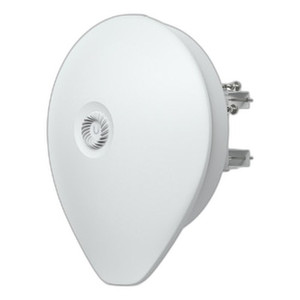
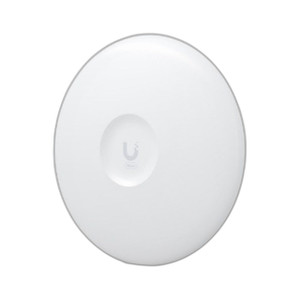
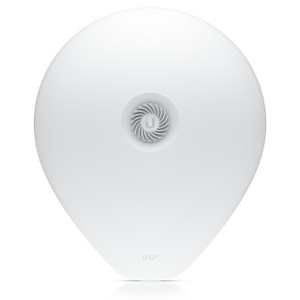
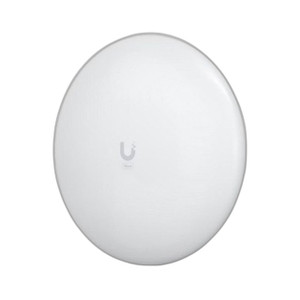
Ubiquiti AF60-LR 60 GHz Point-to-Point Wireless Bridge
Overview
The Ubiquiti AF60-LR is a long-range 60 GHz point-to-point (PtP) radio system engineered for wireless backhaul and site-to-site connectivity over extended distances without fiber infrastructure costs. The AF60-LR (often searched as AF60 LR) establishes true-duplex Gigabit links with a maximum throughput rate of 1.9 Gbps and sustained link ranges exceeding 12 kilometers. This architecture makes the system particularly valuable for security integrators bridging multiple sites, ISPs extending network reach, and IT architects needing high-capacity wireless links where traditional fiber deployment is cost-prohibitive or logistically impractical.
Key Features
- 1.9 Gbps Maximum Throughput: Delivers Gigabit-class performance over long-distance wireless links, enabling bandwidth-intensive applications such as real-time video surveillance integration across distributed camera networks, live multi-stream IP video feeds, and simultaneous data backhaul without saturation.
- 12+ Kilometer Link Range: The high-gain dish antenna achieves extended point-to-point coverage, reducing or eliminating the need for intermediate repeaters, additional towers, or expensive fiber trenching—critical for rural deployments and sites separated by obstacles.
- Wave Technology True-Duplex Architecture: Simultaneous bidirectional communication minimizes latency and eliminates half-duplex delays, ensuring responsive network behavior for real-time applications like PTZ camera control and live video streaming.
- Quad-Core ARM Cortex A7 Processor with 256 MB DDR3 Memory: Onboard processing power ensures stable link management, consistent throughput under load, and integration with network management platforms without requiring a separate controller.
- Passive PoE Powered (48VDC, 0.65A): Operates via standard 4-pair or 2-pair passive PoE, drawing only 18W maximum—low enough to run from battery backup during power loss and straightforward to integrate into existing 48V power plants. A Gigabit PoE adapter (48VDC) is included, eliminating the need to source a separate injector.
- Dedicated Bluetooth Management Radio: Enables wireless commissioning and real-time link alignment directly from a mobile device without temporary Ethernet runs or management infrastructure, accelerating tower installation timelines.
- UISP Integration & Link Planning: Seamless integration with Ubiquiti's UISP web and mobile applications centralizes configuration, real-time monitoring, and predictive link planning across multi-site deployments—reducing manual coordination and improving visibility into link health.
- Built-in GPS Antenna: Integrated GPS enables precise geolocation tracking, timing synchronization for critical applications, and location-aware link planning within UISP, simplifying alignment and site documentation.
- Industrial Enclosure Design: Aluminum body with UV-stabilized polycarbonate and galvanized steel hardware withstands 420 N wind load at 200 km/h (125 mph), ensuring stability in extreme weather and coastal/industrial environments without additional bracing.
- Extended Operating Range (-40°C to 60°C / -40°F to 140°F): Reliable operation across temperature extremes and 5–95% noncondensing humidity covers outdoor deployments in cold climates, hot arid regions, and humid tropical environments without thermal management complexity.
- ±24 kV ESD/EMP Protection: Robust electromagnetic shielding protects against transient surges common in outdoor tower environments, reducing the risk of catastrophic failure from lightning-induced transients.
- FCC, IC, and CE Certification: Global regulatory compliance enables deployment across North America and international markets without additional certification delays or regional variants.
Physical Specifications & Installation
The AF60-LR measures Ø413 × 360 mm (Ø16.3 × 14.2 inches) and weighs 1.5 kg (3.3 lbs) without mount, scaling to 2.7 kg (6 lbs) with the included galvanized steel mount. Pole compatibility spans Ø25.4–76.2 mm (Ø1–3 inches), accommodating standard tower, mast, and wall-mount installations across existing infrastructure. A precision alignment kit is included for rapid aiming and tuning, reducing commissioning time. Maximum power consumption is 18W, making the system energy-efficient for remote or battery-backed installations where power budgets are constrained.
Network & Management Interface
The AF60-LR connects via a single Gigabit Ethernet RJ45 port, supporting both 4-pair and 2-pair passive PoE injection for flexible cabling runs. LED indicators provide real-time operational feedback: power status (bootup/not connected/UISP connected), Ethernet activity, GPS signal acquisition (minimum 4 satellites), and active 60 GHz link status. The onboard Bluetooth radio enables wireless commissioning and link monitoring, eliminating the need for temporary Ethernet connections during tower installations and simplifying field diagnostics.
Deployment Considerations
The AF60-LR integrates into existing Ubiquiti wireless infrastructure and third-party networks via standard Ethernet, functioning as a transparent bridge for any downstream device. Line-of-sight alignment is critical at 60 GHz; obstruction by trees, rain fade, or terrain will degrade throughput significantly below the 1.9 Gbps maximum. Plan link routes using UISP's Fresnel zone calculator to account for potential obstructions. The system is well-suited for campus interconnects, multi-site surveillance backhaul, ISP last-mile delivery, and disaster recovery scenarios where rapid wireless deployment beats fiber installation timelines. For very long-distance links (10+ km), assess local weather patterns, atmospheric conditions, and Fresnel clearance before committing infrastructure investment.
What's in the Box
- 1× Ubiquiti AF60-LR 60 GHz Radio Unit
- 1× Gigabit PoE Adapter (48VDC)
- 1× Galvanized Steel Mounting Bracket
- 1× Precision Alignment Kit
- Mounting Hardware (bolts, washers)
- Quick Start Guide
Frequently Asked Questions
Q: What is the maximum sustained throughput on the AF60-LR, and will it handle multiple video streams simultaneously?
A: The AF60-LR delivers a maximum 1.9 Gbps throughput, which is sufficient for simultaneous multi-stream IP video (multiple 4K or dozens of 1080p feeds depending on bitrate) plus general data traffic. Real-world throughput depends on link distance, atmospheric conditions, and antenna alignment—shorter links tend to sustain higher rates. UISP monitoring provides live bandwidth utilization visibility.
Q: Does the AF60-LR require line-of-sight between units, and what happens in bad weather?
A: Yes, line-of-sight is mandatory for 60 GHz operation; even minor obstructions (trees, buildings) degrade throughput significantly. Heavy rain and dense fog can cause temporary fade. Use UISP's link planning tools to verify Fresnel clearance and assess local weather risk before deployment. For mission-critical links, pair the AF60-LR with a fallback link (4G, secondary microwave, or fiber).
Q: Can the AF60-LR be powered by standard 802.3at PoE+ equipment?
A: No. The AF60-LR requires passive PoE at 48VDC and draws up to 18W. A standard 802.3at PoE+ injector (which delivers active PoE protocol) will not power the unit. Use the included 48VDC Gigabit PoE adapter or source a compatible 48V passive PoE supply that supports the required current capacity.
Q: How does the Bluetooth management radio function, and do I need UISP to deploy the AF60-LR?
A: The onboard Bluetooth radio allows wireless link alignment, basic configuration, and status monitoring from a mobile device without physical Ethernet access. UISP integration is optional but strongly recommended for centralized multi-site management, link planning, and long-term monitoring. You can commission the AF60-LR standalone using Bluetooth, but UISP unlocks geolocation tracking, predictive analytics, and coordinated monitoring across deployments.
Q: What certifications and compliance does the AF60-LR carry?
A: The AF60-LR is certified by the FCC (USA), IC (Canada), and CE (European Union), enabling deployment across North America and international markets. Consult local spectrum authorities to confirm 60 GHz band licensing requirements in your region.
Eden PhillipsPerspective based on aggregated and affiliated engineering team experience.
I've deployed the Ubiquiti AF60-LR in several multi-site video backhaul scenarios, and it's a genuinely useful tool for avoiding fiber costs when line-of-sight exists. The 1.9 Gbps throughput at 12+ kilometer range is competitive, and the passive 48VDC PoE design fits neatly into existing tower power infrastructure. The AF60-LR differentiates itself from lower-cost microwave solutions by eliminating the need for specialized RF engineering or licensed spectrum coordination—it operates in unlicensed 60 GHz bands in most regions, and setup is tractable for field technicians familiar with basic Ethernet provisioning.
Technical Highlights:
- 1.9 Gbps True-Duplex Throughput: Wave Technology delivers simultaneous bidirectional bandwidth without half-duplex arbitration delays. On a 10 km link with good Fresnel clearance and minimal rain fade, you'll sustain 1.5–1.8 Gbps—more than adequate for multi-stream 4K surveillance backhaul or campus data replication. Shorter links (under 5 km) typically hold rated speeds.
- Passive PoE 48VDC @ 0.65A (18W max): Low power consumption is a genuine advantage in remote deployments. The included PoE adapter simplifies wiring; no separate 12V supply required. Battery-backed 48V plants on towers will sustain the link during mains outages, a critical redundancy for security applications.
- Integrated GPS & UISP Link Planning: The onboard GPS feeds timing and geolocation to UISP's Fresnel zone calculator, allowing you to model obstructions before commissioning. This cuts trial-and-error alignment time significantly—I've seen it reduce field adjustments from hours to minutes on complex multi-building links.
Deployment Considerations:
- Rain Fade Risk at 60 GHz: The millimeter-wave band is susceptible to heavy rain attenuation. In tropical or monsoon climates, expect 10–20% seasonal throughput variance. Plan for this by oversizing your downstream link capacity or deploying a secondary fallback path (bonded 4G, secondary microwave). UISP's monitoring will show you when fade occurs in real time.
- Mandatory Line-of-Sight & Fresnel Clearance: Even small obstructions (dense vegetation, partial building blockage) degrade performance below rated specs. Verify Fresnel zone clearance (typically a football-shaped zone around the direct path) before committing. Tall trees growing between commissioning and operational phases can kill a link without warning—budget for periodic tree trimming or plan link rerouting contingency.
- Passive PoE Infrastructure Required: Standard active PoE+ (802.3at) equipment will not work. Confirm your tower PoE plant supplies 48VDC passive PoE, or budget for a separate 48V supply. This is a common gotcha on retrofit deployments.
The AF60-LR shines in rural campus interconnects, multi-building surveillance backhaul where fiber is cost-prohibitive, and ISP last-mile scenarios where licensed spectrum is unavailable or too expensive. For mission-critical links over 8+ km, I always pair it with a bonded 4G fallback or secondary RF path to mitigate rain fade risk. Solid performer for its price point and power profile.