Ubiquiti WAVE-NANO 60 GHz Point-to-Point Wireless Bridge
Overview
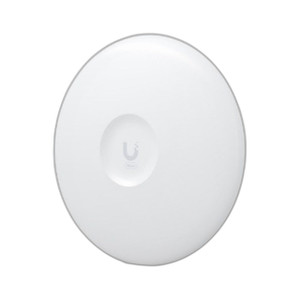
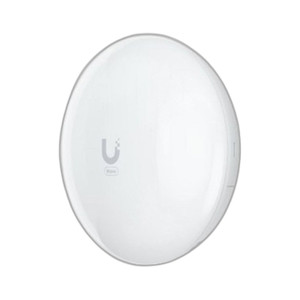
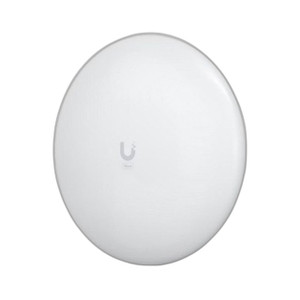
The Ubiquiti WAVE-NANO is a compact 60 GHz point-to-point wireless bridge engineered to eliminate fiber dependency for campus and backhaul links. Operating at 802.11ax Wi-Fi 6 standards, this unit delivers 2 Gbps throughput across distances exceeding 5 km — meaning you can bridge isolated buildings or connect remote surveillance arrays to your NOC without running expensive conduit or negotiating right-of-way for fiber trenches. The cylindrical form factor measures 256.5 mm diameter by 113.5 mm depth and weighs only 932 g, making pole mounting straightforward on structures from 25 to 63.5 mm diameter. This is a true Layer 2 transparent bridge; it forwards Ethernet frames without routing intervention, so it integrates into existing network designs without VLAN or subnet reconfiguration.
Key Features
- 2 Gbps Throughput Over 5+ km: Eliminates the cost and lead time of fiber deployment for mid-range hops. A single WAVE-NANO pair replaces weeks of excavation, conduit pull, and fiber termination labor, especially valuable in sprawling warehouse or multi-building industrial sites.
- 60 GHz Band with Adaptive Modulation: Supports BPSK (1/2) through 1024QAM (5/6), automatically adjusting data rate based on atmospheric conditions. Rain and humidity will degrade range slightly, but the modulation adapts dynamically — you don't lose the link entirely.
- 19 dBi Antenna Gain & 14° Azimuth Beamwidth: Narrow beam focus concentrates RF energy and significantly reduces co-channel interference when multiple 60 GHz systems operate in the same urban or campus environment. This tight directivity also improves link security by making eavesdropping from off-axis angles much harder.
- Dual-Core ARM Cortex-A53 with 512 MB RAM: Processes bridging, GPS synchronization, and adaptive link management without bottleneck. For standard bridging workloads, CPU is never the constraint.
- Single GbE Port with Passive PoE (48V DC): Both data and power traverse one CAT6 or CAT6A cable run to the antenna location. Peak power draw is 20W under full throughput — well within passive PoE 4-pair budgets. A 0.65A adapter is included; you can inject power via a standard gigabit switch with PoE capability or a dedicated passive injector. No separate power supply needed at the antenna.
- IPX6 Rating with UV-Stabilized Enclosure: Direct rain and spray won't compromise the unit, and UV-resistant polycarbonate withstands outdoor UV exposure without degradation. Aluminum alloy construction handles wind loading of 127 N at 200 km/h (125 mph), so it won't twist or fail in storms.
- Operating Temperature -40°C to 60°C: Supports cold-climate sites (freezing warehouses, rooftop deployments) and hot industrial environments without derating performance. Thermal management is passive (no fans), so no maintenance burden in dusty facilities.
- Integrated GPS for Timing Synchronization: Receives satellite signals to synchronize clocks across distributed links. Valuable for time-stamped security applications or distributed video analytics where frame timestamps must align across multiple camera feeds in different buildings.
- WPA2-PSK (AES) Encryption: Secures all bridged traffic between paired endpoints using industry-standard AES-128 encryption. Simple pre-shared key model — no PKI overhead for a point-to-point link.
- NDAA Compliance, FCC/IC/CE Certified: Meets U.S. Section 889 compliance for federal and defense contractor deployments. Regulatory approvals across North American and European markets eliminate regional deployment surprises.
- Factory Reset Button: Quick recovery if configuration requires rollback. No special tools needed.
Integration & Compatibility
Deploy two WAVE-NANO units in point-to-point configuration to establish a virtual Ethernet cable between distant subnets. Pair the bridge with PoE-enabled gigabit switches to simplify power distribution — no separate supply lines running to the pole. The transparent bridge model means existing NVRs and security infrastructure see no difference; you're simply extending the cable run. GPS synchronization is optional for basic bridging; enable it only if your deployment requires distributed timestamping. Allow stabilization time after mounting — permit GPS acquisition and phase-lock before measuring link performance. Verify frequency band availability in your jurisdiction before deployment; the WAVE-NANO operates within approved 60 GHz spectrum allocations (check local regulatory authority).
When to Choose a Different Model
If your link distance exceeds 5 km or you need failover redundancy within a single unit, explore Ubiquiti's longer-range 60 GHz bridge variants or hybrid configurations with secondary 24 GHz mesh links. If your deployment requires routing (inter-subnet traffic engineering), you'll need a Layer 3 device upstream, not a bridge. If line-of-sight is obstructed by dense forest or buildings, consider sub-6 GHz point-to-point alternatives or traditional fiber.
Deployment Scenarios
The WAVE-NANO excels in campus interconnects where fiber is impractical: bridging isolated warehouses, connecting remote security camera arrays to central NOCs, establishing failover links alongside primary circuits, and linking distributed outdoor access-control readers without running conduit underground. The 5+ km range and narrow beamwidth reduce topology complexity compared to multi-hop mesh. Dense urban environments with multiple 60 GHz operators benefit most from the tight beamwidth — interference from neighboring systems is minimal.
Frequently Asked Questions
Q: Does the WAVE-NANO require line-of-sight?
A: Yes. Install both units with unobstructed sightlines to each other. Foliage, rain, and atmospheric conditions will degrade throughput, but the link adapts modulation dynamically rather than dropping entirely.
Q: Can I use the WAVE-NANO indoors?
A: It is rated for outdoor deployment (IPX6, UV-stabilized housing). Indoor use is technically possible but wasteful — the outdoor ruggedness and PoE-over-single-cable design are overkill for controlled environments.
Q: What's the maximum throughput I should expect?
A: Up to 2 Gbps under ideal line-of-sight and clear-sky conditions. Rain, fog, and distance reduce throughput as modulation adapts; plan for 1.2–1.5 Gbps in typical outdoor conditions if you're bridging multiple camera streams.
Q: Do both WAVE-NANO units require PoE injectors?
A: Yes, both units need 48V DC passive PoE power. You can inject at both ends via gigabit switches with PoE or standalone injectors. The included 0.65A adapter handles one unit; provide identical injection for the remote end.
Q: Is GPS required for basic bridging?
A: No. GPS synchronization is optional and only needed if you require precise clock alignment across distributed camera or sensor feeds. Disable GPS to reduce power draw slightly if timing is irrelevant.
Q: What's the warranty on the WAVE-NANO?
A: Refer to the manufacturer's warranty documentation or contact your vendor for coverage terms and duration.
Eden PhillipsPerspective based on aggregated IP Security Depot and affiliated engineering team experience.
I've fielded backhaul deployments where fiber installation ran $50–100k per kilometer of trenching and right-of-way negotiation. The WAVE-NANO (often searched as WAVE NANO) eliminates that calculus for mid-range campus hops. Two units, 5+ km of transparent bridging, 2 Gbps throughput, and passive PoE over a single cable run — that's a brutal efficiency advantage over fiber for temporary failover or isolated-building connectivity. The 14° beamwidth is the real differentiator here; it forces focus and kills interference in dense RF environments.
Technical Highlights:
- 2 Gbps Point-to-Point, 5+ km Range: Meaningful for bridging multiple 4K video feeds or high-throughput camera arrays without intermediate repeaters. At typical outdoor modulation efficiency, expect 1.2–1.5 Gbps real-world throughput after atmospheric attenuation.
- 19 dBi Antenna Gain, 14° Azimuth Beamwidth: Tight focus means co-channel interference from neighboring 60 GHz systems drops dramatically. In multi-operator urban deployments, this narrow pattern is why the WAVE-NANO works where omnidirectional or wider-beam alternatives fail.
- 20W Max Power, Passive PoE (48V): Single-cable deployment from a PoE switch eliminates separate conduit runs and power supplies. The 0.65A adapter is included; budget for matching injection at the remote end.
- -40°C to 60°C Operating Range, IPX6 + Wind Rating 127N @ 200 km/h: Survives rooftop and tower installations in freezing climates and coastal high-wind zones without thermal derating or moisture ingress. No fans means no maintenance in dusty industrial sites.
- NDAA Compliance, GPS Sync, WPA2-AES: Meets federal procurement rules; integrates timing for distributed video analytics if needed; AES encryption on the bridge itself (though underlying traffic remains unencrypted — use TLS/IPsec if you need end-to-end payload security).
Deployment Considerations:
- Line-of-Sight is Mandatory: 60 GHz absorbs heavily in rain and foliage. If your path has obstructions, test link margin before committing to production. Modulation adapts, but throughput will suffer.
- Both Units Must Be Powered: Requires PoE injection at both ends. The included adapter covers one unit; plan identical injection infrastructure for the remote unit to avoid asymmetric power states.
- GPS Acquisition Takes Time: Allow 5–10 minutes stabilization after mounting before measuring link performance. Disable GPS if timing synchronization is not required — slight power savings and faster boot.
- Frequency Coordination: Verify 60 GHz availability in your regulatory jurisdiction. Some regions restrict or prohibit unlicensed 60 GHz operation. Check before deployment.
Deploy the WAVE-NANO for campus failover links, remote surveillance backhaul, or bridging isolated buildings where fiber negotiation has stalled. In warehouse automation, it's a pragmatic solution for connecting distributed RF readers or motion sensors across large grounds without underground trenching. Pair it with a managed PoE switch and you've solved the backhaul problem in a afternoon.