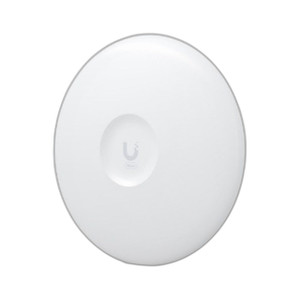
Ubiquiti AF-5XHD-US Point-to-Point Wireless Bridge
Overview
The Ubiquiti AF-5XHD-US is a point-to-point wireless bridge designed to deliver licensed-spectrum performance for enterprise backhaul and long-distance connectivity between fixed sites. Operating in the 5 GHz frequency band, the AF-5XHD-US eliminates the need for costly fiber deployment, right-of-way negotiations, or recurring carrier costs when connecting branch offices, campus buildings, or remote installations. The radome-enclosed RF design protects sensitive wireless components from environmental degradation—dust, salt spray, UV exposure—extending equipment life in harsh climates without sacrificing directional gain or interference rejection. Unlike powered alternatives, the AF-5XHD-US uses passive PoE (Power over Ethernet) to simplify installation at remote sites where AC or DC power infrastructure may not exist, reducing field deployment time and operational complexity.
Key Features
- Passive PoE Power Delivery: Draws power from a standard Ethernet PoE injector or PoE-equipped switch, eliminating the need for separate power supplies at the remote end. This cuts installation complexity and total cost of ownership, especially valuable when deploying to locations with limited electrical infrastructure.
- 5 GHz Licensed-Band Operation: Licensed-spectrum performance reduces susceptibility to interference from Wi-Fi, cordless phones, or unlicensed devices sharing the same airspace. More predictable link stability and throughput for mission-critical backhaul.
- Radome Enclosure: Weather-sealed RF housing protects the antenna and transceiver from rain, dust, salt fog, and UV radiation. Deployments in coastal, industrial, or outdoor environments maintain performance consistency without degradation over time.
- Directional Antenna Gain: Point-to-point topology with focused RF pattern maximizes link distance and minimizes interference from adjacent networks. Ideal for fixed campus-to-campus or site-to-site links where alignment is stable.
- Web GUI and SSH CLI Management: Dual management interfaces allow field technicians to configure and diagnose via browser-based dashboard while supporting centralized automation and scriptable provisioning for large deployments. Easy integration with NOC monitoring and orchestration systems.
- Compact 3.9 lb Form Factor: Lightweight design facilitates pole mounting, wall mounting, or mast installation without requiring heavy structural reinforcement. Standard mounting templates and hardware simplify field commissioning.
Deployment Scenarios & Use Cases
The AF-5XHD-US excels in campus interconnects where fiber trenching is prohibitively expensive or infeasible. Use it to link office buildings, data centers, or warehouse facilities across properties separated by open ground, parking areas, or industrial parks. Remote site backhaul—connecting branch offices, field depots, or surveillance towers to headquarters—becomes straightforward without reliance on expensive carrier MPLS or fiber-to-the-premises contracts. In network extension scenarios, the AF-5XHD-US bridges gaps where microwave links or leased circuits would strain operational budgets. Manufacturing facilities, logistics hubs, and enterprise campuses benefit from the cost stability and performance predictability of licensed-band wireless links.
Integration & Compatibility
Standard Ethernet connectivity (RJ-45) enables integration into any IP network infrastructure. The AF-5XHD-US works alongside wireless bridges and network equipment from other vendors, though organizations standardized on Ubiquiti's airFiber or UniFi ecosystem will recognize consistent web-based configuration paradigms and management workflows. Passive PoE simplifies power budgeting on existing PoE infrastructure; pair with a 48V PoE injector or managed PoE switch to deliver power and data on a single cable run. Field diagnostics, link monitoring, and firmware updates occur through the web interface or automated SSH scripts, supporting centralized management across multiple sites.
Frequently Asked Questions
Q: Does the AF-5XHD-US require a license to operate?
A: Yes. The 5 GHz licensed-band operation means your region's regulatory authority (FCC in the US, OFCOM in the UK, etc.) may require a frequency coordination process or license. Check local spectrum regulations and coordinate with your RF engineer before deployment.
Q: What PoE injector or switch do I need?
A: The AF-5XHD-US uses passive PoE (not 802.3af or 802.3at). You'll need a 48V passive PoE injector or a managed switch with passive PoE output. Standard enterprise PoE switches support this; confirm your switch's output voltage and wattage specification before purchase.
Q: Can the AF-5XHD-US be used outdoors in rain and snow?
A: Yes. The radome enclosure provides weatherproof protection rated for outdoor installation. It handles rain, snow, and dust. However, extreme submersion (e.g., splash zones at sea) may require additional environmental protection—consult the datasheet for full environmental specifications.
Q: What is the maximum line-of-sight distance for a link?
A: Point-to-point distance depends on antenna gain, transmit power, receiver sensitivity, and environmental factors. Refer to the product datasheet or contact Ubiquiti for link budget calculations specific to your frequency coordination and path profile.
Q: Does the AF-5XHD-US support SNMP or other standard management protocols?
A: The product supports web-based GUI and SSH CLI management. For centralized monitoring integration (SNMP, syslog, NETCONF), verify compatibility with your NOC platform by testing with a pre-sales engineering sample or requesting compatibility confirmation from Ubiquiti support.
Q: What is the weight and mounting footprint?
A: The AF-5XHD-US weighs 3.9 lbs, designed for standard pole or wall mounting hardware. Exact dimensions and mounting hole patterns are detailed in the product datasheet.
Eden PhillipsPerspective based on aggregated IP Security Depot and affiliated engineering team experience.
The AF-5XHD-US addresses a real pain point in enterprise wireless backhaul: the gap between cost and reliability. Fiber is expensive to install and maintain; unlicensed 5 GHz Wi-Fi bridges are cheap but noisy. The AF-5XHD-US sits in the sweet spot—licensed-band stability with passive PoE that eliminates power infrastructure overhead. At 3.9 lbs and designed for standard pole mounting, field deployment is straightforward. The radome enclosure protects against coastal salt spray and industrial dust, so you're not nursing equipment failures in remote locations. Both web GUI and SSH CLI mean you can commission it through a browser on your phone or automate 50 sites from your NOC with scripted provisioning.
Technical Highlights:
- Licensed 5 GHz Band: Eliminates interference from consumer Wi-Fi and cordless phones sharing 2.4 GHz or unlicensed 5 GHz airspace. More predictable link quality and throughput for mission-critical backhaul compared to unlicensed alternatives.
- Passive PoE Architecture: 48V passive PoE means one cable run for power and data—no separate power supplies or UPS complexity at the remote end. Reduces BOM cost and field wiring time, especially valuable for unattended remote sites.
- Radome-Enclosed RF Design: Weather-sealed antenna and transceiver housing extends equipment lifespan in harsh outdoor environments. UV-resistant and corrosion-resistant, reducing premature failures in coastal or industrial deployments.
Deployment Considerations:
- Licensed-band operation requires frequency coordination in your region—coordinate with your RF engineer and regulatory authority (FCC, OFCOM, etc.) before deployment. Licensing timelines can add 2–6 weeks to project schedules.
- Point-to-point topology demands careful site survey and line-of-sight alignment. Obstructions (buildings, trees, terrain) degrade link performance significantly. Factor in RF engineering and antenna mounting costs, not just the hardware cost.
The AF-5XHD-US is the right choice for organizations connecting fixed sites (campus buildings, branch offices, remote data centers) where unlicensed wireless is too noisy and fiber is cost-prohibitive. If you're deploying dozens of backhaul links across multiple properties, the PoE simplicity and licensed-band stability deliver lower total cost of ownership than powered alternatives or expensive carrier solutions.