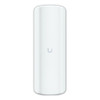
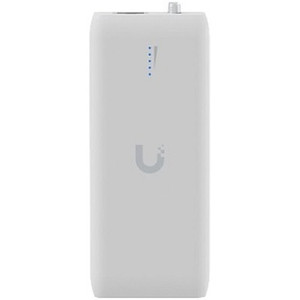
Ubiquiti UDB-PRO-SECTOR 5 GHz Point-to-Multipoint Wireless Bridge
Overview
The UDB-PRO-SECTOR is a 5 GHz 802.11a/n/ac point-to-multipoint wireless bridge engineered to extend network coverage across distributed sites without running cable. It connects 50+ Device Bridge Pro clients at ranges up to 5+ km, making it a cost-effective alternative to fiber or leased lines for remote security systems, warehouse facilities, and multi-building campuses. The pole-mountable outdoor form factor lets you deploy it where the geography demands — no equipment room required. This is particularly valuable in automation environments where camera clusters or access control hubs need backhaul without infrastructure overhaul.
Key Features
- 50+ Client Capacity: Point-to-multipoint architecture eliminates bottleneck point-to-point links. One sector can serve dozens of remote locations simultaneously, reducing the total number of access points needed across a distributed deployment.
- 5+ km Range (5 GHz 802.11ac): 5 GHz performance at extended distance cuts through dense urban RF environments better than 2.4 GHz and avoids microwave/Wi-Fi congestion in warehouses and industrial sites. Range scales with antenna gain and line-of-sight; plan for 2–3 km in obstructed scenarios.
- Passive Power over Ethernet (PoE): Draws power from standard PoE injectors — no separate power supply, conduit, or electrical work at the pole. Simplifies remote site installation, especially where power is unavailable or expensive to run.
- IPX6 Weatherproofing: Withstands direct rain and spray without protective shrouds. Not submersion-rated (that would require IP67), but adequate for rooftop and pole-mount outdoor environments. Verify housing/radome if exposed to heavy splashing from irrigation or hose-down areas.
- Ubiquiti Ecosystem Integration: Designed to work with Device Bridge Pro endpoints and UISP provisioning workflows. If your security or access control platform is already Ubiquiti-based, this bridge extends coverage without adding management complexity.
- Pole-Mountable Design: Standard mounting hardware simplifies installation on existing poles, towers, or roof brackets — no wall mount, no ceiling cutout. Reduces installation labor in outdoor warehouse and perimeter applications.
Integration & Compatibility
The UDB-PRO-SECTOR integrates with Ubiquiti access point and wireless infrastructure deployments. It is compatible with Device Bridge Pro clients and works within UISP-managed network environments. Suitable for enterprise security integration, telecom backhaul, and distributed access control topologies where multi-client wireless coverage is required. If you operate non-Ubiquiti endpoints, verify Device Bridge Pro compatibility with your specific client hardware before deployment.
When to Choose a Different Model
If you require higher client density (100+ simultaneous endpoints) or need dual-band failover (2.4 GHz fallback), explore other Ubiquiti sector models in the professional wireless line. For point-to-point bridging only (two sites, no multi-client fan-out), a narrower-beam point-to-point bridge may deliver better range and rain fade immunity. For indoor multi-tenant coverage, standard access points provide better client experience than sector bridges.
Frequently Asked Questions
Q: Can I deploy multiple UDB-PRO-SECTOR units in the same area?
A: Yes, but they must be on different channels to avoid co-channel interference. 5 GHz offers multiple non-overlapping channels; plan channel allocation before deployment, especially in dense urban or multi-site configurations.
Q: What is the warranty on the UDB-PRO-SECTOR?
A: Ubiquiti provides a standard 1-year manufacturer warranty. Optional 5-year extended coverage (UI Care) is available, which includes prioritized RMA support, faster replacement, and prepaid return shipping.
Q: Does the UDB-PRO-SECTOR work with non-Ubiquiti clients?
A: The UDB-PRO-SECTOR is optimized for Device Bridge Pro endpoints. Standard 802.11ac clients may associate, but you will lose proprietary features like optimized roaming and performance tuning. Verify compatibility with your endpoint manufacturer before deployment.
Q: What power consumption does the UDB-PRO-SECTOR draw?
A: The device operates on passive PoE (no 802.3af/at classification specified in public documentation). Confirm exact wattage draw with the manufacturer datasheet before sizing your PoE injector or switch port power budget.
Q: Is the UDB-PRO-SECTOR suitable for high-interference environments (warehouses, urban RF)?
A: 5 GHz mitigates consumer Wi-Fi and microwave interference present on 2.4 GHz, making it a good choice for warehouses and industrial sites. However, 5 GHz range degrades faster through metal structures and dense obstructions. Conduct a site survey to confirm line-of-sight or near-line-of-sight paths before purchase.
Q: Can I PoE-power multiple devices from a single injector?
A: No. Each UDB-PRO-SECTOR requires its own PoE power source. Calculate total wattage demand (UDB-PRO-SECTOR + any powered clients on the same circuit) to ensure your injector or PoE switch has sufficient headroom.
Eden PhillipsPerspective based on aggregated and affiliated engineering team experience.
The UDB-PRO-SECTOR fills a specific gap in distributed wireless backhaul: it's a multi-client 5 GHz bridge that doesn't require line-of-sight to every endpoint, and it runs on passive PoE so you're not paying for power infrastructure at ten different pole locations. That matters when you're tying together a 10-building campus or a warehouse complex with multiple camera clusters. The 50+ client capacity means one sector can fan-out to a lot of remotes, which is cheaper than daisy-chaining or running multiple point-to-point links.
Technical Highlights:
- 5 GHz 802.11ac in point-to-multipoint mode: Eliminates the RF congestion problem you'd face on 2.4 GHz in a warehouse. You get multiple non-overlapping channels, so interference from Wi-Fi or microwave equipment is largely off-table. Plan for 2–3 km in obstructed terrain; 5+ km is realistic only with clear line-of-sight and good antenna gain.
- Passive PoE power simplifies remote deployment: No 24VDC power supplies, no separate conduit runs — just PoE injector at the switch. In a multi-site deployment, that's a real labor and cost win. Size your injector carefully; confirm power draw before you order.
- 50+ simultaneous client support: One sector serving dozens of remotes beats the heck out of installing a separate AP per site. Device Bridge Pro endpoints are optimized for this; standard Wi-Fi clients will work but won't get the roaming and performance tuning designed into the Ubiquiti ecosystem.
Deployment Considerations:
- 5 GHz range drops fast in rain and through metal. Conduct a site survey and confirm near-line-of-sight paths before finalizing placement. Obstructed urban deployments may underperform the advertised 5 km range.
- IPX6 is rain-resistant, not submersion-proof. Adequate for poles and rooftops, but pole-mount housings should include drip loops and cable strain relief. If the sector sits in standing water or heavy hose-down areas, consider a wall-mount or sealed radome.
- Channel planning is mandatory when deploying multiple sectors. Coordinate with your RF team or use UISP's site survey tools to avoid co-channel interference. Ignore this and you'll get thermal performance that looks fine on paper but fails in real traffic.
Deploy the UDB-PRO-SECTOR when you have 3+ remote sites needing coverage from a central PoE-powered hub, good-to-fair line-of-sight, and Ubiquiti-compatible endpoints (or a willingness to accept standard Wi-Fi fallback). It's not a point-to-point long-distance bridge — use a narrow-beam directional model for that. It's a campus-scale multi-client connector that happens to run on the same PoE infrastructure as your security cameras.