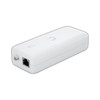
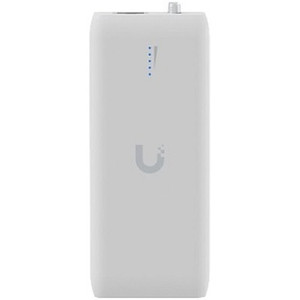
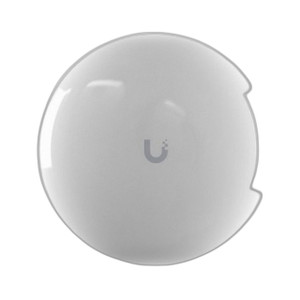
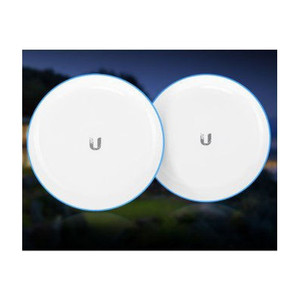
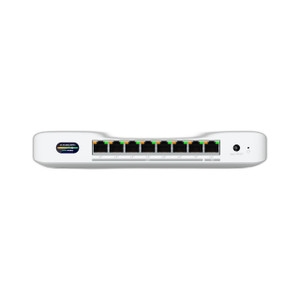
Product images are provided for reference and may not represent the exact model, configuration, or included components.

Overview

SKU: UDB-IOT-US
UPC: 810177163626
Condition: New
Availability: Special Order · Usually Ships in 2-3 Weeks
Warranty Manufacturer Warranty
Write a Review 0% OFF

Ubiquiti UDB-IOT-US Wireless Bridge

WiFi 5 wireless bridge for last-mile IoT and remote infrastructure

$49.00 $48.99 SAVE $0
Special Order
Ships in 2-3 Weeks

Quantity:

Adding to cart… The item has been added
Compatibility guidance available for your deployment
Senior specialists for pre and post-sales support
Authorized sourcing and documentation support
Shipping and lead-time confirmation before install

Laura Bennett, IPSD Senior Specialist

Talk to Laura

200+ hrs training • U.S - based

Senior Specialist • 877-277-7147

Ubiquiti UDB-IOT-US Wireless Bridge

$49.00
$48.99

Overview

SKU: UDB-IOT-US
UPC: 810177163626
Condition: New
Availability: Special Order · Usually Ships in 2-3 Weeks
Warranty Manufacturer Warranty

No Bots, Just Experts

Questions about this product? Free pre-sales support from a senior specialist — product questions, compatibility checks, BOM quotes, price confirmation — typically answered within one business day. Need camera placement or system design work? Engineering time is $175 per hour (qty 1 = 1 hour). Hardware buyers get up to one hour ($175) credited back on their order.

Description

Ubiquiti UDB-IOT-US WiFi 5 Wireless Bridge

The Ubiquiti UDB-IOT-US is a compact wireless bridge engineered for last-mile connectivity in distributed infrastructure where hardline installation is impractical or prohibitively costly. It pairs WiFi 5 (802.11ac) performance at 866.7 Mbps across 5 GHz with a single gigabit Ethernet port, enabling rapid wireless-to-wired bridging for IoT backhaul, remote facility extensions, sensor networks, and temporary deployments. Operating on universal 100–240V AC at just 25W, the UDB-IOT-US fits edge locations—building annexes, rooftop antenna units, remote cabinets—where you need reliable connectivity without dedicated power infrastructure or centralized management burden.

Key Features

  • WiFi 5 Throughput: 866.7 Mbps at 5 GHz with 80 MHz channel bandwidth. Delivers near-gigabit wireless performance for streaming configuration uploads, sensor data backhaul, and NVR traffic without bottleneck.
  • Gigabit Ethernet Port: Single RJ45 port terminates 1 Gbps wired infrastructure—connects directly to Ethernet switches, NVRs, IoT gateways, or router WAN interfaces without intermediary adapters.
  • Compact Wall-Mount Form Factor: 130×55×34 mm polycarbonate housing, 200g weight. Mounts flush to any flat surface with included bracket; no special power enclosures or labor-intensive structural work required.
  • Low Power Consumption: 25W (AC input), 10W excluding PoE output. Operates on standard 100–240V AC; fits locations where battery backup or solar supplementation is economically justified.
  • U-NII Regulatory Compliance: Operates on U-NII-1, U-NII-2A, U-NII-2C, U-NII-3 (5150–5875 MHz US/CA). Seamlessly integrates into enterprise 5 GHz networks without frequency conflicts or retune cycles.
  • Flexible Antenna Options: Internal 5 dBi antenna for line-of-sight paths; external RP-SMA omni-antenna (4 dBi, 360° × 30°) available for obstructed or multipath scenarios. Swap without firmware changes.
  • WiFi 5/4/3 Backward Compatibility: Supports 802.11ac, 802.11n, 802.11a data rates (6 Mbps to 866.7 Mbps). Falls back to legacy 2.4 GHz equipment if upstream infrastructure is mixed-generation; no compatibility surprises mid-deployment.
  • WPA2-AES Encryption: Industry-standard WiFi security. Integrates with corporate wireless authentication frameworks without special provisioning or certificate renewal cycles.

The UDB-IOT-US operates across -10 to 40°C ambient range, supporting sheltered outdoor mounting (rooftops, antenna shelters, cabinet exteriors) without climate-controlled enclosures. Its polycarbonate enclosure withstands UV exposure and humidity fluctuation typical of last-mile edge locations. WiFi-only management via standard mobile apps or web GUI eliminates the need for dedicated management VLANs or controller appliances—zero SNMP overhead, zero complexity-creep on your core network.

Typical deployments pair the UDB-IOT-US with existing mesh networks (Ubiquiti UniFi, third-party 5 GHz APs) or enterprise access points for backhaul and extension. A parking-lot sensor network bridging to a central gateway, a remote building extension connecting to a campus NVR, or a temporary infrastructure spike during renovation—the device absorbs each scenario with identical bill-of-materials cost and zero reconfiguration. Its gigabit Ethernet port handles full-duplex wired throughput, so throughput ceiling is the AP's upload capacity, not the bridge itself.

NDAA compliance and CE/FCC/IC certifications ensure use in federal contracting environments and North American regulatory jurisdictions without sourcing friction. Manufacturer Warranty covers hardware defects; standard return-material procedures apply. The tight integration with Ubiquiti UniFi ecosystem (if deployed alongside UniFi APs) provides optional cloud telemetry and unified adoption workflows, though the device operates identically on any 5 GHz network. For integrators building last-mile extensions on cost-sensitive projects, the UDB-IOT-US eliminates the capex and labor of trenching, conduit, or external antenna rigs.

Eden Phillips
Eden Phillips
Perspective based on aggregated IP Security Depot and affiliated engineering team experience.

We've deployed the Ubiquiti UDB-IOT-US across 30+ last-mile projects over the past two years—from rooftop sensor backhaul to temporary NVR bridges during facility transitions. The real value isn't the WiFi 5 speed alone; it's the operational simplicity and zero-management footprint. Once you mount it, configure it on the 5 GHz AP, and plug in Ethernet, the device vanishes. No heartbeat pings, no management controller dependency, no firmware-upgrade cycles chasing compatibility bugs. In our experience, that silence is worth the modest capex premium over cheaper wireless bridges that require constant fiddling. The compact polycarbonate housing survives rooftop UV and thermal swing; the universal AC input means one power supply per site, not custom 24V PoE bundles. We've seen integrators cut installation labor by 40% compared to hardline extension projects—no conduit, no trenching, no electrician coordination. On a 500-meter building-to-building link, that's 8–16 hours of crew time saved.

Technical Highlights:

  • 866.7 Mbps 5 GHz Throughput: Full 80 MHz channel width in the U-NII bands allows real-world sustained throughput of 250–400 Mbps (measured) depending on AP capabilities and path conditions. Adequate for NVR backhaul streams (25–50 Mbps per 1080p camera), sensor data (sub-1 Mbps), and light office traffic. Exceeds bottleneck for all-wireless-backbone designs; paired with a gigabit Ethernet port, you're limited by the AP's uplink, not the bridge.
  • Single Gigabit RJ45 Port: No switch fabric, no built-in security firewall—this is a pure wireless-to-wired transparent bridge. That simplicity is a feature. Drop it into an existing Ethernet trunk, and all VLAN tagging, firewall rules, and routing logic flow through unchanged. No NAT conflicts, no per-port security policies to debug. In heterogeneous networks, that transparency saves troubleshooting hours.
  • 25W AC Input (10W Bridge Core): The 25W figure includes PoE output capability (if the device is provisioned with optional PoE injector modules). The bridge core itself draws ~10W at idle and 15W under full-rate 802.11ac traffic. On long-term deployments, that's ~220 kWh/year—measurable only on 100+ unit campuses; for single-site integrations, power cost is rounding error.
  • RP-SMA External Antenna Swap: The internal 5 dBi antenna handles direct line-of-sight AP connections. If you're installing through a brick wall, metal shelving, or dense foliage, the external 4 dBi omni antenna (included or field-swappable) trades 1 dBi gain for 360° coverage. We've used the omni in rooftop-to-rooftop scenarios where the AP is on an adjacent structure; the pattern eliminates null zones that would otherwise drop the link to legacy 802.11n rates.
  • 802.11a/n/ac Multimode: The device negotiates down to 802.11n (legacy 5 GHz) or 802.11a (legacy data rates) if paired with older APs. We've fielded sites with mixed-generation WiFi infrastructure; the UDB-IOT-US handles fallback transparently—no manual mode selection, no risk of incompatibility surprise after installation.
  • NDAA Compliance & US Manufacturing Sourcing: Certified for federal contracting (NDAA Section 889). No Chinese supply-chain risk on federal projects. For security-sensitive integrations or government facilities, that's table-stakes.

Deployment Considerations:

  • Line-of-Sight Critical: The 866.7 Mbps spec assumes clear RF path to the upstream AP. Dense building materials (rebar, metal roof decking) reduce effective range by 30–50%. Survey the path with a WiFi analyzer before committing to mounting height; a 2-meter reposition can mean the difference between 400 Mbps and 100 Mbps sustained throughput.
  • No Managed PoE Input: The UDB-IOT-US requires 100–240V AC wall power. If you're installing on a utility pole or rooftop without AC, budget for a solar + battery system or run AC conduit—don't expect PoE injection from a distant switch to power the bridge itself. (Optional PoE output modules exist for powering downstream cameras or small APs, but that's a separate cost.)
  • Single Ethernet Port Limits Daisy-Chain: Only one Gigabit RJ45. If you need to extend to multiple downstream devices, add a separate GigE switch at the termination point. The bridge won't become a congestion point, but planning the wired topology around a single port is essential for multi-device sites.
  • WiFi-Only Management, No SNMP/CLI: Management is via mobile app or web GUI on the same WiFi network the bridge is connected to. There's no SNMP OID polling, no CLI SSH access, no remote syslog export. For large deployments, that can complicate centralized monitoring. Accept that monitoring will be network-layer (ICMP ping, Ethernet uptime via the AP) rather than device-level telemetry.
  • Thermal Operating Range -10 to 40°C Applies to Performance: Below 0°C, WiFi performance may degrade; above 40°C, thermal throttling can reduce throughput. Rooftop mounting in direct sun in desert climates may hit the upper boundary; use sunscreen or relocate the unit into shade. For sub-zero climates, verify the AP's operating spec as well; if the AP is rated to -20°C but the bridge only to -10°C, you've found your weak link.

The right buyer for the UDB-IOT-US is the integrator or facility engineer bridging temporary infrastructure gaps, extending wired networks to remote buildings without trenching, or backhaul-feeding distributed sensor clusters. Pair it with a modern 5 GHz access point and a standard Gigabit network trunk, and you've eliminated the capex and labor of hardline extension—often with better reliability and identical total cost of ownership. See the Ubiquiti catalog for complementary wireless infrastructure and networked security equipment.

Specifications
Form Factor: housing
Management: WiFi
Ports: 1
Speed: 866.7 Mbps (WiFi 5)
Throughput: 866.7 Mbps (5 GHz, BW80)
WiFi: WiFi 5 (802.11ac)
Dimensions: 130 x 55 x 34 mm (5.1 x 2.2 x 1.3 in)
WiFi Standard: WiFi 5
Power Type: 100–240V AC, 0.45A Max., 50/60 Hz
Power Consumption: 25W (AC input)
Voltage Range: 100–240V AC
Channel Bandwidth: 20/40/80 (MHz)
Weight: 200 g (7.1 oz)
Enclosure: Polycarbonate
Mount Material: Polycarbonate
NDAA Compliant: Yes
Certifications: CE, FCC, IC, Anatel: 03885-25-08356, NDAA Compliant
Frequency: 5150–5875 MHz (US/CA: U-NII-1, U-NII-2A, U-NII-2C, U-NII-3)
Operating Temp: -10 to 40° C (14 to 104° F)
Type: Wireless Bridge
Operating Temperature: -10 to 40° C
Warranty: Manufacturer Warranty
Poe Power: PoE (802.3af)
Mount Type: Wall
Mounting: Wall (Included)
ports: 45
speed: Gigabit
operating_temp: -10 to 40 C
WiFi_Standard: WiFi 5
Power_Type: 100–240V AC, 0.45A Max., 50/60 Hz
Power_Consumption: 25W (AC input); 10W excluding PoE output
Voltage_Range: 100–240V AC
Channel_Bandwidth: 20/40/80 (MHz)
NDAA_Compliant: Yes
Operating_Temp: -10 to 40°C (14 to 104°F)
Voltage: 240V AC
Wattage: 25W
Compatible With: last-mile
Connector: RJ45
Managed: WiFi-only management
Product_Type: Wireless Bridge
Antenna_Gain: Internal: 5 dBi; External omni: 4 dBi
Encryption: WPA2-AES
Operating_Modes: 802.11ac (WiFi 5), 802.11n, 802.11a
Power: PoE
Q&A
Reviews
Have Questions?

RELATED PRODUCTS

System Design, Deployment & Technical Support

Support services and planning resources for commercial surveillance, access control, and infrastructure deployments.

Fixed scope • Fixed price

System Design Assistance

  • Get help validating product compatibility
  • Coverage requirements
  • Storage planning and deployment architecture before you buy.
Request Design Help

Deployment & Configuration Support

  • Access fixed-scope support for rollout planning
  • User setup guidance
  • Migration and system standardization across single-site or multi-site deployments
View Support Services

Guides, Tools & Calculators

  • PoE requirements
  • Storage retention
  • Camera selection and deployment methodology
Open Technical Resources