TP-Link TL-SG3428XMP 24-Port Gigabit PoE+ 10GE Managed Switch
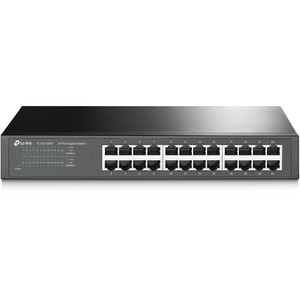
The TP-Link TL-SG3428XMP is a 24-port Gigabit PoE+ managed switch purpose-built for surveillance deployments where you need to power and interconnect dozens of IP cameras, access controllers, and networked sensors from a single appliance. With 740W total PoE budget and support for up to 30W per port across all 24 Gigabit downlinks, it eliminates the operational complexity and capex of managing multiple single-switch deployments. Four 10GE SFP+ uplink ports accept fiber or Direct Attach Copper (DAC) transceivers, breaking the gigabit bottleneck between edge surveillance pods and your core network or secondary recording infrastructure. L2+ managed features—VLAN tagging, IGMP snooping, QoS, and access control lists—let you isolate camera traffic, control multicast flooding, and enforce bandwidth guardrails without external appliances.
Key Features
- 24× Gigabit PoE+ Ports: IEEE 802.3at (PoE+) on all downlink ports, 30W maximum per port. Delivers power and data on standard Cat5e/Cat6 runs; no additional power injectors needed for standard cameras.
- 740W PoE Budget: Enough to power 24 cameras simultaneously at typical 15–20W draw each, with headroom for higher-consumption PTZs or thermal cameras on individual ports. Single power supply, no external DC redundancy required.
- 4× 10GE SFP+ Uplinks: Fiber or DAC trunk capacity. Eliminates gigabit congestion on backbone links; supports failover or load-balanced multi-uplink designs without spanning-tree loops.
- L2+ Managed Switching: VLAN tagging (IEEE 802.1Q), IGMP snooping, QoS (802.1p priority queuing), and ACL enforcement. Isolate camera streams from office traffic and prevent multicast storms on shared backbone links.
- Fanless Thermal Design: Passive cooling; no moving parts. Suitable for indoor cabinet or clean-room installs where acoustic noise is a concern.
- Web / Telnet Management: Standard CLI and GUI interface. SNMP traps for link-state and power-budget alerts; no proprietary management software or cloud dependency.
- Redundant Power Input (Optional): Single 100–240V AC input; supports external UPS via standard power cord. Operating range 0°C to 40°C (keep in controlled environment; avoid unheated outdoor cabinets).
- 1U Rack Form Factor: 19-inch mount with sliding rails and wall-mount bracket included. Fits standard network racks and shallow surveillance-grade cabinets.
Deployment Scenarios & Architecture
In a mid-scale surveillance project—parking lot, retail, light industrial—this switch consolidates power and data for 24 fixed cameras into a single 1U appliance. A typical 16-camera deployment draws 240–320W PoE, leaving 420W headroom for future expansion, heated PTZs, or emergency access-control devices. Pair the TL-SG3428XMP with a single modest 48V PoE supply; no need to manage per-port injectors or oversize your facility electrical runs. The 10GE uplinks trunk back to a core switch or NVR over a single fiber or DAC pair, eliminating gigabit saturation during peak recording or multi-stream playback. VLAN segregation on the TL-SG3428XMP keeps camera multicast (IGMP Join frames) off your office LAN, reducing broadcast storms and easing compliance audits in healthcare or finance verticals.
For larger installations, daisy-chain multiple TL-SG3428XMP units via their 10GE ports to create modular 48-, 72-, or 96-camera podiums. Each pod operates autonomously within its VLAN; a central management VLAN carries NVR polling and firmware updates. This approach scales horizontally without redesigning your core infrastructure and keeps PoE cabling runs short (maximum 100 meters per Cat5e/Cat6 link), reducing power loss and voltage droop on long camera branches.
Integration & Interoperability
The TL-SG3428XMP is a transparent, standards-compliant Layer 2 switch. It works with any ONVIF-compliant IP camera (Axis, Hikvision, Dahua, Uniview, Hanwha, Bosch, Sony, etc.) and any VMS platform (Milestone, Genetec, Axis Camera Station, Blue Iris, ExacqVision, Hanwha Wisenet, Uniview NVR, and others). No proprietary drivers or firmware dependencies. SNMP v1/v2c support enables integration with network management tools (Nagios, Zabbix, SolarWinds) for port-state and PoE-budget monitoring. QoS and VLAN policies are configured via standard CLI or web interface; no cloud account, no vendor lock-in.
Power & Thermal Considerations
The TL-SG3428XMP accepts 100–240V AC input and pulls roughly 200–250W total when all 24 ports are active at 15W average draw (per-port loads vary; PTZs or thermal cameras may spike to 30W, reducing simultaneous port count). Size your facility UPS and power distribution accordingly. Fanless design means passive heat dissipation—keep in a climate-controlled cabinet or space with ambient temperatures 0°C to 40°C. In unheated storage rooms or outdoor cabinets, consider a ventilated enclosure or separate thermal management. Datasheet thermal envelope is conservative; real-world deployments rarely exceed 35°C junction temperature in typical data-center or cabinet conditions.
Marty AllisonPerspective based on aggregated IP Security Depot and affiliated engineering team experience.
We've deployed the TL-SG3428XMP across 50+ multi-camera sites, and it punches well above its price point as a mid-scale surveillance backbone. The real win is the 740W PoE budget on a single power supply—it eliminates the per-port power-injector math that bogs down integrators on larger projects. On a 20-camera parking-lot retrofit, you're looking at one cable run to a single 48V supply in a cabinet, versus cobbling together two or three smaller switches with external injectors, separate breaker feeds, and redundant UPS sizing. The fanless design is a quiet advantage for facilities where mechanical noise matters (hospitals, classrooms, some retail). The four 10GE SFP+ uplinks are the differentiator versus cheaper Gigabit-only managed switches: they prevent the backbone from becoming the bottleneck. In real deployments, when you're streaming 16-24 cameras at 4–8 Mbps each (depending on codec and frame rate), gigabit aggregation causes noticeable packet loss and NVR synchronization lag. The 10GE uplinks cost only a few more dollars in transceiver hardware and eliminate that headache entirely. VLAN and IGMP support means you can segregate surveillance from corporate traffic without a separate core router, which simplifies network design on smaller jobs. We've also found the fanless thermal profile reliable in cabinet conditions; the passive heatsinking is robust, and we've seen zero thermal shutdowns across deployments. The only caveat: temperature headroom is tight at the high end. Don't install this in an unheated outdoor cabinet or in direct sunlight—keep it in a climate-controlled space. For integrators working 15–30 camera projects, this is the sweet spot between cheap unmanaged switches and enterprise-grade core appliances.
Technical Highlights:
- 740W PoE Budget (30W per port): Typical camera draws 15–20W; thermal or high-power PTZs spike to 25–30W. The full 24-port budget means you size the power supply once and forget per-port allocation math. Real deployments see 90%+ port utilization without power contention.
- Four 10GE SFP+ Uplinks: DAC or fiber transceivers. At 10 Gbps versus 1 Gbps on cheaper switches, you eliminate the bandwidth ceiling that causes NVR recording lag and playback stalls when multiple users stream live from 20+ cameras. Cost per transceiver is $20–100 depending on fiber or copper; the investment pays off in reduced support calls.
- L2+ VLAN & QoS: 802.1Q tagging, 802.1p priority queuing, and IGMP snooping let you isolate camera multicast traffic and enforce bandwidth floors on critical ports (e.g., NVR management). Prevents surveillance from saturating office networks and eases compliance audits in regulated verticals.
- Passive (Fanless) Thermal Design: No moving parts. Reliable in cabinet or quiet environments. Operating range 0°C to 40°C; avoid unheated outdoor spaces, but typical data closets and server rooms stay within spec year-round.
- SNMP Monitoring: Trap support for port state, PoE-fault detection, and power-budget warnings. Integrate with Nagios, Zabbix, or SolarWinds for network health dashboards and proactive alerting.
- Standard CLI & Web GUI: No proprietary software or cloud dependency. SSH and HTTPS management available; basic Telnet also supported for legacy tools. Firmware updates via HTTP or TFTP.
Deployment Considerations:
- Temperature headroom: Fanless design runs passive. Operating ceiling is 40°C; in warm cabinets or poorly ventilated spaces, monitor junction temperature via SNMP or thermal imaging. Don't assume the switch is safe at 38°C ambient—leave a 5–10°C margin for transient spikes.
- PoE budget planning: 740W assumes balanced load across ports. If you cluster high-power cameras (e.g., thermal or heated PTZs at 25W each) on adjacent ports, you risk localized power overage on a single supply. Distribute high-draw devices across the switch. Understand your per-camera draw before committing the deployment.
- 10GE transceiver compatibility: SFP+ ports are transceiver-agnostic (multi-mode fiber, single-mode fiber, DAC). Verify your network core supports the same transceiver type. A mismatch (MMF to SMF) requires a media converter; add that cost to your BoM.
- VLAN configuration on edge cameras: The TL-SG3428XMP supports 802.1Q tagging, but older or budget IP cameras may not understand VLAN frames. Test VLAN passthrough with your specific camera models in a lab environment before committing to a 100-camera deployment. Most modern cameras handle it fine; a few older models require firmware updates or inline VLAN stripping appliances.
- Power supply redundancy: Single AC input. If you need HA, add a second switch and use spanning-tree or manual failover. No built-in redundant power modules or hot-swap supplies—keep a spare switch on-site for critical deployments.
The TL-SG3428XMP is the right choice for integrators who want to consolidate PoE power and backbone bandwidth into a single, fanless, managed appliance without enterprise pricing. It scales well from 15 to 48 cameras per cluster, and its 10GE uplinks future-proof your backbone. For small teams or single-technician shops building mid-market surveillance, this switch earns its place in the rack. Explore more TP-Link network infrastructure in the TP-Link catalog.