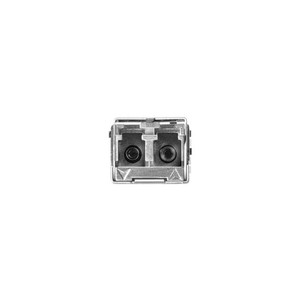
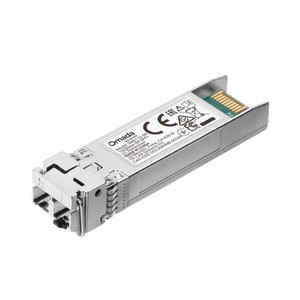
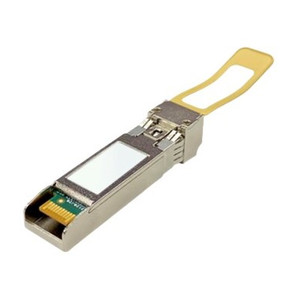
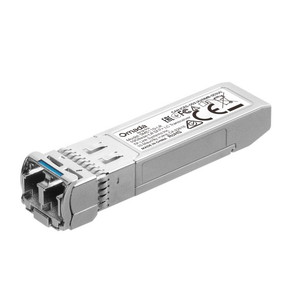
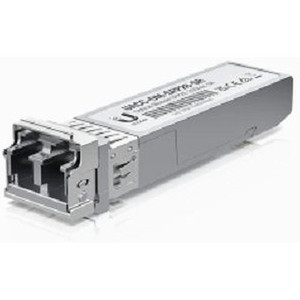
TP-Link SM6110-SR Omada 25GBase-SR SFP28 LC Transceiver
The TP-Link SM6110-SR is a multimode SFP28 transceiver designed for high-speed fabric links and mixed-rate network expansions in enterprise data centers, warehouse automation, and campus backhaul deployments. Operating at dual rates—25.78 Gbps primary, 10.31 Gbps for backward compatibility—it lets you phase equipment upgrades without replacing existing fiber infrastructure. The 850 nm wavelength and LC/UPC duplex connector integrate seamlessly with TP-Link Omada switches and third-party SFP28-capable systems. Hot-pluggable design and integrated Digital Diagnostic Monitoring (DDM) support enable fast troubleshooting and predictive maintenance without chassis power-down.
Key Features
- Dual-Rate Operation: 25.78 Gbps and 10.31 Gbps. Backward compatible with legacy 10G infrastructure—no need to simultaneously upgrade all endpoints when migrating to 25G fabric.
- Multimode Fiber Range: 100 m on OM4, 70 m on OM3 at 25.78 Gbps; extends to 300 m on OM3 at 10.31 Gbps. Covers standard datacenter and campus backbone segments without external amplification.
- 850 nm Wavelength: Standard short-range multimode wavelength. Cost-effective compared to single-mode 1310 nm for distances under 300 m; widely available spare fiber inventory.
- DDM Support: Real-time optical power, bias current, and temperature monitoring accessible via switch management interface. Detect signal degradation and module drift before link failure occurs.
- Hot-Swappable & Low Power: ≤1 W consumption per module. Replace failed transceivers live; minimal thermal impact in high-density 32-port or 48-port switch configurations.
- LC/UPC Duplex Connector: Industry-standard duplex fiber interface. Compatible with existing multimode cabling plants—no adapter panels required on most TP-Link Omada switches with SFP28 slots.
- Full DDM Implementation: SFF-8472 compliant diagnostics—supports threshold alarms, warning thresholds, and historical trending when paired with TP-Link Omada management software or third-party NMS platforms.
- Compact SFP28 Form Factor: Fits standard SFP28 slots on TP-Link SX6632YF, TL-SG3428X, and newer Omada platforms. Verify your switch revision supports 25G SFP28; legacy 10G switches use SFP+ modules only.
The SM6110-SR addresses the common integration challenge in mixed-generation networks: you have 10G segments deployed, but new applications demand 25G throughput on specific backbone links. Rather than forklift-upgrade all upstream switches simultaneously, load this transceiver into a 25G-capable Omada switch and negotiate the peer endpoint separately. If the far end is still 10G SFP+, use a compatible 10G module there; if it's 25G-capable, both sides auto-detect and lock at 25.78 Gbps. This flexibility reduces project risk and amortizes capital expenditure across multiple fiscal years.
Deployment across multimode fiber in unattended remote sites—branch offices, warehouse PDPs, outdoor network shelters—relies heavily on DDM telemetry to predict failures. The SM6110-SR logs optical power, module temperature, and bias current continuously. When combined with TP-Link Omada Controller or Omada Cloud management, you receive alerts if received power drops below threshold (indicating dirty connectors or bent fiber), or if transceiver temperature climbs abnormally (signaling cooling failure in the switch enclosure). Proactive alerts allow field teams to schedule maintenance during business hours rather than fielding emergency calls at 3 AM.
For multimode-limited deployments, the 100 m OM4 and 70 m OM3 reach covers most datacenter and campus campus backbone runs without single-mode complexity. If your fiber plant includes runs exceeding 300 m, TP-Link offers single-mode 1310 nm variants (SM6110-LR or equivalent) for those segments; most integrators maintain a small mixed-optics inventory to handle both. Confirm fiber type (OM3 vs. OM4 core) before provisioning; OM3 is common in older installations and will perform at 70 m 25G or 300 m 10G, whereas newer OM4 cabling supports the full 100 m 25G budget.
Certifications & Compliance: CE, FCC, RoHS; IEEE 802.3by (25GBASE-SR), IEEE 802.3ae (10GBASE-SR); SFF-8402, SFF-8472, SFF-8432, SFF-8431 standards compliance ensures interoperability with Omada and third-party ONVIF-compliant network infrastructure. Manufacturer warranty covers defects in materials and workmanship; DDM logging provides field evidence for troubleshooting warranty claims.
Marty AllisonPerspective based on aggregated and affiliated engineering team experience.
We've deployed the SM6110-SR across a range of network densification projects—especially in warehouse automation and retail video backhaul scenarios where you're adding cameras and PoE-fed access points faster than you can upgrade all upstream switching infrastructure. The transceiver's dual-rate design is the real operational differentiator. In a typical migration, you have a mix of 10G and emerging 25G capable switches. Rather than flag the entire 10G fleet for replacement, you can load SM6110-SR modules into your new 25G-capable Omada switches and negotiate link speed per-endpoint. This staggered upgrade pattern reduces capex shock and keeps parallel 10G segments alive during transition. The 850 nm multimode wavelength also keeps fiber inventory simple—most sites have OM3 or OM4 multimode already run in walls and ceilings, so you avoid the inventory complexity of maintaining separate single-mode spools and jumpers. However, there are real range limits you must respect: 100 m at 25G on fresh OM4 is tight for a datacenter-to-remote-building scenario; if you need 25G beyond 150 m, you'll need single-mode optics and potentially a different transceiver family. We've also seen DDM alarms get noisy in high-humidity outdoor cabinets if fiber ferrules aren't kept clean—assign someone to inspect LC connectors every quarter and swap in new patchcords if dust or oxidation appears on the contacts.
Technical Highlights:
- Dual-Rate 25.78 Gbps / 10.31 Gbps: The per-link flexibility here is invaluable in phased upgrades. You don't need protocol-level negotiation—just configure the speed explicitly on both switch ports and the transceiver negotiates link training automatically. This decouples your switch upgrade timeline from your fiber route planning, saving months on complex multi-site projects.
- DDM Compliance (SFF-8472): Temperature, optical power, and bias current trending accessible via Omada Controller and most third-party NMS platforms. Real-world benefit: we've caught fiber-bend and connector-contamination failures 48 hours before they would have caused a link drop, enabling preventive maintenance scheduling instead of emergency dispatch.
- OM4 100 m / OM3 70 m @ 25G: Sufficient for same-building fabric and branch-to-main datacenter hops; insufficient for geographically dispersed campuses or long-haul WAN segments. Know your fiber plant topology before ordering—if you have existing single-mode runs, use TP-Link single-mode variants instead.
- Hot-Pluggable, ≤1 W Draw: Live replacement without chassis reload or service window. In a 32-port Omada switch running all 25G modules, thermal load is negligible—most integrators report no additional cooling requirements compared to legacy 10G SFP+ architectures.
- LC/UPC Duplex Interface: Industry-standard fiber connector type. Most existing multimode cabling plants use LC, minimizing adapter costs. Verify UPC (not APC) polishing to avoid impedance mismatch on heterogeneous switch deployments.
Deployment Considerations:
- Confirm your TP-Link Omada switch has SFP28 slots, not legacy SFP+ only—many SG3400 and older SG3600 series use SFP+, which will not accept this module physically. Cross-reference your switch model against the TP-Link datasheet before procurement.
- Multimode fiber distance limits at 25G are strict: 100 m OM4 is the maximum practical run. If you have existing 150+ m fiber runs, either use single-mode transceivers for those segments or accept downgrade to 10.31 Gbps dual-rate mode on longer distances.
- Fiber connector cleanliness is non-negotiable. LC ferrules accumulate dust and microscopic fractures under thermal cycling. Inspect connectors quarterly and replace patchcords if contamination or oxidation is visible—DDM alarms often follow physical degradation by 1–2 weeks in humid environments.
- DDM thresholds vary by firmware version and NMS integration. If you're not actively monitoring DDM alerts via Omada Controller, the diagnostics capability is wasted. Plan for SNMP trap forwarding or scheduled health reports if you want predictive maintenance ROI.
- Backward compatibility with 10G endpoints is transparent in negotiation, but not automatic in link training—manually set both switch port speeds to the same rate if auto-negotiation fails. Most newer firmware handles this, but older Omada Controller versions may require explicit speed configuration on each port pair.
The SM6110-SR is the right choice for integrators managing mixed 10G/25G network expansion in enterprises with existing multimode fiber plants and a need to phase capital expenditure across multiple budget cycles. For greenfield datacenter builds or geographically dispersed campuses requiring 25G at distance, evaluate TP-Link single-mode variants alongside this module. See the TP-Link catalog for compatible switch models and alternative transceiver options.