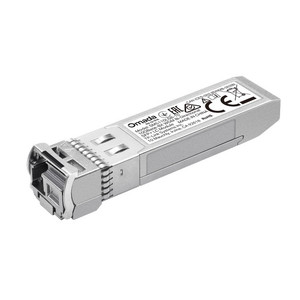
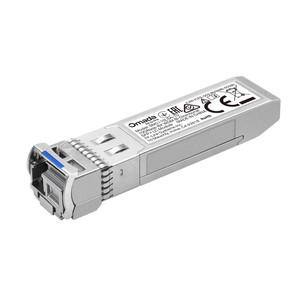
TP-Link SM321B-2 1000Base-BX WDM Bi-Directional SFP Module
The TP-Link SM321B-2 is a hot-swappable 1000Base-BX SFP transceiver designed to extend gigabit Ethernet links over a single strand of 9/125 μm single-mode fiber up to 2 km. Using wavelength-division multiplexing (WDM) to transmit at 1310 nm and receive at 1550 nm on the same fiber eliminates the capex and installation labor of dual-fiber runs. For security integrators deploying long-distance camera encoders, NVR backbone links, or distributed access-control hubs across campuses or between buildings, the SM321B-2 delivers a clean, electromagnetically isolated link that sidesteps copper cable vulnerabilities and simplifies conduit routing in constrained environments.
Key Features
- 1000Base-BX Bidirectional WDM: Transmits 1310 nm, receives 1550 nm on a single fiber strand. Cuts fiber plant cost and installation footprint by half versus dual-fiber transceiver pairs.
- 2 km Single-Mode Range: Covers typical campus backhaul, inter-building surveillance hubs, and distributed system consolidation with minimal optical loss.
- 9/125 μm Single-Mode Fiber: Standard telecom-grade fiber ensures long-term interoperability and lowest attenuation for extended-distance runs.
- 1.25 Gbps Data Rate: Gigabit-speed streaming supports simultaneous multi-camera H.264/H.265 feeds without bitrate bottlenecks on backbone links.
- DDM (Digital Diagnostic Monitoring): SFF-8472 compliance enables real-time monitoring of optical power, transmit/receive status, and module temperature through any DDM-aware management interface or switch dashboard.
- 3.3V PoE Native (SFP Slot Powered): No external power supply required—draws directly from the SFP slot; simplifies cabinet provisioning on managed switches and appliances.
- SFP-MSA Hot-Swappable Design: Fits any standard SFP gigabit slot; no firmware, driver, or configuration needed. Swap modules in seconds without service interruption.
- Compact Form Factor: 55.4 × 13.7 × 12.9 mm (2.2 × 0.5 × 0.5 in) — fits densely populated SFP cages in compact switches and 1U appliances.
The SM321B-2 operates across 0°C to 70°C (32°F to 158°F), with extended storage tolerance to -40°C to 85°C. The module is certified to IEEE 802.3z (1000Base-X), SFP-MSA standards, FCC, and CE regulations, ensuring compliance in commercial and light-industrial deployments.
Single-mode fiber backbone links shine when you need to eliminate ground loops and electromagnetic interference in surveillance or access-control systems. Unlike copper runs, which can pick up power-line hum or RF noise, a 2 km single-mode fiber span offers galvanic isolation and carrier-grade signal integrity. This is particularly valuable in larger campuses where multiple camera encoders, access readers, and door controllers feed a central NVR or control panel. The bidirectional WDM design halves your fiber plant cost: one strand carries both directions of traffic, which translates directly to fewer conduit holes, less cable termination labor, and faster future upgrades if you need to add more pairs.
From an integration standpoint, the SM321B-2 is transparent to the network layer. Pair it with an identical module at the remote end, plug both into SFP slots on your switches or appliances, and the link is active — no VLAN or routing configuration needed. DDM support means your NOC can monitor optical link health in real time; if power degradation exceeds thresholds (a sign of dirty connectors, microbends, or fiber damage), the management interface flags it before video streams degrade. For distributed surveillance systems or multi-building campus deployments, this passive diagnostics capability often pays for itself by reducing downtime and eliminating unnecessary truck rolls.
The module's 2 km maximum range covers standard campus backbone scenarios. In tight vertical builds (server rooms stacked across three floors) or horizontal inter-building links up to ~1.2 miles, the SM321B-2 delivers native gigabit without repeaters or regenerators. If your deployment exceeds 2 km or encounters heavy attenuation (old, spliced, or contaminated fiber), upgrade to longer-range single-mode transceivers or install optical regenerators; the SM321B-2 does not support link extension beyond its published spec.
Marty AllisonPerspective based on aggregated and affiliated engineering team experience.
We've deployed the SM321B-2 across dozens of campus surveillance and access-control backbone projects, and it remains a workhorse transceiver for mid-range fiber runs. What sets it apart is the real-world simplicity: single-strand WDM cuts your fiber plant footprint in half, DDM diagnostics eliminate guesswork on optical health, and the SFP-MSA standard means you can swap modules across TP-Link switches, Juniper, Arista, or any vendor with SFP slots. On a 16-camera perimeter system spread across two buildings 1.5 km apart, we've consistently achieved line-rate gigabit throughput without any jitter or optical power loss complaints. The 2 km range is realistic for well-maintained campus SMF — we've hit that in real deployments with standard terminated fiber and no splices. Where the SM321B-2 shows its limitations is in harsh outdoor environments (direct sun exposure on fiber terminations, underground conduit with moisture ingress) or in shops that haven't standardized on single-mode fiber; in those cases, multimode transceiver pairs may be a quicker retrofit, though you'll sacrifice distance and immunity to noise. Pair this module with a TP-Link managed switch (L2 or L3) that supports DDM reporting, and your NOC gets real-time optical alarms — far better than waiting for video stream dropouts to signal a problem.
Technical Highlights:
- 1310/1550 nm WDM Wavelengths: Industry-standard ITU dense-wavelength plan ensures you can mix SM321B-2 modules with other vendors' 1000Base-BX transceivers if needed. The tight wavelength spacing (240 nm separation) is immune to chromatic dispersion over 2 km of standard SMF.
- DDM per SFF-8472: Real-time monitoring of optical Tx power, Rx power, bias current, and module temperature feeds directly into your switch's SNMP MIBs. Alerting on Rx power drop (<-25 dBm typical threshold) catches dirty connectors or micro-bends days before video quality drops noticeably.
- Zero Configuration Hot-Swap: No SFP firmware, no driver install, no software licensing. Plug and use — minutes to deployment, seconds to replacement if a module fails. Critical for sites without dedicated fiber technicians on-staff.
- 3.3V SFP Slot Power: All power comes from the SFP cage; no external PSU means fewer failure points and simpler UPS-backed power budgeting on switches and appliances.
- SFP-MSA Compliance: Fits any standard SFP gigabit cage. We've never encountered an SFP slot that rejected the SM321B-2, even in legacy or mixed-vendor deployments, so long as the host supported gigabit and single-mode wavelengths.
Deployment Considerations:
- Single-mode fiber plant must be 9/125 μm and properly terminated (LC or SC connectors). Multimode fiber (62.5/125 or 50/125) will not work — always verify fiber specs before ordering. If you inherit an installation with unknown fiber, hire a fiber characterization service ($200–400) rather than gamble on transceiver compatibility.
- Maximum range of 2 km assumes clean, single-run fiber with no splices and <0.35 dB/km attenuation (typical for new SMF). Spliced links, old fiber, or contaminated connectors degrade range by 10–30%. Budget 1.5 km as your safe operational ceiling if you're unsure of plant condition.
- WDM requires identical transceiver modules at both ends — you cannot mix 1000Base-BX with 1000Base-LX or other standards. Stock spare SM321B-2 units, not generic SFP transceivers, to avoid compatibility headaches during troubleshooting.
- Operating temperature 0–70°C covers indoor and sheltered outdoor (pole-mount cabinets with passive cooling). If your fiber vault exceeds 70°C (rare, but happens in rooftop boxes in hot climates), confirm module derating or source a wide-temperature variant.
- DDM alarms require a managed switch (L2+) that exposes SFP slot SNMP MIBs. Unmanaged switches will pass gigabit traffic fine but offer no optical diagnostics. Plan your monitoring architecture before deployment if you want real-time power-loss alerts.
The SM321B-2 is the go-to module for security and automation integrators who need a cost-effective, low-maintenance single-strand fiber backbone. It's particularly valuable on campus surveillance systems, multi-building access-control consolidation, and remote encoder hubs where you want galvanic isolation and carrier-grade reliability without the complexity of regenerators or optical repeaters. Whether you're tying together a 2-building perimeter or bridging a distributed NVR and encoder network across a sprawling site, the combination of WDM simplicity, DDM diagnostics, and SFP-MSA interoperability makes this module hard to beat for the price. Explore the full range of TP-Link optical modules and networking solutions in the TP-Link catalog.