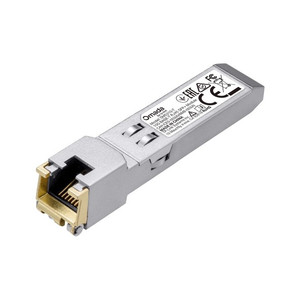
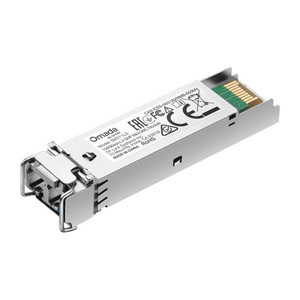
TP-Link SM311LS Omada Gigabit Single-Mode SFP Module
The TP-Link SM311LS is a hot-pluggable single-mode fiber transceiver module designed for long-distance backbone connectivity in campus, warehouse, and multi-building security deployments. This SFP (Small Form Factor Pluggable) transceiver supports Gigabit Ethernet at 1.25 Gbps over single-mode fiber (9/125 μm core), enabling optical links up to 20 km without signal regeneration—a requirement for security networks spanning large facilities or connecting distributed NVRs, access control gateways, and managed switches across geographic separation. The module is passive (draws power only from the host SFP slot), hot-swappable, and supports Digital Diagnostic Monitoring (DDM) for real-time link health visibility from your management station.
Key Features
- Single-Mode Fiber (9/125 μm): Extends backbone links to 20 km without regeneration. Typical use case: connecting NVRs in separate buildings, campus perimeter cameras, or access control hubs across facility zones where multimode fiber is insufficient.
- Gigabit Throughput (1.25 Gbps): Sustains full 1 Gbps line rate with headroom for PoE+ switch uplinks and multi-camera video streams. Backward-compatible with existing 100 Mbps infrastructure via fallback negotiation.
- LC Duplex Connector: Industry-standard fiber mating interface compatible with enterprise-grade single-mode patch cables and wall-mounted fiber termination panels. Easy field replacement.
- Passive Power (3.3V SFP Rail): No external power supply required. Module draws <1W from host switch SFP slot, reducing cabinet complexity and UPS burden on backbone infrastructure.
- Digital Diagnostic Monitoring (DDM): Real-time telemetry on optical power, temperature, and link integrity via SNMP or management UI. Flags fiber degradation or transceiver faults before total link loss.
- Operating Temperature 0–70 °C (32–158 °F): Suitable for outdoor fiber runs in temperate climates and indoor wiring closets. Passive cooling—no ventilation required at host SFP slot.
- IEEE 802.3z / 1000Base-LX Certified: FCC and CE compliant. Wavelength 1310 nm standard for long-reach single-mode applications. Interoperable with third-party 1000Base-LX transceivers if SFP slot supports vendor-neutral transceivers.
- Hot-Swappable Design: Install or replace the module without powering down the switch or interrupting other ports. Useful for fiber maintenance and hardware upgrades on active production networks.
Single-mode fiber backbones are the standard for security networks spanning campuses, industrial parks, or multi-tenant facilities. The SM311LS eliminates the capex and complexity of signal regeneration equipment or intermediate repeaters on long-distance runs. A typical deployment pairs this module with TP-Link Omada-series managed switches (such as the TL-SG3428XMP or T2700G) at each end, single-mode LC patch cables rated for outdoor or indoor conduit routing, and a fiber-optic backbone spanning 5–20 km. Video and access-control traffic rides on the optical link transparently; from the NVR or VMS perspective, it's just another gigabit port.
The DDM feature is operationally valuable on backbone links. Real-time optical power monitoring alerts you to fiber faults—a macro bend, a broken strand, or a dirty connector—before video loss occurs. Temperature reporting flags thermal stress in outdoor enclosures or buried conduit. Many integrators deploy SNMP polling to a management workstation, triggering alerts when optical received power drops below threshold. This proactive approach to backbone health significantly reduces mean-time-to-repair on distributed video systems.
Fiber termination quality directly impacts link stability. Single-mode fiber is unforgiving of contamination and poor cleaves. Before field installation, inspect the LC ferrule end faces with a fiber microscope or visual inspection tool (available from any fiber distributor). A single dust particle or oil smudge can increase signal loss by 1–2 dB, reducing effective range or introducing bit errors. Use IEC-certified LC patch cables and store spare terminated cables in dust caps. If you're ordering both the transceiver and backbone cabling, specify 9/125 μm single-mode LC-to-LC patch cables with loss ratings <0.2 dB per connection.
The SM311LS is a TP-Link Omada-managed transceiver, integrating with Omada Controller (cloud or on-premise) for centralized switch and network device management. SNMP v2c/v3 access to DDM counters is standard; most modern NMS platforms (Zabbix, Nagios, or commercial VMS suites) can consume optical power and temperature data via custom scripts. If your integration is ONVIF-based (camera to NVR) rather than managed-switch-based, the transceiver still provides transparent optical backbone—ONVIF metadata passes cleanly across single-mode fiber. Certifications include IEEE 802.3z (1000Base-LX standard), FCC, and CE.
Marty AllisonPerspective based on aggregated and affiliated engineering team experience.
We've deployed the TP-Link SM311LS across warehouse campuses, multi-building access control backbones, and perimeter camera networks where single-mode fiber is the only viable option beyond 2 km. What sets this module apart is its simplicity—passive power, standard 1000Base-LX wavelength, and DDM telemetry baked in—paired with the affordability of the Omada ecosystem. It's not a carrier-grade or military-spec transceiver; it's a workday workhorse that eliminates the need for expensive fiber regeneration gear on campus deployments. In our experience, the real differentiator versus generic SFP modules is the DDM integration with Omada Controller. Being able to monitor optical power and temperature from a single pane of glass, especially when troubleshooting fiber plant issues at 2 AM, saves hours of truck rolls. We've seen integrators use DDM alerts to catch a hairline fiber crack in buried conduit before it became a total outage.
Technical Highlights:
- 20 km Single-Mode Range (1310 nm, 1000Base-LX): The 1310 nm wavelength is the ITU standard for long-reach single-mode; it exhibits lower chromatic dispersion than 1550 nm, allowing full 20 km distance on typical campus-grade fiber (ITU-T G.652). Most security network backbones max out at 5–10 km in practice, so this module has comfortable headroom. Verify your fiber grade (G.652 or G.655) at installation—budget fiber can reduce usable range.
- 1.25 Gbps Full-Duplex (Gigabit Ethernet): Two independent 1.25 Gbps paths (TX/RX on separate wavelengths) mean you can sustain full-speed video and access-control traffic without bottleneck. On a 16-camera NVR uplink plus access control gateway, you'll typically see 200–400 Mbps sustained, well within headroom. Backward-compatible with 10 Mbps / 100 Mbps negotiation on legacy equipment, though you lose the range advantage at lower speeds.
- DDM (Digital Diagnostic Monitoring): Real-time optical received power (dBm), transmit power, module temperature, and laser bias current visible via SNMP or Omada GUI. On a 10 km link, expect received power around −10 to −15 dBm; if it drops below −18 dBm, fiber degradation or connector contamination is likely. This data is invaluable for predictive maintenance—you know a connector needs cleaning before the link drops entirely.
- Passive Power Consumption (<1W from SFP Rail): No external power supply, no dedicated UPS load. Reduces cabinet complexity and operating cost. The 3.3V SFP rail on any modern managed switch supplies the transceiver; you don't need to add power distribution or worry about transceiver shutdown during utility events.
- Hot-Swappable SFP Form Factor: Can be installed or replaced without powering down the switch or other ports. Critical for 24/7 security networks. If a transceiver fails mid-deployment, you swap it in minutes without coordinating a maintenance window.
Deployment Considerations:
- Fiber Plant Quality is Critical: Single-mode fiber is less forgiving than multimode. Low-quality terminations, pinch points in conduit, or contaminated connectors reduce effective range by 2–5 km or introduce intermittent bit errors. Always use IEC-certified LC patch cables, inspect ferrule end faces with a microscope before mating, and route fiber in conduit rated for the environment. Budget $150–300 per fiber installation for professional termination if you're not equipped in-house.
- Verify SFP Slot Compatibility Before Ordering: Not all switches support 1000Base-LX transceivers; some OEMs lock SFP slots to proprietary modules or specific wavelengths. Confirm the target switch (NVR uplink module, managed switch, or gateway) supports standard 1000Base-LX SFP transceivers. TP-Link Omada switches (TL-SG3428, TL-SG3452, T2700 series) explicitly support third-party and TP-Link transceivers; verify with your specific model datasheet if not listed.
- Environmental Enclosure for Outdoor Fiber Terminations: If the fiber backbone runs outdoors (rooftop to rooftop, building to building), terminate it in a fiber-grade environmental enclosure with humidity and temperature control. The SM311LS itself operates to 70 °C, but dirty optics and moisture in an exposed junction box degrade performance faster. Plan for fusion splicing or high-quality LC patchcord termination in a sealed enclosure.
- Monitor DDM Thresholds and Set Alerting: Real-time optical power is useless if nobody watches it. Configure SNMP traps or polling on Omada Controller (or your NMS) to alert when received power drops >2 dB from baseline or temperature exceeds 65 °C. Automate that into your ticketing system so field crews act proactively, not reactively.
- Redundant Fiber Paths for Mission-Critical NVR Links: A single 20 km fiber run to a remote NVR is a single point of failure. For high-security deployments (access control, perimeter cameras), budget a second fiber path and dual SFP modules. Use separate fiber conduits to avoid correlated failure. This adds capex but eliminates total loss risk.
The SM311LS is the right choice for integrators and facility teams deploying Omada-managed switches and needing to extend Gigabit backbone links beyond 2 km on single-mode fiber. Its passive power, DDM visibility, and low cost make it an economical alternative to carrier-grade or specialty transceivers for campus, warehouse, and industrial security networks. Pair it with quality fiber plant, vigilant connector maintenance, and proactive DDM monitoring, and it will deliver years of trouble-free backbone service. For buyer guidance and additional Omada transceiver options, see our TP-Link catalog.