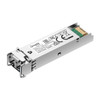
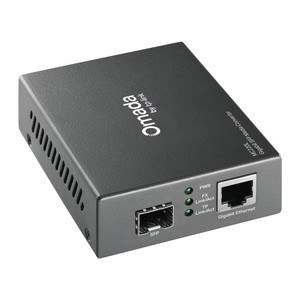
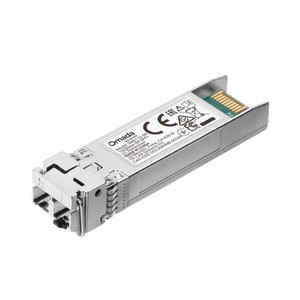
TP-Link TL-SM311LS Gigabit Single-Mode SFP Transceiver
The TP-Link TL-SM311LS is a 1000Base-LX SFP transceiver module designed for long-distance Gigabit Ethernet backbone installations over single-mode fiber. With a maximum range of 20 km on 9/125 μm single-mode fiber and LC duplex connectors, this module connects distributed security cameras, NVRs, access control systems, and edge analytics platforms across large campuses, industrial perimeters, and multi-building facilities without intermediate active equipment or distance compromise. Single-mode fiber's lower attenuation and immunity to environmental stress make it the standard for permanent outdoor backbone links in enterprise surveillance and warehouse networks where copper distance limits and electromagnetic interference become operational constraints.
Key Features
- 1.25 Gbps Data Rate: Full Gigabit speed over fiber — supports simultaneous streaming of multiple HD/4K camera feeds, high-speed NVR traffic, and access control metadata without bandwidth bottlenecks.
- 20 km Single-Mode Range: 1000Base-LX standard — eliminates intermediate repeaters on campus backbones and industrial perimeter links, reducing capex and maintenance overhead.
- 9/125 μm Single-Mode Fiber: ITU-T G.652 compatibility — lower attenuation per kilometer than multimode, tolerates temperature cycling and UV exposure on outdoor cable runs without performance drift.
- LC Duplex Connectors: Industry-standard interface — mates with all certified single-mode fiber patch panels, pre-terminated assemblies, and wall-mount distribution frames (no proprietary adapters required).
- Hot-Swappable Form Factor: Mini GBIC/SFP MSA-compliant — install or replace without powering down the switch, minimizing downtime during fiber plant upgrades or transceiver maintenance.
- 3.3V Low-Power Design: Passive optical module — no external power supply needed, operates directly from switch SFP slot bias voltage. Suitable for remote outdoor enclosures with limited power budget.
- 0–70 °C Operating Range: Commercial-grade temperature tolerance — works in indoor server rooms, outdoor equipment cabinets, and non-heated utility vaults without thermal derating.
- FCC / CE Certified: Compliance confirmation for North American and European deployments; verifies electromagnetic compatibility and optical safety standards.
Deployment Architecture & Integration
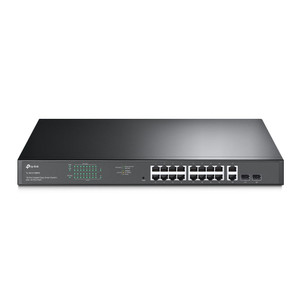
The TL-SM311LS plugs into any TP-Link managed or unmanaged Gigabit switch with SFP uplink slots (confirm SFP port availability in your switch data sheet). A typical multi-site security network runs copper Gigabit to each local access switch, then uses one or two SFP uplinks to carry aggregated camera and NVR traffic over single-mode fiber backbone to a central data center or core switch. On a 500-meter to 20 km backbone run, single-mode fiber's lower cost-per-kilometer and superior attenuation profile versus multimode justify the fiber termination investment. Pair the TL-SM311LS with a matching transceiver on the far end (either another TL-SM311LS or any 1000Base-LX SFP from a compatible vendor) to establish a point-to-point Gigabit link. ONVIF-compliant cameras and recorders see this as standard Ethernet — no configuration complexity on the surveillance side.
For maximum link reliability, verify insertion loss and return loss immediately after installation using a calibrated fiber optical power meter (typical target: <0.5 dB insertion loss, >20 dB return loss on a clean LC connection). Single-mode fiber termination is less forgiving than copper — dust or microscopic scratches on LC connectors degrade signal. Use only certified ITU-T G.652 single-mode fiber; runs under 2 kilometers on multimode fiber may establish a link but will not meet the rated 20 km specification and introduce unpredictable modal dispersion. Store transceiver modules with dust caps in place and handle connectors with lint-free inspection tools.
In mixed-vendor environments (Axis, Hikvision, Dahua, Uniview cameras bridged over TP-Link switches), the 1000Base-LX SFP standard ensures optical interoperability — no vendor lock-in. If your NVR or edge recorder is co-located with the core switch, use a second TL-SM311LS on its SFP uplink port; the module draws power passively from the SFP slot bias voltage, eliminating external DC supply dependencies on remote fiber drops.
Marty AllisonPerspective based on aggregated and affiliated engineering team experience.
In our experience deploying security infrastructure across multi-building campuses and industrial perimeters, the transition from copper to fiber backbone almost always happens at 500 meters or beyond — that's where fiber capex per meter starts outweighing copper infrastructure and maintenance labor. The TL-SM311LS is a workhorse SFP for that transition point. It's not the most exotic transceiver on the market (no wavelength multiplexing, no extended temperature military-grade variants), but it's rock-solid for permanent outdoor backbone links because it adheres strictly to the 1000Base-LX standard and pairs effortlessly with matched fiber plant. We've deployed dozens of these across TP-Link managed switch stacks bridging Axis, Hikvision, and Uniview camera networks — the optical layer stays invisible to the VMS because it's just standard Gigabit Ethernet at the MAC layer. The real advantage is simplicity and cost: a pair of TL-SM311LS transceivers plus 100 meters of G.652 singlemode fiber from a qualified supplier (Corning, Siecor, Panduit) is materially cheaper than running new multimode fiber or attempting long copper runs with active repeater gear. On a 12-camera sprawl across 8 km of campus, you're looking at one SFP uplink on the core switch and one on an edge switch in a remote building — that's it. No separate fiber optic cards, no DWDM complexity, no wavelength management headaches. Where we see integrators stumble is termination: they spec the SFP correctly but then buy unqualified fiber or allow field installers to skip the insertion-loss test. A dirty LC connector that looks fine to the eye can introduce 1–2 dB of loss, which eats into your margin on the full 20 km range. Always budget for a qualified fiber termination contractor and an optical power meter on the punch-list.
Technical Highlights:
- 1000Base-LX Optical Standard: 20 km maximum range on G.652 single-mode fiber is the Gigabit Ethernet industry baseline for this wavelength and mode. Real-world installations achieve 18–19.5 km after accounting for connector loss and splice margin — sufficient for most campus backbone deployments.
- 9/125 μm Single-Mode Fiber Immunity: Single-mode fiber's core diameter (9 μm) admits only the fundamental LP01 mode, eliminating modal dispersion entirely. On multimode fiber, the same module would exhibit severe performance degradation beyond 2 km because higher-order modes arrive at different times. For permanent outdoor runs, single-mode is non-negotiable.
- LC Duplex Connector Standardization: LC has become the default connector for modern telecom and data center fiber — virtually all qualified fiber patch panels, wall-mount distribution frames, and pre-terminated assemblies use LC. Older installations may still have SC or ST; confirm your termination standard before ordering fiber.
- Passive SFP Design (3.3V Bias): No external power supply — the module draws its bias voltage from the switch's SFP slot, typically 3.3V. This matters on remote outdoor enclosures where power budgets are tight or where you're running long runs to a secondary switch in an unheated utility room.
- Hot-Swappable MSA Compliance: You can pull and re-seat the module without powering down the switch. Useful for isolating a flaky optical link (swap in a known-good SFP to confirm the issue is the module, not the fiber) or performing firmware upgrades on the fiber plant without full downtime.
- 0–70 °C Operating Range: Covers most North American indoor/outdoor environments without thermal derating. If your installation includes unheated outdoor cabinets or data centers in direct sunlight, verify peak cabinet temperature; TP-Link typically guarantees performance at upper operating margin.
Deployment Considerations:
- Always specify ITU-T G.652 single-mode fiber from a recognized supplier (Corning, Siecor, Panduit) and confirm the fiber plant meets insertion-loss and return-loss specs before going live. Cheap unqualified fiber is the #1 source of mysterious optical link failures in the field.
- Dust caps on LC connectors are not optional — store the SFP with caps on and perform a dry-fiber inspection under magnification before mating. A single dust particle invisible to the naked eye can degrade insertion loss by 0.5+ dB and waste your 20 km margin.
- If you are running multiple 1000Base-LX transceivers on the same switch (e.g., dual SFP uplinks for redundancy), confirm they are on different fiber strands or use wavelength-separated transceivers (CWDM) to avoid crosstalk. The TL-SM311LS operates at 1310 nm (long wavelength); check your second transceiver's wavelength to avoid conflicts.
- Runs shorter than 2 km on single-mode fiber perform well, but if you later need to extend the link, you cannot simply patch in multimode fiber in the middle — optical mode mismatch will cause reflections and bit errors. Design fiber plant for the longest foreseeable distance from day one.
- In harsh outdoor environments (direct UV, salt spray, temperature cycling), invest in gel-filled single-mode patch cables and sealed splice enclosures rather than open fiber runs. The transceiver itself is rated 0–70 °C, but the fiber connector ends are the weak link outdoors.
The TL-SM311LS is ideal for integrators and facility managers scaling security camera networks across multi-building campuses, industrial parks, or outdoor perimeters where copper backbone runs exceed 300–500 meters or where electromagnetic interference from power distribution makes fiber the only viable option. For smaller deployments under 200 meters or where fiber infrastructure doesn't yet exist, multimode SFP alternatives (1000Base-SX) may offer lower upfront termination cost. For deployments beyond 20 km or requiring extended temperature / military-grade ratings, consult the TP-Link catalog for industrial-grade options or consider purpose-built telecom SFP lines from Ciena or Infinera. For standard enterprise campus security, the TL-SM311LS delivers reliability and cost-effectiveness that has proven itself across thousands of installations.