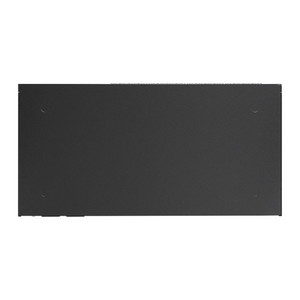
TP-Link TL-SM311LM Gigabit Multimode SFP Transceiver
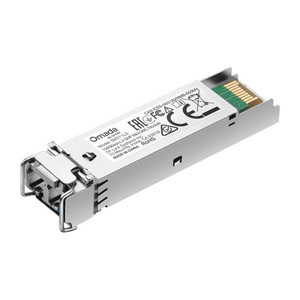
The TP-Link TL-SM311LM is a 1000Base-SX multimode fiber SFP (Small Form-factor Pluggable) transceiver designed for extended gigabit network spans across campus backbones, warehouse zone interconnects, and IP surveillance system fiber uplinks. Operating at 1.25 Gbps (1000 Mbps throughput), it extends connectivity up to 550 meters over multimode fiber (50/125 µm or 62.5/125 µm), eliminating the need for copper runs in electromagnetically noisy industrial or outdoor environments. The passive design draws no power and works with any standard SFP port on managed switches, routers, and surveillance appliances, making it a cost-effective alternative to active transceivers for campus-scale fiber deployments.
Key Features
- 1000Base-SX Gigabit Multimode: 1.25 Gbps signaling rate over multimode fiber (50/125 µm and 62.5/125 µm compatible). Full gigabit throughput across campus backbone runs without active electronics.
- 550-Meter Maximum Range: Extends to 550 m at full bandwidth; uncontrained performance for runs under 275 m. Typical for multi-building campuses and large warehouse zones without intermediate repeaters.
- LC/UPC Connector: Industry-standard LC duplex connector with physical contact (UPC) polish — works with all standard fiber patch cables and wall-mount panels.
- Passive Optical Transceiver: No power consumption — plugs directly into any SFP slot without requiring additional power infrastructure or thermal management.
- Wide Operating Temperature: Rated 0–70°C (32–158°F), suitable for outdoor-sealed network cabinets, utility enclosures, and temperature-controlled equipment rooms.
- FCC & CE Certified: Meets electromagnetic compatibility and telecom safety standards for North American and European deployments.
- Hot-Pluggable Form Factor: SFP form factor allows installation or replacement without powering down the host device or disrupting other ports.
- Cost-Effective Backbone Link: Passive module eliminates the capex and operational overhead of active (powered) transceivers for planned fiber runs under 550 m.
The TL-SM311LM bridges the physical layer gap between copper-based access networks and fiber-based backbone infrastructure. In IP security deployments, it serves as the critical uplink from edge PoE switches (feeding IP cameras across a warehouse or perimeter) to a central NVR or management platform housed in a separate building or fortified equipment room. Fiber immunity to lightning strike surge and RF interference makes it the safer choice for outdoor or industrial camera runs than copper Ethernet, especially in multi-building campuses where long copper cable runs introduce grounding complications.
Compatibility with multimode fiber (the less expensive, shorter-distance sibling to single-mode) keeps total cost of ownership reasonable for sub-kilometer backbone links. Standard SFP slots on enterprise-grade switches (TP-Link TL-SG3428MP, TL-SG5428MP, and similar managed platforms) natively support the 1000Base-SX standard without proprietary transceiver locks. Before ordering, confirm your target device does not enforce optics whitelisting; most carrier-class equipment and open-standard switches do not. If you require ranges beyond 550 m or operation in single-mode fiber plant, specify a single-mode SFP transceiver (1000Base-LX) instead.
Installation quality directly impacts performance. Misaligned or contaminated LC connectors are the most common field failure point for passive transceivers and will introduce link errors, jitter, and latency spike long before the module physically fails. Use an optical power meter (or request a fiber certifier on large deployments) to validate insertion loss and received power levels at each end of the span. A properly terminated LC connection should yield insertion loss under 0.5 dB; excessive loss often indicates dirty ferrules or mechanical stress in the patch cable. Operating temperature range 0–70°C covers most indoor and outdoor-sealed cabinets; if your environment runs below freezing (outdoor poles) or above 70°C (unvented utility closets), verify thermal envelope before installation.
This module is ONVIF-compatible in the sense that it is transparent to IP traffic — it carries any Layer 3 protocol (RTSP, ONVIF metadata streams, HTTP management, VPN tunnels) without modification. Firmware updates and device configuration occur on the host switch or appliance, not the transceiver itself. The passive design means no firmware version tracking, no driver compatibility matrix, and no obsolescence risk tied to the module itself — it will function identically in TP-Link switches deployed today or in five years, provided the SFP slot remains the form factor standard.
Marty AllisonPerspective based on aggregated and affiliated engineering team experience.
In our experience, passive SFP transceivers like the TL-SM311LM are the unglamorous backbone of large IP surveillance and access-control networks. We've installed hundreds of these across multi-site campuses — university grounds, industrial parks, healthcare systems spanning multiple buildings — and they work reliably for 10+ years if termination and environmental sealing are done correctly. The passive design is the real win: no power supply to fail, no thermal throttling in sun-exposed network cabinets, and no firmware obsolescence. A 1000Base-SX module installed in 2015 performs identically to one installed today because there's nothing inside to age or require updates. The 550-meter envelope is well-suited to typical campus backbone runs (two buildings connected across a parking lot, a warehouse linked to the main office). Beyond that, you're shopping for single-mode optics, which are more expensive but necessary for kilometer-plus distances. The LC/UPC connector is now the industry standard; we rarely encounter old MTRJ or ST-based SFP slots in new deployments, but always verify before ordering — a wrong connector type means a site visit to swap the module and the patch cable. The real pitfall in the field is underestimating the sensitivity of fiber termination quality. We've troubleshot link flapping on TL-SM311LM modules where the root cause was dust on a connector that a tech had touched once with their bare finger. Invest in connector cleaner kits and optical power meters at the time of deployment — they're cheap insurance against a 2 AM callback.
Technical Highlights:
- 1000Base-SX Multimode Standard: The transceiver operates at a fixed wavelength of 850 nm (near-infrared) over multimode fiber. This wavelength and fiber type combination is standardized in IEEE 802.3z and limits range to ~550 m but keeps module cost low compared to single-mode (1310 nm) alternatives. For surveillance backhaul on a 3–5 building campus, this is the right choice; for inter-site links spanning multiple kilometers, single-mode becomes mandatory.
- Passive Design (Zero Power Draw): The module contains no active electronics — no transimpedance amplifier, no laser driver, no temperature compensation circuit. Light from the fiber is detected directly by a photodiode and coupled to the host switch's receiver. This passivity means longer service life, no thermal budget impact on the switch, and immunity to firmware rot. In a warehouse with 20–40 uplink modules, passive optics save measurable power and eliminate transceiver replacement cycles tied to software obsolescence.
- LC/UPC Connector Durability: The LC (Lucent Connector) is now the de facto standard for SFP modules worldwide. The /UPC (Ultra Physical Contact) polish is the standard termination for multimode datacenter and campus fiber; it delivers insertion loss ~0.3–0.5 dB per mated pair when clean. Always pair with LC/UPC patch cables and keep connector dust caps in place when the module is unplugged. A single grain of dust in the ferrule can raise insertion loss 1–2 dB and trigger link errors or latency complaints.
- Operating Temperature 0–70°C: Covers standard network cabinets and climate-controlled utility rooms. If the host equipment is mounted in an unvented outdoor enclosure or directly sun-exposed, add passive cooling (ventilated cable trays, thermal barriers) to stay within the 70°C ceiling. Transceiver performance is flat across this range; no derating needed for cold environments (unlike some active modules), and no thermal shutdown risk as long as the switch itself stays in spec.
- FCC & CE Compliance: Passive optics transceivers generate no RF emissions and comply with EMC standards by design. No additional shielding or grounding tricks required. Install in standard SFP slots on compliant network equipment and you inherit that compliance for the full link.
Deployment Considerations:
- Fiber Plant Quality is Non-Negotiable: Multimode fiber quality varies significantly between budget and premium patch cables. Always spec OM3 or OM4 rated patch cables when ordering in bulk; do not mix old OM1 or OM2 cable scrap from the job site closet into a new installation. Insertion loss specifications assume good termination; marginal fiber introduces intermittent link flapping that is maddening to troubleshoot.
- 550-Meter Limit is Hard: The 1000Base-SX standard tops out at ~550 m over multimode fiber. If your run is 400 m, this module is perfect. If it's 800 m, you'll need a single-mode transceiver and matching single-mode fiber plant — a more expensive but necessary upgrade. Always measure the actual run length (or add 10–15% for slack in conduit) before ordering.
- SFP Slot Compatibility Varies: Most enterprise and mid-market switches (TP-Link managed series, Cisco Catalyst, Juniper EX) support standard 1000Base-SX modules without vendor lock. However, some carrier or proprietary platforms restrict optics to approved vendor transceivers. Request a compatibility matrix from the switch manufacturer or test with a loaner module before committing to 50 units.
- Connector Cleanliness is Your Biggest Headache: Fiber connectivity failures on otherwise good modules almost always trace to contaminated LC connectors. Provide field techs with alcohol wipes and lint-free swabs. A 30-second cleaning can eliminate hours of troubleshooting. Keep spare connectors and patch cables on site for quick swaps during diagnostics.
- No Diagnostics Onboard: Passive transceivers provide no link status or diagnostic counters. You must rely on the host switch's port LED and SNMP MIB to detect link faults. An optical power meter is essential for field validation if the switch port stays dark after module insertion. Out-of-spec received power (too weak or too strong) usually points to fiber damage, misalignment, or contamination, not a bad module.
The TL-SM311LM is the right choice for integrators building multi-building IP video or access-control networks on a TP-Link or generic managed switch backbone. It's also the best optics module to stock in your warehouse if you support small-to-mid campuses in your region — you'll sell 5–10 of these per year and they'll serve reliably for a decade. For detailed specifications and fiber plant selection guidance, see the TP-Link catalog.