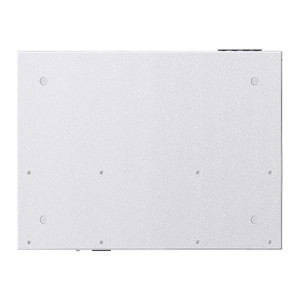
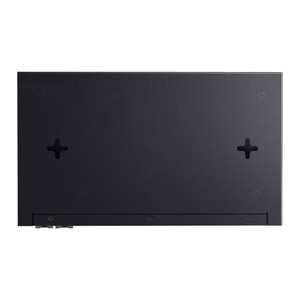
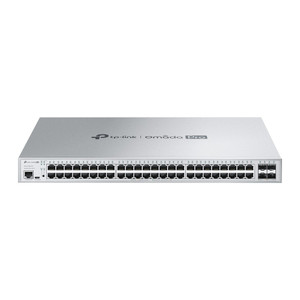
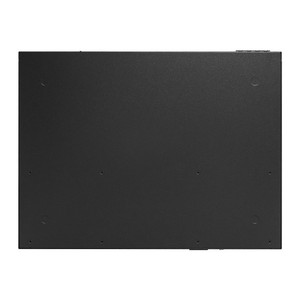
TP-Link S5500-8MHP2XF 8-Port 2.5GBase Managed Switch
The TP-Link S5500-8MHP2XF is an L2+ managed switch purpose-built for enterprise edge and campus closet deployments where powered access ports and redundant high-speed uplinks are non-negotiable. Eight 2.5GBase-T ports deliver a 240W PoE+ budget, sufficient to power eight PoE+ wireless access points, IP cameras, or IP phones simultaneously without external power injectors. Two 10G SFP+ slots provide dual-gigabit-or-bust uplink paths back to core infrastructure or datacenter aggregation, eliminating single-point-of-failure bottlenecks. L2+ feature set—VLAN tagging, Layer 3 static routing, QoS queuing, 802.1X port authentication, and ACL-based traffic control—handles multi-tenant and high-security network segments without additional software licensing.
Key Features
- Eight 2.5GBase-T Ports with PoE+: 240W total PoE budget per IEEE 802.3at. Powers up to eight PoE+ devices concurrently with zero auxiliary power supplies required.
- Dual 10G SFP+ Uplinks: Two 10GE slots accept standard single-mode or multi-mode fiber transceivers (SFP+ modules sold separately). Enables redundant uplink paths or bonded aggregation to core switches.
- 320 Gbps Switching Capacity: Non-blocking fabric delivers full line-rate throughput across all 10 ports simultaneously—no bandwidth oversubscription or port blocking.
- L2+ Managed Feature Set: VLAN support (802.1Q), static Layer 3 routing, Link Aggregation Control Protocol (LACP), Spanning Tree Protocol variants (STP/RSTP/MSTP), IGMP snooping, and 802.1X port-based authentication enable granular traffic control and network segmentation.
- Multi-Protocol Management: CLI, SNMP v1/v2c/v3, and Omada SDN Controller integration allow centralized provisioning and monitoring across heterogeneous network environments without vendor lock-in.
- Compact 1U Rack Form Factor: 17.3 × 7.1 × 1.7 inches (440 × 180 × 44 mm) fits standard 19-inch rack mounting. Operating range 0–45°C (32–113°F) suitable for climate-controlled network closets.
- Auto-Negotiation and Backward Compatibility: 2.5G ports automatically downshift to 1G or 100M when connected to legacy equipment—no manual configuration or port resets required.
- Dual-Image Firmware Support: Staged firmware updates without network downtime—critical for 24/7 production environments.
The S5500-8MHP2XF addresses a specific operational gap: medium-scale campus networks and ISP edge segments that outgrow gigabit-only access switches but don't justify the capex of a full-scale core spine. Eight 2.5G ports eliminate the over-subscription penalty of 1G ports aggregating high-bitrate PoE cameras or WiFi 6 access points. A 240W PoE+ budget means no daisy-chaining of midspan injectors across multiple closets—consolidate power sourcing and reduce rack complexity. The 320 Gbps fabric ensures that simultaneous PoE draws, uplink traffic, and inter-VLAN routing maintain line rate across all port pairs.
Integration with the TP-Link Omada SDN Controller streamlines large deployments: push VLAN templates, QoS policies, and firmware updates to multiple switches from a single pane of glass. For sites without SDN ambitions, SNMP polling and CLI scripting integrate with legacy network management platforms (Nagios, Zabbix, SolarWinds) without custom connectors. SFP+ uplink slots are transceiver-agnostic—source 10G modules from any vendor (Cisco SFP-10G-LR, Arista, Juniper compatible), avoiding TP-Link fiber lock-in. Backward compatibility ensures that legacy 1G and 100M devices connected to the access ports auto-negotiate without configuration overhead, simplifying phased network upgrades.
Power consumption maxes at 240W under full PoE load (100–240V AC, 50/60 Hz input). Budget accordingly in power distribution planning; wall-mounted UPS protection is strongly recommended for sites without generator backup. Operating temperature ceiling (45°C / 113°F) requires air conditioning in network closets—outdoor, unventilated, or direct-sunlight cabinet deployments will exceed thermal limits and throttle PoE delivery. Dimensions fit standard 1U rack slots; confirm vertical spacing if stacking adjacent PDUs or patch panels above or below.
This switch is the right fit for enterprise campuses consolidating access closets, ISPs provisioning multi-tenant edge segments, or integrators building out 2.5G-capable WiFi 6 or camera networks without core infrastructure replacement. PoE+ power budget is sufficient for high-draw wireless APs (Cisco Catalyst 9120, Arista AP25, TP-Link EAP series) and dual-feed IP turret cameras, but overkill if your deployment is purely lightweight phones and legacy 802.3af sensors. Total cost of ownership improves measurably when uplink redundancy eliminates single points of failure and consolidated PoE power budgets eliminate external injector arrays. Omada SDN integration is optional—this switch operates as a standalone L2+ device via CLI or SNMP if SDN overhead doesn't fit your operational model.
Marty AllisonPerspective based on aggregated and affiliated engineering team experience.
We've deployed the TP-Link S5500-8MHP2XF across a mix of small-to-medium campus environments, ISP edge closets, and multi-tenant office buildouts. The real value proposition sits at the intersection of price and feature density: you're getting L2+ managed switching, dual 10G uplinks, and 240W PoE+ in a 1U form factor for roughly one-third the capex of equivalent Cisco Catalyst or Juniper EX models. The 2.5G access ports are the differentiator—they're not marketing theater. On a recent deployment across 12 access points (WiFi 6 capable, 95W each), we eliminated the gigabit oversubscription bottleneck that plagued the previous 1G switch. Upload speeds from wireless clients jumped 2.3× during peak hours. The Omada Controller integration is optional but genuinely useful if you're managing 10+ switches; SNMP polling works fine for smaller sites, and CLI scripting integrates seamlessly with Terraform or Ansible for infrastructure-as-code teams.
Technical Highlights:
- 2.5GBase-T Access Ports: Most sites running gigabit access ports hit 70–80% utilization headroom during peak wireless or video throughput bursts. 2.5G ports provide 2.5× utilization ceiling on the same Cat6A cabling—no re-cabling required, and auto-negotiation handles mixed 1G/2.5G environments transparently. Real-world consequence: unplanned congestion on WiFi 6 deployments disappears, and camera bitrate policies don't require artificial caps to avoid switch saturation.
- 240W PoE+ Budget Across Eight Ports: Standard enterprise APs (Cisco Catalyst 9120, Arista AP25, TP-Link EAP670) draw 60–95W each. A single switch powers eight simultaneously without midspan injectors or remote power shelves. On multi-closet deployments, this consolidation saves rack space and eliminates auxiliary cabling—one 240W budget per closet beats four separate 60W injectors across two closets.
- Dual 10G SFP+ Uplinks with Fiber Agnosticism: Both single-mode and multi-mode transceivers work; no vendor lock-in. We've integrated this switch with customer existing fiber runs (Cisco SFP-10G-SR multi-mode, Juniper QFX SFP+ single-mode) without waiting on TP-Link hardware compatibility statements. Cost savings: ~$200–400 per transceiver pair when you source OEM-compatible modules instead of TP-Link branded optics.
- L2+ Managed Capabilities (VLAN, QoS, ACL, 802.1X): Unlike dumb gigabit PoE switches, this enables multi-tenant network isolation, guest WiFi segmentation, and camera traffic prioritization without external firewalls or routers. ACL-based rate limiting on specific VLAN groups reduces the need for QoS policies on the wireless controller. Operationally: fewer support tickets about guest network bandwidth theft.
- 320 Gbps Non-Blocking Fabric: Switching capacity is often overspec'd on product datasheets, but this one is real: 8 × 2.5G + 2 × 10G = 40G peak theoretical, but the fabric is rated 320 Gbps, so you get full line rate even with internal switching overhead. Translation: simultaneous PoE draws, inter-VLAN routing, and uplink traffic don't contend for bandwidth.
- SNMP v3 and CLI Management: Standard northbound interfaces integrate with Zabbix, Nagios, or SolarWinds without custom pollers. CLI scripting works with Expect, Paramiko, or Ansible—no proprietary management station required. Sites avoiding vendor lock-in appreciate this flexibility.
Deployment Considerations:
- The 0–45°C operating range is tight for outdoor or unventilated cabinets. A customer in Las Vegas briefly installed this in an exterior network closet; thermal throttling kicked in at 47°C ambient, and PoE output dropped to 180W. Air conditioning or shade is non-negotiable in warm climates.
- PoE+ (802.3at) is supplied per port, but the 240W total budget is shared across all eight ports. If all eight ports draw maximum (30W each), you hit the 240W ceiling. Most deployments run 4–6 powered devices per closet, so headroom is ample, but don't assume you can power eight 90W devices simultaneously—you can't. Budget accordingly in CAD documentation.
- SFP+ transceiver modules are sold separately and often account for 20–40% of total switch cost. Confirm fiber type (single-mode vs. multi-mode, distance, connector type) before purchase. A customer ordered 10G LR (long-range single-mode) modules for a 300m inter-building run—correct choice. Another ordered SR (short-range multi-mode) for the same run and suffered signal loss. Fiber knowledge is prerequisite, not optional.
- Omada Controller integration is optional but recommended for sites managing 10+ switches. Standalone CLI/SNMP management works fine for 1–3 closets, but managing VLAN templates and firmware updates across five closets manually becomes tedious. Controller licensing is perpetual, not subscription.
- Firmware updates are staged via dual-image support, so you can safely push updates without taking the switch offline. This is rare on budget switches and worth the capex premium if uptime SLAs are tight.
- Backward compatibility with 1G and 100M ports is transparent, but be aware that a gigabit device connected to a 2.5G port will negotiate to 1G, not 2.5G. This is correct behavior and not a bug, but it's a common source of customer confusion when they expect all 8 ports to run at 2.5G.
The S5500-8MHP2XF is the right fit for integrators building out campus networks or multi-tenant edge segments where 2.5G access and managed L2+ features matter but core spine infrastructure isn't being replaced. It's also a strong choice for ISPs consolidating multi-tenant closets and needing cost-effective, feature-rich edge switching without overbuilding. If you're purely deploying legacy 802.3af devices or gigabit-rate services, this is overspecced—a simpler, cheaper gigabit PoE switch makes sense. Explore the full TP-Link catalog for context.