TP-Link MC210CS Gigabit Single-Mode Fiber Media Converter
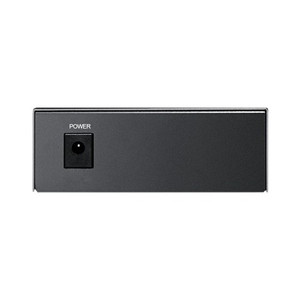
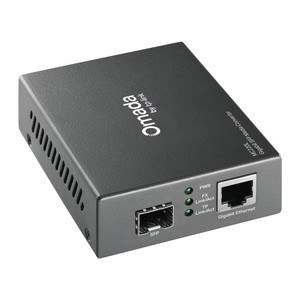
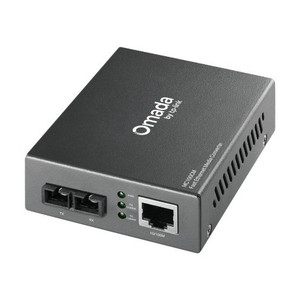
The TP-Link MC210CS is a passive Gigabit media converter that translates 1000Mbps copper (RJ45) to single-mode fiber (SC connector) at full duplex, enabling network links up to 15 kilometers without active electronics or configuration overhead. Single-mode fiber eliminates electromagnetic interference and extends reach far beyond copper's 100-meter limit—essential for campus backhaul, cross-building links, and remote edge deployments housing IP cameras, wireless access points, or network video recorders. Operating transparently at Layer 1 with no drivers, firmware, or management interface, the MC210CS integrates into any 1000BASE-T infrastructure and fits into the TL-MC1400 rack chassis for organized fiber distribution.
Key Features
- Gigabit Throughput: 1000Mbps full-duplex copper-to-fiber conversion. IEEE 802.3x flow control prevents packet loss on congested links.
- Single-Mode Fiber (1310nm): 15 km transmission distance. Single-mode eliminates multimode modal dispersion, critical for extended backhaul and reduced jitter on real-time video streams.
- SC Fiber Connector: Industry-standard single-mode SC jack. Compatible with direct fiber runs, patch panels, and wall-mounted distribution frames.
- Passive Operation: No management interface, no CLI, no firmware updates. Plug RJ45 and fiber, apply power, and forward traffic transparently.
- Low Power Consumption: 5.5W max (9V/0.6A or 5V/1A adapter included). Operates 0°C to 40°C (32°F to 104°F), suitable for indoor network closets and protected outdoor enclosures.
- Compact Form Factor: 3.7 × 2.9 × 1.1 in., desktop or shelf placement. Integrates into TL-MC1400 chassis for multi-converter rack installations.
- Standards Compliance: CE and FCC certified. Full-duplex, full-rate forwarding with no frame buffering or latency introduction.
Single-mode fiber's real-world advantage over multimode or copper is electromagnetic immunity and distance. On a campus with two buildings 800 meters apart, multimode would work but accumulate dispersion; copper would require a repeater or powered switch. The MC210CS bridges the gap with a passive, power-efficient link that handles bursts without backpressure. Network operators frequently deploy these in pairs—one at the primary switch, one at the remote building—to convert between existing copper infrastructure and fiber trunks.
Deployment scenarios include connecting a primary network switch (in the main data center) to a remote building NVR that ingests camera streams from multiple IP cameras on that site. The fiber link is immune to ground loops and RF noise common in industrial facilities or outdoor cable runs. When copper exceeds 100 meters, the MC210CS and single-mode fiber eliminate the need for powered repeaters or additional active infrastructure. The 15 km reach also serves as a future-proofing hedge: if the remote facility moves or expands, the fiber link remains viable without costly rewiring.
Installation is straightforward but requires attention to fiber hygiene. Single-mode SC connectors are polished and must be kept clean; a speck of dust at the interface causes significant signal loss. RJ45 termination on the copper side follows standard Ethernet pinouts—any 1000BASE-T port works (managed switches, PoE injectors, routers). The converter draws minimal power; most network closets and equipment racks have spare 9V or 5V outlets. For rack integration, the optional TL-MC1400 chassis holds up to 4 MC210CS units and simplifies cable management and power distribution. Operating temperature range (0–40°C) is typical for indoor installations; outdoor enclosures require environmental monitoring if ambient exceeds 40°C.
The TP-Link MC210CS is backed by CE and FCC certifications, confirming electromagnetic emission and immunity compliance. It is passive and transparent to any standard 1000BASE-T equipment—no vendor lock-in, no proprietary firmware, no license keys. Organizations using Genetec, Milestone, Axis, or any mainstream NVR platform will find the MC210CS integrates without special drivers; it is simply a physical-layer bridge that preserves all Layer 2 and above protocols. For integrators building resilient campus networks with fiber trunks and edge cameras, the MC210CS delivers cost-effective, maintenance-free reach extension.
Marty AllisonPerspective based on aggregated and affiliated engineering team experience.
We've deployed the MC210CS in dozens of campus and distributed camera networks, and it remains one of the most reliable, zero-configuration media converters in its class. The appeal is simplicity: no management interface, no firmware surprises, no support tickets. Pair it with single-mode fiber and you eliminate the operational drag of powered repeaters, active switches, or copper-run distance anxiety. On a recent three-building surveillance expansion, we ran single-mode fiber between the main network closet and two remote buildings 600 and 900 meters away. The MC210CS converters at each end transparently extended the Gigabit network; camera NVRs and access points pulled DHCP and streamed video as if they were in the main building. Passive operation means zero power budget impact on battery UPS systems—a measurable win on sites with limited electrical infrastructure.
Technical Highlights:
- Single-Mode Fiber @ 1310nm: 15 km range eliminates repeater chains and simplifies topology diagrams. In practice, 15 km is overkill for most campuses, but the 0 dB insertion loss of a passive converter means you pay no penalty for that headroom—the link performs identically at 100 meters or 10 kilometers. Multimode converters (cheaper, shorter range) don't offer this future-proofing advantage.
- Full-Duplex, No Latency: IEEE 802.3x flow control ensures packet integrity on congested links. Real-time video and sensor data experience zero additional delay; a passive converter introduces ~1 microsecond, imperceptible to any application. Powered converters with buffering can add milliseconds under load.
- 5.5W Consumption: Negligible power draw means the MC210CS fits into battery-backed UPS systems without consuming backup runtime. On a 10-converter rack installation, total draw is 55W—less than a single PoE injector or managed switch port.
- SC Connector Robustness: Single-mode SC jacks are extremely durable and support thousands of mate cycles. Unlike LC connectors (used in higher-density applications), SC connectors are less prone to mating force errors and fiber tip damage.
Deployment Considerations:
- Single-mode fiber connectors require cleanliness. Before mating, inspect the SC tip with a fiber scope or cleaning pen; a single dust particle causes 10+ dB loss. Budget for low-cost fiber cleaning supplies and training integrators on inspection discipline.
- RJ45 polarity matters. Cross-wired copper runs (common in legacy deployments) will not work. Verify 568A or 568B continuity before connecting the converter; a simple Ethernet tester ($30) catches this in seconds.
- Single-mode fiber itself is more expensive than multimode and requires slightly longer lead times. For links under 300 meters, multimode (LC or SC) is cost-competitive; the MC210CS justifies single-mode only when reach or future expansion is a constraint.
- The TL-MC1400 chassis is optional but recommended for multi-converter sites. It organizes power distribution and simplifies cabling; without it, you manage separate adapters and power strips, increasing clutter and failure points.
- Operating temperature limit (40°C max) rules out unventilated outdoor cabinets or exposed equipment racks. For outdoor fiber terminals, specify environmental monitoring and active cooling if ambient temperatures exceed 35°C.
The MC210CS is the go-to choice for integrators building distributed IP camera networks across campuses, industrial sites, or mixed indoor-outdoor deployments where fiber backhaul is non-negotiable. It eliminates active infrastructure, reduces operational overhead, and works with any standard network equipment. For end-users evaluating total cost of ownership, passive converters lower the cost of ownership per kilometer compared to powered alternatives and require zero management training. Explore the full TP-Link catalog for additional networking and infrastructure products.