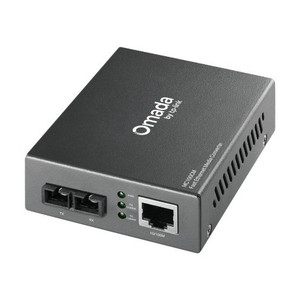
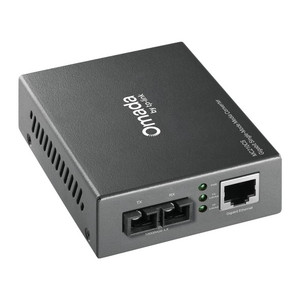
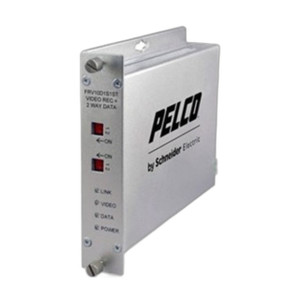
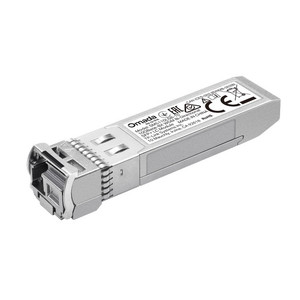
TP-Link MC110CS Single-Mode Fiber Media Converter
The TP-Link MC110CS is a fiber media converter designed for extending Ethernet networks beyond standard copper distance limits using single-mode fiber. Operating at 10/100Mbps over SC single-mode fiber with a rated range of up to 20km, it bridges copper RJ45 connections to fiber infrastructure for IP camera systems, network backbone extensions, and access control feeds where distance, electromagnetic interference, or signal integrity demands fiber topology.
Key Features
- Single-Mode Fiber (20km Range): SC connector on fiber side supports ITU-T G.652 single-mode fiber. 20km maximum distance eliminates copper distance constraints on long perimeter runs, parking lot networks, or multi-building campuses without repeaters.
- 10/100Mbps Full-Duplex Ethernet: Transparent conversion—RJ45 input accepts devices at either speed. Full-duplex operation ensures simultaneous bidirectional data flow critical for real-time surveillance feeds with zero collisions.
- Zero-Configuration Operation: Plug-and-play converter requires no IP address, management interface, or firmware updates. Signal passes through transparently once powered.
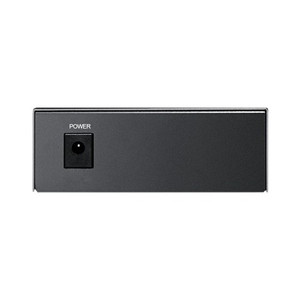
- External Power Supply (9V/0.6A or 5V/1A): Low-power design draws minimal current. Standard switching adapter minimizes heat dissipation in cabinet environments.
- Rack-Mount Form Factor: Compact adapter designed for network cabinet installation. Mounts inline or in patch panels without taking up significant rack space.
- Wide Operating Temperature Range: 0°C to 40°C operating; storage rated to −40°C to 70°C. Suitable for both indoor climate-controlled cabinets and outdoor enclosures with thermal management.
- FCC and CE Certified: Meets regulatory standards for electromagnetic compatibility and emissions control across North America and EU markets.
Single-mode fiber carries Ethernet at lower attenuation over distance than multimode fiber, making the MC110CS ideal for backbone links connecting distant network nodes. At 20km, fiber attenuation becomes the limiting factor—typical single-mode fiber exhibits loss around 0.35dB/km at 850nm wavelength, meaning a 20km run will experience approximately 7dB cumulative loss. The converter's internal optical transceiver is calibrated for this profile; verify your fiber installation with a power meter before going live on critical surveillance or access control links.
Deployment of single-mode converters requires attention to fiber quality and connector hygiene. SC/UPC or SC/APC connectors must be inspected for dust, scratches, or residue before mating—even microscopic contamination degrades signal strength at maximum range. If you are extending an existing copper network to a remote building, measure the fiber run and confirm attenuation stays below the converter's maximum loss budget (typically −15dB to −20dB for reliable 10/100Mbps operation). Test with a portable fiber power meter or OTDR (Optical Time Domain Reflectometer) before connecting live cameras or critical infrastructure.
The MC110CS integrates with any standard Ethernet ecosystem—IP cameras on PoE injectors, managed switches, NVRs, or access control hubs. Because the converter operates at Layer 1 (physical layer) with no spanning tree, bridging logic, or MAC learning, it introduces no latency jitter and is invisible to network management tools. This transparency is a strength (no configuration overhead, no single point of management failure) and a limitation (no redundancy, no failover logic if the fiber is cut or connector is degraded). For critical deployments, consider dual fiber runs with two separate converters, or integrate the converter into a larger fiber backbone with OTDR monitoring and documented attenuation baselines.
Compliance certifications (FCC, CE) confirm the unit meets electromagnetic emissions limits for networking equipment. There are no export controls, import duties, or supply-chain concerns with this product; it is widely available and interchangeable with other 10/100Mbps single-mode fiber converters from neutral vendors. Total cost of ownership is driven primarily by the cost of single-mode fiber installation (trenching, aerial runs, conduit) rather than the converter itself—a $200–$400 hardware cost is trivial against a $5,000–$20,000 fiber deployment. Where single-mode fiber is already in place (e.g., connecting data centers or campus buildings), adding a MC110CS converter to existing dark fiber is a cost-effective way to extend your surveillance or access control network footprint.
Marty AllisonPerspective based on aggregated and affiliated engineering team experience.
We've deployed the TP-Link MC110CS on campus networks, parking lot perimeters, and multi-building surveillance backbones where single-mode fiber was already running between buildings or across open ground. The key differentiator versus multimode converters is distance and attenuation profile—single-mode's tighter core (8–10 microns vs. 50–62 microns for multimode) allows light to travel 20km before signal loss becomes unacceptable. On a 14-building university campus with 8–12km fiber runs between security zones, we've used pairs of MC110CS units to feed IP camera traffic from remote buildings back to a central NVR over existing backbone fiber. The converter's transparency (zero config, no IP address, no management overhead) meant one less thing to troubleshoot when network engineers were provisioning the fiber plant—it just worked once we confirmed the fiber attenuation was within budget. The trade-off: this is a dumb converter with no redundancy logic, no failover, and no way to know if the fiber has degraded until video quality drops or alarms stop reporting. On critical access control or intrusion feeds, we pair it with fiber monitoring (periodic OTDR testing or power-meter spot checks) rather than relying on the converter to self-diagnose.
Technical Highlights:
- 850nm Infrared Wavelength: Standard telecom wavelength for short-to-medium-distance single-mode fiber. Allows use of commodity single-mode fiber (ITU-T G.652) without special ordering. Attenuation is approximately 0.35dB/km, meaning a 20km run experiences ~7dB loss—within the converter's optical budget for reliable 10/100Mbps operation.
- Full-Duplex, Collision-Free Operation: RJ45 input and fiber output operate simultaneously without half-duplex delays or collision backoff. Critical for surveillance streams where buffering or retransmission jitter can cause dropped frames in real-time video feeds.
- 10/100Mbps Auto-Negotiation: Converter detects device speed (10 or 100 Mbps) and adapts optical output accordingly. No manual configuration—cameras, switches, and PoE injectors connect and work immediately.
- Passive Optical Design (Transparent): Operates at Layer 1 with no MAC learning, bridging logic, or spanning tree protocol. Introduces zero latency overhead and no single point of network management failure. Also means no way to monitor link health from the network side—fiber inspection and power-meter testing are your only diagnostics.
- Low Power Draw (0.6A @ 9V or 1A @ 5V): External switching adapter minimizes heat dissipation in cabinet environments. Suitable for dense equipment racks with limited cooling capacity.
Deployment Considerations:
- Fiber Attenuation Baseline: Before going live, test your fiber run with a portable power meter or OTDR. Typical single-mode fiber loses ~0.35dB/km at 850nm. At 20km, expect ~7dB cumulative loss. If attenuation exceeds −15dB to −18dB, performance will degrade or fail. Document the baseline so you can spot degradation later (dust, micro-bends, or connector wear).
- Connector Hygiene Critical: SC/UPC and SC/APC connectors must be inspected under magnification and cleaned with fiber-grade isopropyl alcohol wipes before mating. Dust, scratches, or fingerprints on the connector face directly reduce signal strength. On a 20km run, even microscopic contamination is unacceptable.
- Single-Mode vs. Multimode: This converter is strictly single-mode only. Attempting to use multimode fiber will result in signal loss, intermittent connectivity, or complete failure, especially beyond 500 meters. Verify your fiber plant is single-mode before deployment.
- No Redundancy or Failover: The MC110CS has no automatic detection of fiber breaks or degradation. If the fiber is cut or the connector is dirty, the converter will pass no signal with no warning. For mission-critical feeds (access control, intrusion detection), plan for dual fiber runs with separate converters or periodic power-meter monitoring.
- Cabinet Mounting: Unit is compact and designed for inline patching or rack mounting. Ensure adequate cable slack for connector servicing—fiber patch cables should not be bent sharply (typical bend radius limit is 10–15cm for single-mode).
The MC110CS is the right choice for integrators extending surveillance or access control networks across campuses, industrial parks, or utility properties where single-mode fiber backbone is already in place or cost-effective to install. Its transparency and low power draw make it a set-it-and-forget-it converter once the fiber plant is validated. If you need managed redundancy, link monitoring, or automatic failover, step up to managed fiber converters with redundant ports and SNMP monitoring—but for straightforward long-distance Ethernet extension, this TP-Link unit delivers the range and simplicity at a compelling price point. See the TP-Link catalog for other networking and infrastructure products.