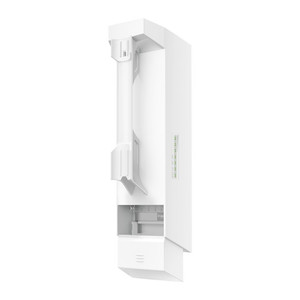
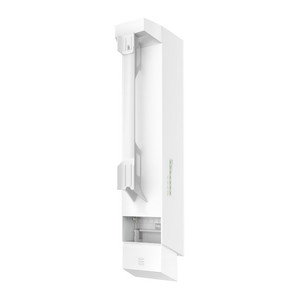
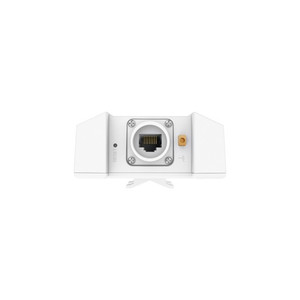
TP-Link CPE710 5GHz 867Mbps Outdoor CPE
Overview
The CPE710 is a 5GHz outdoor customer premises equipment (CPE) radio built for fixed point-to-point and point-to-multipoint wireless bridge deployments. It delivers 867 Mbps throughput over IEEE 802.11a/n/ac standards and uses a 23 dBi directional antenna to concentrate RF energy over distance—meaning you get focused coverage and reduced interference in congested wireless environments, critical when deploying backhaul links through urban or industrial RF noise.
Deploy the CPE710 where fiber or copper runs are impractical: warehouse-to-office site-to-site connectivity, last-mile access to remote buildings, or temporary network extensions during infrastructure reconfiguration. The 5GHz band avoids 2.4GHz saturation common in dense urban and factory floors. Pole-mountable form factor fits standard 1.5-inch pipe mounts, keeping installation straightforward on existing tower or rooftop infrastructure.
Compatibility
The CPE710 operates as a standalone access point or transparent wireless bridge. Pair two units in symmetric point-to-point mode for bidirectional site-to-site links, or deploy multiple CPE710 clients connecting to a central base station for point-to-multipoint fan-out. It integrates with TP-Link's outdoor wireless ecosystem and supports third-party equipment adhering to IEEE 802.11ac standards. Verify RF line-of-sight and antenna alignment before deployment—directional designs degrade quickly under obstruction or misalignment.
Installation Notes
Confirm pole-mounting surface can withstand wind load from the directional antenna array. Position antenna with clear azimuth and elevation paths to the remote site and account for Fresnel zone clearance—even partial obstruction degrades throughput significantly. Use outdoor-rated cables and surge protection on both power and network ports to guard against lightning strike. The unit draws power via PoE, eliminating the need for separate power supplies at the antenna site. Before final deployment, conduct a site survey to verify signal strength and line-of-sight conditions across the planned link distance.