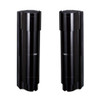
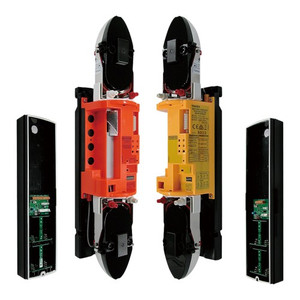
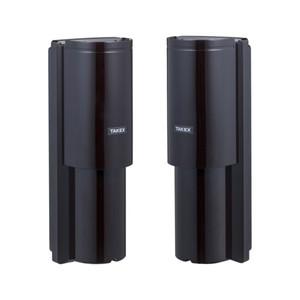
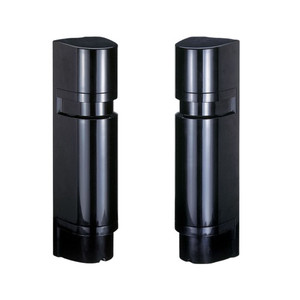
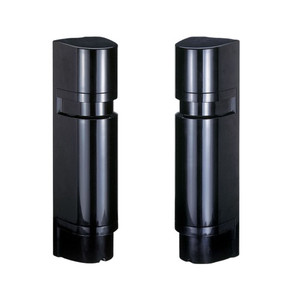
Takex TXF-125E Battery Operated Quad Beam Photoelectric
The Takex TXF-125E is a battery-operated quad beam photoelectric detector designed for outdoor perimeter monitoring in locations where hardwired power is impractical or cost-prohibitive. The quad beam configuration—four parallel detection beams stacked vertically—monitors intrusion attempts across multiple height planes simultaneously, eliminating the blind spots inherent in single-beam designs. This detector pair integrates with standard hardwired security control panels and alarm systems, making it a retrofit option for existing installations without requiring new infrastructure investment.
Key Features
- Quad Beam Detection: Four stacked photoelectric beams per unit pair. Covers multiple height zones in a single installation, reducing the number of detector units needed for full perimeter coverage.
- Battery Powered: No AC or PoE dependency. Ideal for remote fence lines, building perimeters, and access points where power runs are impractical or prohibitively expensive to install.
- IP66 Weather Rating: IP66 rated for rain, dust, and temperature extremes. Operates year-round in harsh outdoor environments without degradation.
- 100m Range: Achieves 100 m (330 ft) detection range per beam pair. Larger perimeters can be covered by stacking multiple transmitter-receiver pairs on the same pole line.
- Pole Mount Configuration: Standard pole mount assembly fits galvanized steel poles (KP-100 or KP-150 sold separately). Quick-deploy installation without trenching or excavation.
- Selectable Frequency Bands: Four selectable frequencies prevent cross-talk when aligning multiple beam sets. Critical for large zones with multiple detector pairs operating in parallel.
- Optional Accessories: Rear cover (BP-50X) hides mount hardware for aesthetic integration. Side trim (BS-50X) prevents beam crosstalk on back-to-back installations.
- Standard Panel Integration: Connects to hardwired security control panels and alarm systems via photoelectric input terminals. No proprietary gateway or VMS required.
The quad beam design fundamentally changes perimeter detection economics. A single TXF-125E pair covers a wider vertical target space than two single-beam units, reducing hardware count and total installation labor. For a 200-meter fence line with varying terrain, a traditional single-beam solution might require 8–10 detector pairs; quad beam coverage achieves the same protection with 4–5 pairs. On remote sites where power infrastructure doesn't exist, that translates directly to capex and operational savings—no generator rental, no trench permits, no ongoing AC monitoring.
Battery operation is the defining constraint and advantage simultaneously. The TXF-125E eliminates power wiring entirely, enabling rapid deployment and repositioning without infrastructure lockdown. However, battery life varies with environmental temperature, humidity, and alarm frequency. Cold climates and high-traffic perimeters (frequent false alarms) drain batteries faster than specification datasheets suggest. Integrators should conduct a pre-deployment battery life audit for any remote installation and establish a predictable replacement schedule. Optional solar charging kits (sold separately) extend battery runtime indefinitely on sunny sites, though they add cost and complexity.
Installation footprint is minimal: a pole, a transmitter unit on one side of the monitored zone, and a receiver on the opposite side. The quad beam transmitter and receiver units are matched pairs—they must be deployed together and aligned to the same frequency. Four frequency options prevent interference when multiple TXF-125E pairs operate on the same perimeter. Alignment is critical; misalignment of even 15–20 cm over a 100-meter span can result in nuisance trips or unmonitored blind spots. Use a laser alignment tool or reflective tape during initial installation and verify beam intersection quarterly for outdoor installations subject to wind loading or vibration.
The TXF-125E has no built-in analytics, IP addressing, or cloud reporting—it is a pure hardwired photoelectric detector. Alarm relay output (typically dry contact form C) connects directly to a panel input. For integration with modern VMS platforms (Genetec, Milestone, Avigilon), the alarm contact must be bridged through a hardwired panel that supports IP forwarding or through a discrete bridge relay. This design philosophy is both a strength and a limitation: it ensures reliable, interference-immune operation in RF-hostile environments (near high-voltage transmission lines, cellular towers, industrial machinery), but it precludes remote monitoring or cloud alerting without intermediate hardware.
The TXF-125E is sourced direct from the manufacturer, factory-new, with Manufacturer Warranty coverage. It meets NEMA and UL standards for outdoor intrusion detection and is suitable for fence-line perimeter security, building access control, and parking lot boundary monitoring. For integrators managing mixed deployments of wired and wireless perimeter sensors, the quad beam's hardwired reliability and zero RF dependency make it a prudent choice on sites where RF noise is a known issue. Refer to the Takex catalog for complementary beam detector models and accessory compatibility.
Marty AllisonPerspective based on aggregated IP Security Depot and affiliated engineering team experience.
The Takex TXF-125E quad beam is a niche product, but in our experience, it fills a critical gap: rapid outdoor perimeter deployment where power infrastructure is either absent or too expensive to justify. We've specified quad beams on rural facility perimeters, remote equipment yards, and temporary construction site boundaries where hardwired single-beam solutions would have required $3,000–$8,000 in trenching and conduit just to reach the fence line. The quad beam configuration is the real differentiator here. Instead of daisy-chaining four single-beam pairs to cover a 4-meter-tall fence from ground to 3 meters, one quad pair does the job. On a 500-meter perimeter, that cuts hardware count by 30–50%, with proportional savings on alignment labor and field troubleshooting. Battery operation introduces an obvious weakness—battery replacement intervals and cold-weather performance are unpredictable—but on sites where site access is reasonable (monthly or quarterly walk-throughs), the operational overhead is manageable. The real liability is using the TXF-125E on unmanned sites with no service schedule; we've seen installations fail silently mid-winter because battery drain rates weren't validated in the deployment environment.
Technical Highlights:
- Quad Beam vs. Single-Beam Economics: Four stacked vertical beams eliminate the need for multiple detector pairs to cover human-sized intrusion targets. On a 200-meter perimeter requiring 4-meter vertical coverage, a single quad pair (transmitter + receiver) replaces 3–4 single-beam pairs. That's 40–50% fewer mounting brackets, fewer cable runs back to the panel, and fewer alignment points to validate.
- Battery Endurance in Cold: Alkaline batteries in outdoor installations can drop 30–50% of their rated capacity in sub-freezing conditions. Before committing the TXF-125E to a remote, unheated installation, calculate expected battery life from the datasheet and apply a conservative 60% derating factor. On high-traffic perimeters (frequent alarm events), expect 6–9 months rather than the stated 12–18 months.
- Frequency Selectivity: Four selectable frequency bands are essential when stacking detector pairs on the same pole or when adjacent perimeter zones require independent detection. Crosstalk between mismatched frequencies causes false alarms and nuisance lockouts. Always document frequency assignments and label transmitter/receiver pairs at installation.
- Alignment Tolerance: Quad beam pairs require laser or reflective-tape alignment to within ±10–15 cm over 100 meters. Wind loading, vibration from adjacent machinery, or thermal expansion of the pole can drift alignment over 6–12 months. Schedule quarterly beam intersection checks on outdoor installations to catch drift before it causes blind spots.
- Panel Integration Flexibility: Dry-contact relay output ties directly to any hardwired panel (DSC, Honeywell, Apollo, Bosch) without proprietary gateways. On sites with legacy wired panels, the TXF-125E integrates immediately; on modern IP-based systems, bridge the relay through a hardwired contact input or discrete IP bridge module (sold separately by panel manufacturer).
Deployment Considerations:
- Battery replacement intervals vary widely by climate and alarm frequency. Cold climates and high-traffic zones consume batteries 30–60% faster than temperate, low-traffic settings. Establish a predictable battery audit schedule before deploying to unmanned or remote locations.
- IP66 rating handles rain and dust, but ultraviolet exposure and salt spray (coastal installations) can degrade plastic housing over 2–3 years. On salt-spray sites, consider upgrading to stainless-steel pole mounts and applying UV-protective coatings to extended optical surfaces.
- Pole height and angle of incidence matter more with quad beams than single-beam detectors. Incorrect installation angle or pole lean can misalign the entire four-beam stack. Use a laser level or clinometer to verify vertical alignment at 90° to the perimeter fence before activating the alarm circuit.
- Frequency conflicts with nearby RF sources (cellular towers, two-way radios, industrial RF equipment) are rare but catastrophic when they occur. If the TXF-125E is deployed near high-power RF installations, perform an RF survey and document the selected frequency band in the site maintenance log.
- Optional solar charging kits extend battery life indefinitely on sunny sites but add ~$500–$800 per pair and require periodic cleaning of solar panels. Conduct a cost-benefit analysis: if battery replacement labor is expensive (remote site, difficult access), solar pays for itself in 18–24 months; otherwise, stick with battery-only operation.
The Takex TXF-125E is ideal for integrators managing perimeter security on budget-constrained or hard-to-wire facilities. It's not a replacement for hardwired beam detectors on fully developed sites; it's a force multiplier for temporary, remote, or rapid-deployment perimeters where power infrastructure is simply not available. If your project has a fixed fence line, stable terrain, reasonable site access, and a willingness to manage battery replacement, the quad beam configuration will save material and labor costs versus comparable single-beam solutions. For more Takex beam detector models and system design guidance, visit the Takex catalog.