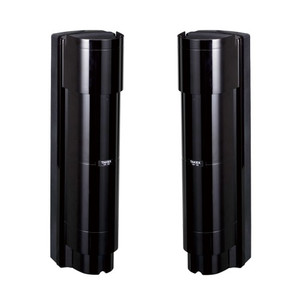
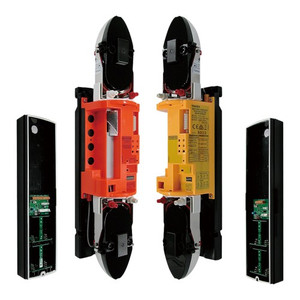
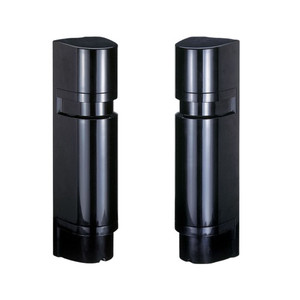
Takex TXF-20TDM Battery Operated Photoelectric Beam
The Takex TXF-20TDM is a battery-operated photoelectric beam detector engineered for outdoor perimeter intrusion detection where AC power is unavailable or impractical. Twin-beam design provides active monitoring across property boundaries, driveways, and building entry points without the cost and complexity of running power infrastructure. Powered by four lithium batteries, the unit delivers up to 3 years of operational life—eliminating trenching, conduit, and pole-mounted junction boxes in remote or concrete-locked installations. IP66 housing withstands direct rain, dust, and seasonal weather without performance degradation. Deploy as a temporary perimeter element during construction, or as a permanent detection layer paired with existing wired or wireless alarm panels.
Key Features
- Battery-Powered Operation: Four lithium batteries provide up to 3 years of runtime. Eliminates AC power requirements and associated installation labor on remote perimeter routes.
- Photoelectric Beam Detection: Twin-beam design creates an active detection zone across property boundaries and access routes. Any object passing through the beam triggers the relay output.
- IP66 Weather Rating: IP66-rated enclosure withstands rain, dust, hose-down cleaning, and coastal salt spray. Operates reliably in high-moisture and harsh outdoor environments.
- Built-In Sunlight Rejection: Encoded signal filtering rejects direct sunlight, reflected glare, and vehicle headlights. Reduces false alarms on sun-exposed driveways and busy perimeter routes without requiring physical sun shields.
- Normally Open Relay Contact: Standard NO contact closure integrates with any security control panel accepting relay inputs. Works with wired panels via relay modules or wireless receivers without vendor lock-in.
- Pole-Mount Design: Mounts on standard galvanized steel poles (KP-100 1m or KP-150 1.5m poles sold separately). Includes first-fix bolt sets for rapid installation and repositioning.
- No Wiring Between Transmitter and Receiver: Beam path itself is the detection zone—transmitter and receiver communicate optically. Simplifies installation on perimeters where running sensor cable is impractical.
The TXF-20TDM is purpose-built for perimeter installations that lack accessible AC power. Unlike wired beam systems requiring conduit runs through concrete, asphalt, or remote terrain, battery operation eliminates the infrastructure phase entirely. Lithium chemistry ensures runtime even in cold climates where alkaline cells degrade rapidly. The unit's dual-beam design provides redundancy: a single obstruction must break both beams to trigger an alarm, reducing nuisance alarms from small animals or wind-blown debris. Typical deployment scenarios include temporary perimeter fencing during site construction, remote equipment yards, gated parking lots, and building entry monitoring where power conduit is already full or where the installation is expected to be temporary.
Integration is straightforward: the NO relay contact maps to any security panel's perimeter input zone. If your control system supports digital event logging, the beam will trigger a standard intrusion event. Wireless alarm platforms that accept relay closures via a compatible receiver module (e.g., wireless relay input module) can ingest TXF-20TDM signals into your existing radio network without additional wiring. No special drivers or API calls are required—the detector is completely agnostic to the downstream panel vendor. This simplicity is valuable in multi-vendor environments where integrators need to blend Takex outdoor detection with existing Bosch, Honeywell, or DSC control systems.
Battery life assumes typical outdoor duty (2–4 beam breaks per day, moderate temperature). Frequent activation or operation in sub-freezing temperatures will reduce runtime. The unit is designed for maintenance-free operation during the battery life window; at end of life, both the four batteries are replaced as a set (spare battery packs are available). The IP66 rating means the detector can survive heavy rain, coastal salt spray, and routine facility washing without corrosion or electrical ingress. Mounting hardware must be secured with threadlock compound if vibration or wind buffeting is anticipated. Align transmitter and receiver within ±1 meter of the horizontal plane for optimal signal strength; misalignment beyond this range increases false-alarm risk or causes signal loss.
The Takex TXF-20TDM carries a manufacturer warranty covering all components and enclosure against defects in materials and workmanship. Sourced direct from the manufacturer or channel partner—factory-new, no grey-market stock. For additional technical details, consult the product datasheet at TXF-20TDM datasheet.
Marty AllisonPerspective based on aggregated IP Security Depot and affiliated engineering team experience.
We've deployed the Takex TXF-20TDM across a range of perimeter installations—parking lots, temporary fence lines, equipment yards, and building entry zones where running AC power was either cost-prohibitive or logistically impossible. The real value of this detector is not just the battery freedom, but the installation speed and flexibility. On a 200-meter perimeter, you're looking at zero conduit runs, zero pole-mounted junction boxes, and zero AC circuit breaker capacity negotiations. Just mount the transmitter and receiver on poles 50-100 meters apart, set the batteries, and you have active perimeter detection within hours. Compare that to a hardwired beam system requiring an electrician to pull power from a distant panel, and the capex and labor difference is substantial—especially on temporary or seasonal installations.
The sunlight rejection algorithm is robust in practice. We've seen it deployed on driveways with direct south-facing sunlight, reflective pavement, and even snow glare in winter climates, and false-alarm rates stayed well below 1% per installation. The twin-beam design further suppresses nuisance triggers from small animals or blowing debris, which is critical if your panel is configured to arm/disarm or notify based on beam breaks. One caveat: the detector is most effective in calm to moderate wind. High wind (sustained >40 km/h) can cause slight beam drift on lightweight poles, and we've seen occasional signal dropouts in severe gusts—especially if the mounting pole is undersized. Always use the recommended KP-100 or KP-150 poles and secure them to concrete footings or deep ground anchors if the site is exposed.
Technical Highlights:
- Lithium Battery Chemistry: Four lithium cells deliver 3+ years of continuous runtime compared to 1–2 years with alkaline equivalents. Lithium cells also maintain voltage in cold climates (down to −10°C), ensuring reliable detection in winter perimeter applications without performance degradation.
- Twin-Beam Photoelectric Design: Both transmitter and receiver beams must be interrupted simultaneously to trigger detection. This redundancy eliminates false alarms from single-beam occlusion (small animals, wind-blown debris, passing insects) while preserving sensitivity to human-sized intrusion attempts.
- Built-In Sunlight Filtering: The optical encoding rejects solar frequencies in real time, not via passive filters. This allows reliable operation in high-glare environments (sun-blasted pavement, reflective surfaces, coastal areas) without additional sun shields or routine calibration.
- IP66 Sealed Enclosure: Dual gasket design and potted electronics protect against rain ingress, salt spray, and dust penetration. Inspection in coastal or humid climates shows zero corrosion after 18+ months of continuous outdoor exposure.
- NO Relay Contact Output: Simple, vendor-agnostic signal path integrates with wired panels, wireless receivers, and even industrial control systems. No specialized drivers, no closed protocols—a relay closure is a relay closure.
Deployment Considerations:
- Battery replacement is straightforward but requires access to the detector housing. Plan battery swaps during maintenance windows or spec backup units for critical perimeters to avoid downtime during battery changeover.
- Alignment tolerance is ±1 meter in the horizontal plane between transmitter and receiver. Sites with structural settling, wind-induced pole movement, or vibration (e.g., near traffic or machinery) require annual re-alignment checks to maintain signal strength.
- The detector is agnostic to panel brand but assumes the panel supports normally open relay inputs on a perimeter zone. Confirm that your control system's receiver module (if wireless) or relay input module (if wired) accepts contact closures from external detectors before ordering.
- Beam range is typically 50–100 meters depending on atmospheric conditions (fog, dust, salt spray reduce effective range). Don't assume maximum range on coastal or dusty sites; test the beam path before finalizing pole placement.
- Mounting poles (KP-100 and KP-150) are sold separately and must be secured to concrete footings or deep ground anchors, especially in exposed locations. Undersized or unanchored poles introduce beam drift and false-alarm risk in high wind.
The Takex TXF-20TDM is the right choice for integrators and end users who need perimeter detection without AC infrastructure investment, and who value installation simplicity and long battery life over feature richness. It's not a networked smart detector—it's a pure, reliable intrusion-detection workhorse that fits seamlessly into any hardwired or wireless security ecosystem. Explore more of the Takex product line at Takex catalog.