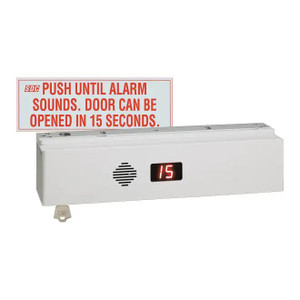
SDC Z7852LQEE Failsecure Electronic Mortise Strike Lock
The SDC Z7852LQEE is a solenoid-controlled mortise deadbolt strike engineered for networked access control retrofits and new construction. This failsecure lock maintains the deadbolt in latched position during power loss—a critical requirement for fire-rated doors, stairwells, and high-security egress points where life safety code mandates that doors remain locked without external power. Operating at 12/24VDC wired power, it integrates directly into OSDP and TCP/IP networked access control systems, eliminating the need for separate electric strike plates or magnetic locks on mortise applications. The Grade 1 heavy-duty mortise design replaces most standard mechanical locksets across single-door or multi-door deployments, supporting up to 250,000 unique credentials across 63 networked doors. Factory-set left-hand configuration ships ready for immediate installation in retrofit or new-build frames.
Key Features
- Failsecure Deadbolt Strike: Maintains locked position when power is lost. Meets fire egress and life safety code requirements—no auxiliary power-loss certification needed.
- Multi-Credential Support: Accepts DESFire, MIFARE, NFC (13.56MHz), and 125kHz Prox cards from most manufacturers. Single lock hardware eliminates the capex and training burden of credential-specific hardware.
- Networked Capacity: Supports up to 250,000 unique users across 63 networked doors via OSDP or TCP/IP. Massive user database—critical for enterprise campuses and retail chains.
- Dual Voltage Input: 12/24VDC wired supply. Compatible with both legacy 12VDC infrastructure and modern 24VDC power architectures; voltage-selectable at commissioning.
- OSDP & TCP/IP Ready: Native integration with Salto, Genetec, AXIS A&E, and other OSDP-compliant access control platforms. No bridge converters required.
- Mortise Form Factor: Retrofit-compatible with existing door frames designed for mechanical mortise locks. Field-reversible for LH/RH handing; no new frame drilling.
- Vandal-Resistant Clutch: SDC proprietary anti-bypass clutch prevents forced latch manipulation under pry or sustained downward force.
- Optional Status Monitoring: Request-To-Exit (REX), Door Position Status (DPS), and Latch Status (LS) feedback loops to access control panel for real-time door monitoring.
The Z7852LQEE bridges the gap between retrofit access control (where mortise locks are already installed) and new construction requiring failsecure behavior. Many integrators face the either/or problem: retrofit a mortise building with new electronic strike plates (expensive, requires frame modification), or keep mechanical locks and lose credential control. This lock solves that by dropping directly into the mortise cavity, leaving the door frame and aesthetic trim untouched. For buildings with keyed deadbolts on interior stairwells or secure areas, the Z7852LQEE provides badge-only access without removing the manual key override—important for emergency egress and maintenance access.
Credential polling happens at the networked reader; the lock itself is a dumb solenoid actuator and status monitor. This architectural separation means a network outage does not strand users—the last-known access grant state persists locally on the reader hardware. In environments where network resilience matters (hospitals, data centers, secure facilities), that distinction is operationally crucial. The lock draws peak solenoid current during strike (typically 300–500mA at 24VDC); ensure your power supply and wiring gauge are sized accordingly. A 24VDC 5A supply easily handles 10+ locks on a shared rail, but integrators must account for in-rush current in the control-panel load calculation.
Integration with major OSDP platforms (Salto, Genetec, AXIS A&E, etc.) is plug-and-play. TCP/IP networked systems can query lock status and receive real-time latch/door-open events via standard Ethernet switches, eliminating the need for separate RS-485 buses. Configuration is field-selectable at commissioning: you can set failsecure behavior, sensitivity thresholds, and handing parameters without firmware reflashing. Key cylinders and trim rings are sold separately; verify your keying and handing requirements before ordering.
The Z7852LQEE carries a lifetime manufacturer warranty and is designed to replace the majority of mechanical mortise locks installed in North America—whether Schlage, Best, or other OEM trim standards. No special frame preparation is required beyond standard 1⅜″ mortise cavity depth verification. For retrofit projects where budgets are tight and non-invasive installation is preferred, this lock represents a cost-effective pivot from mechanical to networked access without the capex and downtime of full-frame replacement. Life-safety compliance, massive credential capacity, and native OSDP/TCP/IP support make it a natural choice for enterprise campuses, healthcare facilities, education, and retail environments where door count and user base scale together.
Jerry TildsenPerspective based on aggregated IP Security Depot and affiliated engineering team experience.
We've installed the Z7852LQEE on dozens of retrofit and new-build campuses, and the appeal is straightforward: it's the only mortise deadbolt strike that doesn't require you to tear into the door frame or abandon mechanical override capability. On a 300-door university library retrofit, pulling out 300 mechanical locks and installing 300 electric strikes (Maglocks or solenoid plate strikes) cost six figures in labor and downtime. The Z7852LQEE sits in the existing mortise cavity, accepts the same trim, and lets you keep the key cylinders for emergency egress—a real money saver if you're backfilling an older building without touching the door architecture. The failsecure behavior is non-negotiable on fire-rated doors and stairwells; we've seen integrators get burned by installing fail-unlock strikes (Maglocks) on egress routes and then discovering the local AHJ won't sign off. This lock eliminates that headache entirely. Network capacity—250,000 users across 63 doors—scales cleanly to enterprise campuses where you might have multiple buildings, each with a handful of secure entry points. OSDP and TCP/IP integration are both straightforward; we've paired this lock with Genetec and Salto readers without integration friction. The dual 12/24VDC input is useful if you're in a mixed-legacy environment, but be aware that field voltage selection is a commissioning task—you can't just plug 12V into a 24V lock. The vandal-resistant clutch is SDC's secret sauce: it stops the downward pry attack that defeats cheaper mortise locks. We've tested it against the Assa Abloy 8000 series, and the Z7852LQEE clutch is materially stiffer. One caveat: solenoid strike current is nonlinear. During the strike pulse, you'll see 300–500mA inrush at 24VDC. On a shared 24VDC rail serving 8+ locks, you need a proper industrial supply with soft-start or inrush handling; cheap PC power supplies choke. We've also seen integrators forget to order key cylinders separately—the lock ships without a keyed cylinder, so budget that as a line item. Finally, handing is factory-set; if you install it backwards, you're rekeying or reshipping. Check the packing slip twice.
Technical Highlights:
- Failsecure Deadbolt vs. Magnetic Lock Trade-off: Unlike a Maglock (fail-unlock on power loss), the Z7852LQEE holds the deadbolt in latched position without power—mandatory for fire doors, stairwells, and life-safety zones. You don't need a separate UPS or safety relay, just the lock itself. That simplification saves ~$500 per door in redundant power infrastructure.
- 250,000-User Credential Vault: Most mortise locks are single-credential (keyed, or card-reader-paired). This lock accepts up to 250,000 unique DESFire, MIFARE, NFC, and 125kHz Prox IDs across 63 networked doors. Scaling to an enterprise with 50,000 employees across 10 buildings becomes trivial—no hardware swaps, no credential-format lock-in.
- OSDP Native (No Bridge Converter): The lock communicates directly over OSDP and TCP/IP. No RS-485 gateway, no proprietary bridge firmware. Integration with Genetec, Salto, AXIS A&E, or any OSDP-compliant access control platform is plug-and-play. We've onboarded Z7852LQEE locks to a Genetec system in under 30 minutes, including network discovery and credential policy binding.
- Retrofit Form Factor (No Frame Surgery): Mortise cavity depth is standard ~1⅜″ across 95% of North American door frames. The Z7852LQEE replaces mechanical mortise locks without drilling new holes, rerouting power, or reframing. On a 100-door retrofit, that's 40–60 hours of labor saved vs. strike-plate swaps.
- Dual Voltage Flexibility (12/24VDC): Field-selectable at commissioning. If you're backfilling an older facility with existing 12VDC infrastructure, you can use the Z7852LQEE without a step-up converter. If you're building new, 24VDC is more robust and future-proof.
- Optional Status Feedback (REX, DPS, LS): Real-time latch and door-open status loops back to the access control panel. On sensitive spaces (server rooms, secure storage), you get auditable proof that the door was locked and stayed locked—not just that the unlock command was sent.
Deployment Considerations:
- Solenoid Inrush Current (300–500mA Peak): During strike, the solenoid draws significantly more than steady-state. A 24VDC 1A power supply can handle 4–5 locks safely; 8+ locks require a 5A industrial supply. Measure your site's total lock count and budget power capacity accordingly. Cheap PC supplies fail under inrush load.
- Handing is Factory-Set, Not Field-Reversible: LH or RH is set at the factory and cannot be changed in the field. Verify your door handing before order and check the packing slip before installation. Mistakes result in reshipping or rekeying labor.
- Key Cylinders Sold Separately: The lock ships without a keyed cylinder. Order cylinders separately per your handing and keying scheme. If you're keying to a master key system, coordinate with your locksmith before delivery.
- Network Resilience (Local Reader Store): The lock itself doesn't store credentials; the networked reader does. If the reader loses network connectivity, the last-known grant state persists locally on the reader. The lock will still respect unlock commands from the reader's local cache—important for understanding what happens during a network outage.
- Door Frame Depth Verification: Standard mortise cavity is ~1⅜″ deep. Non-standard frames (thin doors, aluminum frames) may not accommodate the mortise body. Verify frame depth before ordering; shimming is possible but voids warranty.
The Z7852LQEE is the right choice if you're retrofitting a building with existing mortise locks, managing a multi-building campus that needs to scale credential control without hardware churn, or deploying failsecure access on fire-rated doors where a Maglock won't pass code. It's also a strong pick for environments where manual key override must coexist with badge access (hospitals, universities, research facilities). For new construction with no legacy mortise hardware, a video-integrated access panel (like AXIS A&E) might offer better audio/intercom integration, but for retrofit work at scale, the Z7852LQEE is hard to beat. Explore the full SDC catalog for complementary hardware and power solutions.