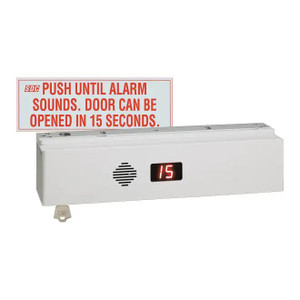
SDC Z7252E5QIC7PKA 24VDC Failsecure Electronic Strike Lock
The SDC Z7252E5QIC7PKA is a failsecure electronic strike lock designed for enterprise access control environments spanning up to 63 doors and 250,000 user profiles. Operating at 24VDC with field-selectable dual-voltage capability (12/24VDC), this wired strike integrates natively with OSDP and TCP/IP access control platforms, eliminating the need for serial protocol gateways or bridge hardware. The latch-type failsecure design energizes to unlock; loss of power keeps the door latched, meeting fire code and egress requirements for commercial, industrial, and institutional deployments.
Key Features
- Multi-Credential Support: Accepts DESFire, MIFARE, NFC/13.56MHz, and 125kHz proximity cards in a single reader-strike ecosystem. One credential infrastructure serves cardholders across enrollment and integration migration.
- Enterprise Scalability: Manages 63 doors and 250,000 user profiles over OSDP and TCP/IP protocols. Grows with your facility without replacing readers, strikes, or control logic.
- Failsecure Latch Design: Remains latched during power loss, AC/DC outage, or network interruption. Satisfies fire code egress requirements and maintains perimeter security under fault conditions.
- 24VDC Wired Operation: Field-selectable 12/24VDC reduces external power conditioning and regulator count. Typical solenoid draw under 1A during actuation; integrates with standard 24VDC access control supplies.
- Latch Status Monitoring: Dry-contact feedback on door position (latched/unlatched). Optional request-to-exit (REX) output available for two-button egress or motion-sensor unlock scenarios.
- Retrofits Existing Mechanical Prep: Replaces standard cylindrical locks in existing door frames (Eclipse Rose or Galaxy Rose trim options). No frame modification required for new or retrofit installations.
- Vandal-Resistant Clutch: Proprietary solenoid clutch resists manipulation and forced actuation. Grade 1 heavy-duty construction for high-traffic and high-security environments.
- Cylinder Options: Supports 6-pin keyed-alike/different or SFIC 7-pin I-Core prep. Integrates with existing key management and backup mechanical access policies.
The Z7252E5QIC7PKA operates as a true enterprise-grade failsecure strike, not a retrofit electromagnetic lock. Because the solenoid is integral to the lock body, there is no exposed magnet, no surface-mounted armature plate, and no external power-to-door-frame routing. This design reduces installation labor, improves aesthetic integration, and eliminates the common failure modes of retrofit magnetic locks (armature misalignment, ice/salt corrosion on external surfaces, magnetic drift over time). The native OSDP and TCP/IP stack means direct wiring to your access control platform's digital I/O or network port—no intermediate relay board or gateway card.
Deployment across 63 doors at a single facility—warehouse, hospital, corporate multi-floor, or industrial campus—is straightforward: daisy-chain OSDP readers to the access control panel, run 24VDC supply and status wiring to each strike, and enroll credentials once. The 250,000 user profile ceiling handles large employee bases, contractors, and tenant rotation without database reimport. TCP/IP connectivity also enables cloud-connected access platforms, mobile credential enrollment, and centralized audit logging across multiple buildings or campuses.
Fire door compliance is automatic: the failsecure latch remains engaged even when the solenoid is de-energized, meaning the door cannot be propped open accidentally or deliberately by power-loss manipulation. Request-to-exit (REX) output supports button-release egress and motion-sensor unlock on secured exit routes, eliminating the need for separate REX hardware. Latch status monitoring provides real-time feedback to your access control system—doorway analytics, forced-entry detection, and propped-door alerts integrate natively without external sensors.
Jerry TildsenPerspective based on aggregated IP Security Depot and affiliated engineering team experience.
We've deployed the Z7252E5QIC7PKA across multi-building enterprise campuses, and the failsecure latch design is the game-changer versus retrofit magnetic strikes. In our experience, exposed magnet locks are maintenance headaches—ice buildup on loading docks weakens the hold, salt spray in parking garages degrades the armature over 3-5 years, and misaligned frames create intermittent unlock failures. The SDC strike eliminates all of that because the solenoid is mechanical, integrated into the lockset, and not exposed to weather. Fire marshals like it immediately: the latch is always engaged, egress is always possible (mechanical or electrified), and there's no ambiguity about power-loss behavior. On the integration side, native OSDP and TCP/IP mean you don't need a relay board or gateway—direct wire to your Allegion, Honeywell, or open-standards access control panel. The multi-credential stack (DESFire, MIFARE, NFC, prox) is a real differentiator if you're mixing legacy proximity card holders with new smartphone wallet deployments; one reader handles all four formats. Scaling to 63 doors and 250,000 users is where most retrofit setups break down—you hit relay card limits, panel I/O limits, or database record caps. The Z7252E5QIC7PKA is architecturally built for that scale from the start.
Technical Highlights:
- OSDP and TCP/IP Native Support: Eliminates the need for Wiegand-to-OSDP converters, serial gateways, or Ethernet bridge cards. Direct panel integration reduces bill of materials and wiring complexity on enterprise-scale deployments.
- Multi-Credential Unification (DESFire, MIFARE, NFC, 125kHz Prox): One reader and strike ecosystem handles legacy proximity cards, modern NFC, and high-capacity DESFire simultaneously. Real money saved on inventory when you're managing mixed credential populations across a 63-door facility.
- Failsecure Latch—Not Magnetic: Mechanical solenoid engagement is immune to ice, salt, temperature drift, and magnetic decay. Five-year field life is predictable; retrofit magnetic locks degrade noticeably after year 3 on salt-exposed doors.
- 24VDC Field-Selectable Supply (12/24VDC): Flex voltage support reduces dedicated power conditioning boards. Most access control panels output 24VDC; this strike works directly off that supply without external regulation.
- Latch Status Monitoring and Optional REX: Dry-contact feedback enables propped-door alerting and motion-sensor egress without additional sensor or relay hardware. Integrates natively into your VMS or access control event stream.
- Grade 1 Vandal-Resistant Clutch: Proprietary solenoid clutch resists mechanical manipulation and forced solenoid rotation. High-traffic and high-security environments benefit from the robust engagement mechanism.
Deployment Considerations:
- Verify your access control panel provides direct 24VDC solenoid control output or OSDP digital I/O. Older hardwired systems using relay banks may require panel firmware updates or relay card replacement to support OSDP protocol.
- Latch status monitoring uses a dry contact—confirm your panel's input card has spare dry-contact inputs available. REX output cannot be used simultaneously with latch status; choose one configuration per door at install time.
- The strike is designed for cylindrical lock prep (standard 1.125" or 1.375" door thickness). Verify frame geometry and lock opening size before ordering; frame modifications are rare but possible on non-standard or oversized doors.
- 24VDC supply wiring should be separate from reader data lines (OSDP or TCP/IP). Run power in conduit or shielded cable to minimize noise coupling on digital lines, especially in industrial environments with VFDs or high-amperage equipment.
- Backup mechanical key is essential on fire doors and egress routes. Ensure cylinder prep (6-pin keyed-alike or SFIC 7-pin) aligns with your key management policy before installation.
The Z7252E5QIC7PKA is the right choice for enterprise access control teams deploying 10+ doors with mixed credential populations, fire code compliance requirements, and a need for native platform integration. Retrofit scenarios where magnetic lock failures are driving maintenance tickets, and new construction where mechanical reliability over magnetic decay is a priority, both favor this strike. For more options across the SDC electrified lock line, visit the SDC catalog.