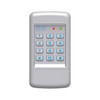
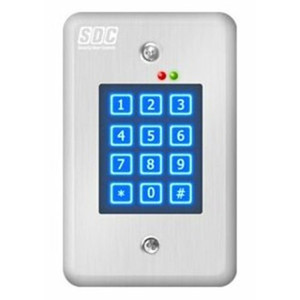
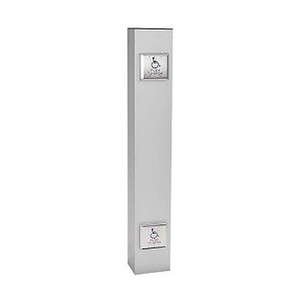
SDC 702U Proximity & Keypad Access Controller
The SDC 702U is a wired access control controller engineered to handle mixed-credential authentication across single or multi-door installations. This device integrates proximity card readers and keypad input simultaneously, meaning you can deploy badge-based access on one reader and PIN-based authentication on another without separate hardware. That flexibility cuts SKU overhead and simplifies retrofit projects where legacy card readers and new keypad requirements must coexist.
Key Features
- Dual Reader Support (Proximity & Keypad): The 702U accepts both proximity card readers and keypad input in the same controller unit, eliminating the need for separate hardware per authentication method. Deploy badge access at one door entrance and PIN codes at another without controller duplication.
- NFC/13.56MHz Credential Standard: Supports 13.56MHz NFC-based credentials, a widely adopted frequency in enterprise access control environments. This standard plays well with modern card issuance systems and reduces the friction of credential replacement across your installed base.
- OSDP Protocol Communication: OSDP (Open Supervised Device Protocol) is the current gold standard for access control device communication. The 702U's OSDP compliance ensures encrypted credential transmission — credentials are not sent in the clear over your network — and integration with any certified access control system or third-party platform that speaks OSDP. This matters if you're integrating with access control platforms from different vendors or planning a future platform swap.
- Wired Connectivity: Operates over wired connection, eliminating wireless latency and pairing complications common in wireless controllers. Suitable for permanent installations where cable runs are already available or can be easily installed.
- Retrofit and New-Build Ready: The 702U form factor and dual-input design make it practical for both new deployments and retrofits into existing door frames. No special mounting enclosure required if your electrical rough-in already supports a standard controller footprint.
- Multi-Door Scalability: Single-unit or multi-unit deployment across warehouse, enterprise, or distributed facility scenarios. OSDP protocol ensures each 702U integrates cleanly into a larger system without custom middleware.
Integration & Compatibility
The 702U integrates with any access control system certified to OSDP, including major platforms from Salto, Genetec Security Center, Honeywell, and others. Proximity readers compatible with 13.56MHz standard pair without vendor lock-in. Keypad input accepts standard 4–6 digit PIN codes configured in your control panel. If you're operating a warehouse automation or enterprise security network, check your access control integration guide to confirm OSDP support on your panel or management platform; OSDP has become widespread but older systems may require a gateway.
The controller operates over standard wired transport — whether that's RS-485, Ethernet, or proprietary panel wiring depends on your specific access control system. Confirm connector type and pinout with your installer or panel documentation before ordering.
Deployment Scenarios
Deploy the 702U in warehouse load-dock environments where dock staff use proximity badges but supervisors require keypad override access. Install across multiple secure doors in a manufacturing facility, mixing badge readers at public entrances with keypads in restricted areas. Retrofit existing door control points where a single controller must support both legacy proximity infrastructure and new PIN-based requirements — exactly the scenario that makes the 702U practical over two separate devices.
The wired connection ensures no wireless interference in RF-heavy industrial environments. OSDP encryption means credential data cannot be intercepted by passive network sniffing, reducing exposure in facilities where access lists carry high security value.
When to Consider a Different Approach
If your environment requires wireless connectivity and battery operation, you'll need a wireless-capable access controller from the SDC line or a third-party vendor. If you need video integration (facial recognition, liveness detection) at the point of entry, pair the 702U with an IP camera running analytics in parallel — the controller handles access logic, the camera adds verification. If your panel does not support OSDP and cannot add a gateway, confirm legacy protocol support before committing.
Frequently Asked Questions
Q: Does the SDC 702U work with my existing proximity card stock?
A: If your cards use the 13.56MHz NFC standard, yes. Older legacy 125kHz proximity systems are not compatible with the 702U. Confirm your current card frequency with your access control integrator or test one card against a 13.56MHz reader to validate compatibility before procurement.
Q: What happens if the 702U loses power?
A: The controller requires continuous wired power from your access control panel. It does not include battery backup. If power loss triggers lockout requirements, design your system with a UPS backing the panel, or configure fail-safe door hardware (electric strike, magnetic lock) that defaults to a known state (locked or unlocked per your policy) during outage.
Q: Can the 702U integrate with cloud-based access platforms?
A: Only if your cloud platform includes an on-premises gateway or connector that speaks OSDP. Direct cloud integration depends on your platform's architecture. Check your cloud provider's OSDP device compatibility list before assuming the 702U will connect without additional hardware.
Q: Is the 702U suitable for outdoor door control?
A: The controller itself is designed for indoor installation. If you require outdoor readers (proximity or keypad), source weather-sealed reader housings rated IP66 or higher and connect them to the 702U indoors via conduit. The controller enclosure must remain protected from rain and direct weather exposure.
Q: Does the 702U support multi-factor authentication?
A: The 702U supports badge-and-PIN combinations — user presents badge to the proximity reader and enters a PIN on the keypad as a second factor. Logic for multi-factor rules is configured in your access control panel. Some panels may require the 702U to be paired with a security module or advanced software license to enable true MFA enforcement; verify with your panel vendor.
Q: What is the typical installation time for the 702U?
A: Wired controller installation typically takes 1–2 hours per door, including cable routing, controller mounting, reader wiring, and initial configuration in the panel. This assumes existing conduit or access and familiarity with your panel's configuration interface. First-time OSDP setup on a new panel may add 1–2 hours for protocol provisioning and credential testing.
Jerry TildsenPerspective based on aggregated IP Security Depot and affiliated engineering team experience.
The SDC 702U is a solid choice for environments where you need to consolidate mixed-credential input onto a single wired controller. The dual reader support (proximity and keypad) eliminates the SKU sprawl you hit when deploying badge and PIN authentication across the same facility — one controller handles both, reducing panel real estate and integration complexity. OSDP protocol is non-negotiable if you care about credential security; it encrypts the transaction between reader and panel, which matters in high-security warehouse and manufacturing settings where badge cloning or eavesdropping on the wired signal is a real concern.
Technical Highlights:
- NFC/13.56MHz Standard: Enterprise-grade frequency with broad card stock availability. Ensures you're not locked into a single vendor's proprietary 125kHz infrastructure, making credential rotation and future panel upgrades feasible without wholesale reader replacement.
- OSDP Encrypted Protocol: Credentials are encrypted end-to-end between reader and panel. Unlike older Wiegand or raw serial protocols, OSDP prevents passive eavesdropping on badge numbers transmitted over the cable run — critical in facilities where access lists map to sensitive areas.
- Wired Connectivity: Zero wireless latency, zero pairing overhead, no battery management. For permanent door control installations, wired is the right call — no surprise disconnections, no RF interference from warehouse equipment or industrial machinery.
Deployment Considerations:
- Confirm your access control panel explicitly supports OSDP; older systems running legacy protocols (Wiegand, RS-485 proprietary) may require a gateway or won't integrate at all. Check the panel's compatibility matrix before committing to the 702U.
- Power design matters. The 702U draws power from your panel; if the panel loses AC, the controller is offline. This is only a limitation if you need fail-secure behavior during power loss — pair it with a UPS on the panel circuit, or configure the strike/lock hardware to default to a safe state (locked or unlocked per policy).
- Card frequency mismatch is easy to miss. If your facility has legacy 125kHz badges in circulation and you deploy 702U with a 13.56MHz reader, your staff can't use old cards. Plan for a migration window or issuance of new stock before rollout.
Best deployment fit: warehouse environments mixing badge access (dock staff, receiving) with keypad-only zones (supervisor overrides, secure storage). Manufacturing facilities retrofitting PIN codes into existing badge infrastructure. Any enterprise retrofit where one wired controller eliminates two separate devices and reduces panel footprint — the payoff justifies the wiring labor.