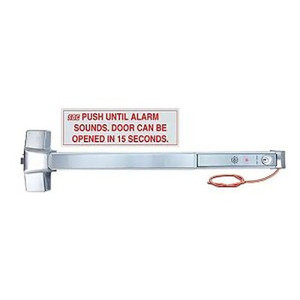
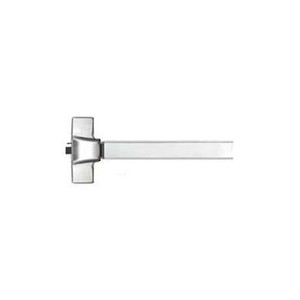
SDC S4103PU36RESP 63-Door RIM Panic Controller
Overview
The S4103PU36RESP is a wired access control controller purpose-built for mid-to-large facilities that need to manage 63 doors from a single platform without hardware sprawl. This RIM panic device integrates fingerprint biometric readers alongside proximity and contactless credentials—DESFire, MIFARE, NFC (13.56 MHz), and 125 kHz—so you don't need separate readers at each entry point. With capacity for up to 250,000 user records, it handles enterprise deployments across commercial, healthcare, government, and institutional facilities. The S4103PU36RESP communicates via OSDP and TCP/IP, meaning it integrates cleanly with modern access management systems without proprietary middleware overhead.
Key Features
- 63-door capacity: Manage a full floor or building wing from one controller instead of daisy-chaining units. Reduces commissioning time and simplifies credential revocation—revoke one cardholder and it propagates instantly across all 63 endpoints.
- 250,000 user records: Scales from a small office security team to multi-building enterprise ops without hitting a hard ceiling. Overkill for a 50-person firm, but critical when you're managing 10,000+ employees across shifts.
- Fingerprint biometric + proximity hybrid: Deploy fingerprint readers at sensitive areas (server rooms, executive suites) and standard RFID at standard doors. A single controller handles both without credential format conversion.
- Multi-credential support (DESFire, MIFARE, NFC, 125 kHz): Mix legacy proximity cards, modern NFC, and encrypted DESFire in the same system. Eliminates the need to retire working infrastructure during upgrades—credentials coexist on the same reader.
- OSDP protocol: Open Supervised Device Protocol is the emerging standard for access control hardware. It supports encrypted command channels and real-time event messaging, reducing the risk of credential replay attacks compared to older Wiegand interfaces.
- TCP/IP network connectivity: Wired Ethernet integration means the controller talks to your access management software and audit systems over the network backbone. No serial port bottlenecks, no dedicated RS-485 runs to a closet.
Integration & Compatibility
The S4103PU36RESP works with access control platforms and VMS software that support OSDP and standard TCP/IP. Its multi-credential engine is architecture-agnostic—you're not locked into a single card brand or reader manufacturer, which simplifies vendor selection and negotiation. Fingerprint enrollment and management operate through your access software's administrative interface; no separate biometric backend required if your ACS already handles it.
Suitable for security integrators managing mixed-credential environments. Fingerprint support offloads traditional PIN/badge theft concerns, while the proximity fallback means visitors and contractors can still use standard cards. Deployment contexts include retail with employee areas requiring biometric authentication, hospitals with badge + fingerprint at pharmacy/surgical suites, government facilities enforcing multi-factor access, and corporate campuses where building access scales across multiple properties.
Deployment Considerations
Wired connectivity is non-negotiable: This is a fixed installation—Ethernet must be run to the controller location. If you need wireless mesh or PoE-powered remote nodes, look at the controller's intended role in your architecture and verify your ACS supports remote readers over IP instead.
Reader installation: The controller itself doesn't decode card data; it sends credentials to the access software for validation. Ensure your readers (fingerprint scanners, card readers) are compatible with the ACS and properly wired to the controller before commissioning.
Frequently Asked Questions
Q: Can the S4103PU36RESP operate standalone if the network connection drops?
A: That depends on your access management software. The controller stores recently-validated credentials locally, but authorization logic typically resides in the ACS. Consult your platform documentation for offline fallback policies.
Q: How many credential types can one physical reader support on the S4103PU36RESP?
A: A single reader can be configured to accept multiple credential formats (RFID, NFC, fingerprint) as long as the reader hardware supports them. This reduces the number of readers you need to install per door.
Q: Does the S4103PU36RESP encrypt credential transmission?
A: OSDP includes encrypted command channels. Verify your access software and reader firmware are configured to use OSDP encryption to avoid credentials being exposed on the network.
Q: What happens if I exceed 250,000 user records?
A: You'll need a second controller. Plan for growth—archive inactive users periodically to stay under the limit, or design your system with multiple controllers if you anticipate exceeding 250K active users.
Ted PerryPerspective based on aggregated IP Security Depot and affiliated engineering team experience.
The S4103PU36RESP is a solid pick when you're scaling access control across a medium-to-large facility and you want to avoid controller sprawl. 63 doors is the sweet spot—big enough to consolidate an entire floor or small campus, small enough that you're not managing six networked units spread across a WAN. The 250,000 user capacity and multi-credential engine (fingerprint, RFID, NFC, proximity) are what make this controller earn its space in competitive deployments.
Technical Highlights:
- OSDP protocol support: Encrypted credential channels and real-time event messaging reduce credential interception risk compared to legacy Wiegand interfaces. Modern access software expects OSDP; Wiegand is legacy maintenance burden.
- Multi-credential (DESFire, MIFARE, NFC 13.56 MHz, 125 kHz proximity): No credential format conversion or reader duplication. One controller handles legacy proximity cards, modern NFC, and encrypted formats simultaneously. Matters when you're migrating infrastructure—old and new coexist during the transition.
- 250K user capacity: Enterprise-scale without a second controller for typical mid-size deployments. Overkill if you're protecting a 40-person office; critical if you're managing shifts across multiple buildings where total active users approach 100K+.
Deployment Considerations:
- Wired Ethernet is mandatory. This is fixed infrastructure—no mesh, no PoE power, no wireless fallback. Plan your network architecture and cable runs before ordering the controller.
- Authorization logic typically lives in the ACS, not the controller. Offline operation depends on your software's fallback policy. If you need 100% uptime, ensure your access software can cache and validate credentials locally if the network drops.
- Fingerprint readers add cost and enrollment overhead. Calibrate biometric deployment to doors that actually need it (secure areas, executive suites) rather than blanket deployment—saves on reader hardware and user friction at standard entry points.
This controller makes sense for security integrators managing campuses where building access scales across multiple properties and you need one source of truth for 10,000+ employees. Retail with employee areas requiring biometric auth, hospitals with pharmacy/surgical suites, government facilities enforcing multi-factor access—those are the wins. If you're protecting a single 20-person office, you're paying for capacity you'll never use.