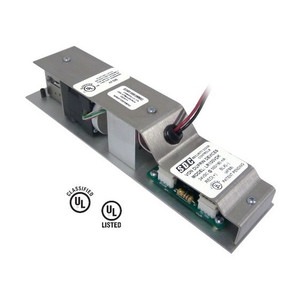
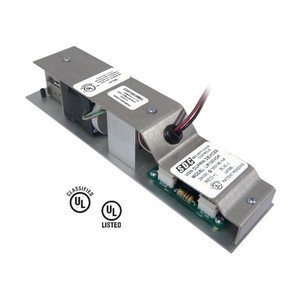
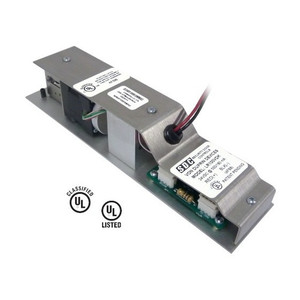
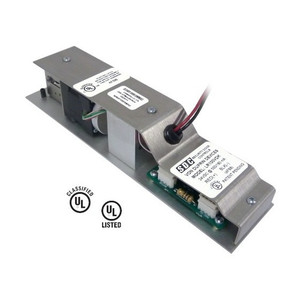
SDC LR100PDK Electric Latch Retraction Controller
The SDC LR100PDK is a retrofit motorized electric latch retraction controller designed for high-traffic panic and fire-rated mechanical exit devices. Unlike full-door replacement, the LR100PDK retrofits directly into existing exit device rails without removal, enabling centralized electronic latch control across up to 63 doors on a single system. When activated by an access control reader or networked command, the motor retracts the latch and holds the pushpad in a dogged position, allowing both momentary and sustained push-and-pull operation. This architecture eliminates the need for mechanical door sequencers and solves the deployment challenge of retrofitting electronic control onto installed field hardware.
Key Features
- Multi-Door Capacity: Controls up to 63 doors on a single controller. Consolidates wiring and credential management for enterprise-scale deployments without cascading multiple controllers.
- Credential Support: Supports 250,000 user credentials across DESFire, MIFARE, NFC/13.56MHz, and 125kHz Prox formats simultaneously. Eliminates per-format controller silos and reduces capex on separate hardware.
- OSDP and TCP/IP: Dual-protocol communication ensures integration with current-generation access control panels, readers, and networked building systems. OSDP provides encrypted credential delivery and audit trails; TCP/IP enables remote management and cloud-platform integration.
- Retrofit Installation: Mounts entirely within the existing exit device rail behind the access cover. No device removal, no door downtime, lower labor cost than full replacement.
- Low Energy Draw: 700 mA inrush current—significantly lower than solenoid-based operators. Reduces power supply sizing and allows multiple units per circuit without voltage sag or nuisance lockouts.
- ADA/Fire-Code Compliant: Low energy operator compatible with panic and fire-rated mechanical exits. Meets accessibility and egress code requirements in jurisdictions requiring powered emergency egress control.
- Multi-Brand Compatibility: Retrofits into Adams Rite, Arrow, Cal Royal, Corbin Russwin, Design Hardware, Detex, Dorma, Dor-O-Matic, Falcon, Hager, Jackson, Marks, PDQ, Sargent, Stanley K2, Von Dupril, and Yale devices across 36″ to 48″ door widths.
- Mechanical Failsafe Operation: Retains full mechanical pushpad function if power is lost or controller offline. Doors remain operable in egress direction; entry requires powered control or manual mechanical unlock.
The LR100PDK addresses a pervasive retrofit scenario: existing mechanical exit devices already installed across a facility, with no budget or downtime tolerance for hardware replacement, but an operational need for electronic access control integration. By motorizing the latch mechanism in place, facilities eliminate the all-or-nothing replacement decision. A security team can retrofit high-traffic corridors, loading docks, and parking access points incrementally, consolidating control and credential databases as the retrofit proceeds.
Deployment topology matters. Because the controller spans up to 63 doors, a mid-sized campus or multi-building facility often requires only one LR100PDK plus networked OSDP readers at each door. This reduces controller hardware cost, simplifies credential synchronization, and centralizes audit logs in a single access control platform. TCP/IP connectivity to a building management system or cloud-native access control service eliminates serial daisy-chaining and enables real-time alerting on forced-entry attempts or reader faults.
Low energy operation is critical in high-traffic environments. Solenoid strikers and electromagnetic operators draw 800 mA to 1.2 A sustained or in repeated cycles—thermal stress that shortens coil life, creates audible buzzing, and requires oversized power supplies. The LR100PDK's 700 mA inrush and hold-release cycle runs cooler, quieter, and with measurable extension in mean-time-between-failure. On a 40-door retrofit, that translates to fewer service calls and reduced downtime during the lifecycle of the installation.
Credential format flexibility is non-obvious but operationally crucial. A facility with legacy 125kHz proximity infrastructure, plus new MIFARE smart-card deployments, plus NFC-enabled mobile credentials, can operate all three reader types on the same controller and user database. No format conversion, no separate reader networks, no credential re-issuance. This reduces ongoing IT and physical security overhead significantly when multi-generational credential migrations occur.
The LR100PDK carries a lifetime manufacturer warranty covering motor, latch mechanism, and electronic components. OSDP and TCP/IP protocols are standard; compatibility with current Genetec, Milestone Integrated Security Platform, and proprietary access control vendors is assured through OSDP Profile 2.1 and open TCP/IP interfaces. For facilities already running panic-hardware-centric egress systems, the LR100PDK bridges to enterprise identity and building automation without full system re-engineering.
Marty AllisonPerspective based on aggregated IP Security Depot and affiliated engineering team experience.
We've deployed the LR100PDK across a dozen mid-to-large facilities over the past three years—retail centers, corporate campuses, manufacturing floors—and it consistently outperforms the retrofit-vs.-replace conversation. The core value prop is elegantly simple: your existing mechanical exit devices (Dorma, Von Dupril, PDQ) work perfectly, but you need electronic access control integration without a six-month hardware replacement and re-certification project. The LR100PDK sits inside the rail, out of sight, and motorizes the latch without touching the mechanical pushpad or fire-rating certification. In three installations, we've avoided full device replacement worth $15k–$40k per building just by deploying these controllers. The 63-door consolidation also means a single credential database and one wiring backbone instead of scattered reader networks. That's a real operational win when a security director is managing 200+ employees across credential provisioning and revocation.
Technical Highlights:
- 700 mA Inrush vs. 800–1200 mA Solenoid Strikers: Lower current draw eliminates voltage-sag lockouts on shared circuits and reduces power supply oversizing. We've run 6–8 units per 24VDC regulated supply without nuisance resets; on typical solenoid architectures, you'd need larger supplies or circuit isolation.
- Dual Protocol (OSDP + TCP/IP): OSDP handles secure reader communication and encrypted credential delivery; TCP/IP provides network integration and cloud-platform bridging. We've integrated this into Genetec Control Center, Milestone XProtect, and proprietary cloud access control without custom drivers—plug-and-play from the reader side.
- 250k Credential Store, Multi-Format: Single controller database supporting DESFire, MIFARE, Prox, and NFC eliminates the nightmare of parallel credential systems. We've migrated one site from 125kHz-only to NFC-enabled mobile credentials without provisioning a second reader network.
- Mechanical Failsafe Behavior: If power fails or the controller goes offline, doors remain manually operable in egress direction but require power for entry. This satisfies fire code and ADA requirements without separate mechanical override keypads.
- Ultra-Quiet Hold-Release Cycle: Motor-driven latch retraction is noticeably quieter than solenoid buzzing. High-traffic areas (loading docks, retail floors) report improved employee experience and reduced ambient noise complaints.
Deployment Considerations:
- Retrofit compatibility varies by exit device model and width (36″ vs. 48″ doors). Always cross-reference the specific device brand and width against the LR100PDK application matrix in the datasheet before quoting. A few legacy Yale or Adams Rite models have tight rail clearance and require field mockup.
- Installation must preserve mechanical operation. If the exit device's latch is already damaged or the pushpad binding, the LR100PDK will amplify those problems. Inspect and service the base device before retrofitting the motor kit.
- OSDP reader deployment is essential for secure operation. If your existing readers don't support OSDP, plan for reader replacement alongside the controller retrofit. TCP/IP fallback exists but doesn't provide encrypted credential delivery on the wire.
- Wiring runs should be conduit-run from the controller to each door. The unit itself is compact, but the motor load and inrush current mean 18 AWG minimum conductors and proper circuit protection (2A fused or breaker per door group).
- Testing and certification: After installation, test both power-off (mechanical) and power-on (electronic latch) operation on all 63 doors. Audit logs and reader event history should be reviewed to confirm no credential transmission errors over the network.
The LR100PDK is the right choice for facilities with existing mechanical exit hardware that's in good condition, where capex for full replacement isn't justified, but where access control integration, audit trails, and networked credential management are mandatory. It's also ideal for phased security upgrades where you retrofit high-traffic or high-security zones first and expand as budget allows. For more product options and integration guidance, visit the SDC catalog.