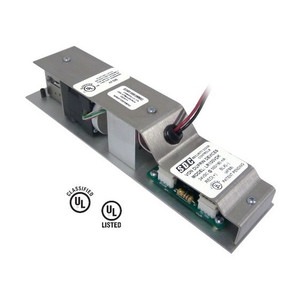
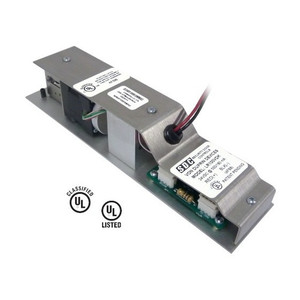
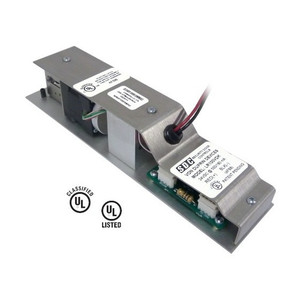
SDC LR100DMK Electric Latch Retraction Access Controller
Overview
The SDC LR100DMK is a wired access control controller purpose-built for mid-scale and enterprise installations where reliable door management and credential flexibility matter. It controls up to 63 doors from a single unit—substantially reducing the controller footprint and complexity in larger deployments. Support for 250,000 user credentials means you won't hit a practical enrollment ceiling in typical security environments. The LR100DMK handles multiple credential types simultaneously (DESFire, MIFARE, NFC at 13.56 MHz, and 125 kHz proximity), eliminating the need to standardize on a single reader technology if your organization has inherited mixed systems or plans a phased credential migration.
Key Features
- Multi-door capacity (63 doors): Consolidates what would otherwise require multiple controllers, reducing wiring complexity, cabinet space, and total cost of ownership in larger facilities like warehouses, manufacturing plants, or multi-building campuses.
- 250,000 credential storage: Handles credential databases for organizations with thousands of personnel or rotating temporary access scenarios (contractors, visitors, shift workers) without requiring remote polling.
- OSDP support: Communicates via Open Supervised Device Protocol, a modern standard for reader-to-controller communication that isolates reader firmware from controller vulnerabilities and supports encrypted credential transmission. This matters if you're refreshing readers or integrating new hardware without a complete system overhaul.
- TCP/IP network connectivity: Connects directly to your wired network infrastructure, enabling centralized management, remote commissioning, and integration with access control management systems and third-party VMS platforms.
- Mixed-credential compatibility: DESFire and MIFARE support NFC and proximity readers on the same controller without dual-reader installations. Particularly valuable if you're migrating from proximity cards to modern NFC credentials or operating sites with different security postures.
- Wired architecture: Direct ethernet and serial connections eliminate wireless latency and dependency on network congestion—appropriate for high-traffic doors or locations where instantaneous access response is non-negotiable.
Integration & Compatibility
The LR100DMK integrates with standard access control management software via OSDP and TCP/IP protocols. This means compatibility with most mainstream access control platforms that support these open standards. If you're standardizing on SDC readers and controllers, the wired protocol stack ensures deterministic communication and audit-trail integrity across your deployment. The electric latch retraction mechanism is suited for controlled-release door hardware; confirm mechanical compatibility with your door frames and fail-safe requirements before installation.
When to Choose a Different Model
If your site requires fewer than 10 doors, a smaller single-door or four-door controller may reduce unnecessary complexity. If wireless communication is mandatory (sites without ethernet runs or extreme installation constraints), consider controllers with integrated cellular or wireless networking. If you need reader-level analytics or embedded video integration, consult SDC's hybrid or camera-integrated product line.
Deployment Considerations
Wired controllers require ethernet and power infrastructure; plan conduit runs early in your design phase. OSDP readers must be compatible with the LR100DMK firmware version at installation—confirm reader datasheets reference OSDP before procurement. The 63-door limit means larger multi-campus deployments may still need multiple controllers; coordinate IP addressing and database replication in advance if you're deploying more than one LR100DMK.
FAQ
Q: Can I integrate the LR100DMK with a Milestone or Genetec system?
A: The LR100DMK communicates via OSDP and TCP/IP. Integration depends on whether your VMS supports OSDP-compliant controllers. Check your VMS documentation or contact the manufacturer to confirm compatibility before procurement.
Q: How many readers can I connect to a single LR100DMK?
A: The LR100DMK manages up to 63 doors. The number of readers depends on your reader wiring and power architecture—typically one reader per door, though some multi-reader scenarios are possible. Consult the datasheet for reader wiring diagrams.
Q: Does the LR100DMK support both proximity and NFC credentials simultaneously?
A: Yes. The controller supports MIFARE, DESFire, NFC (13.56 MHz), and 125 kHz proximity credentials. This allows mixed-credential deployments or credential-type migrations without replacing the controller.
Q: What happens if the LR100DMK loses network connectivity?
A: Local credential validation continues using the 250,000 stored credentials—doors remain operational in offline mode. Once network connectivity restores, the controller re-synchronizes. Confirm this behavior aligns with your fail-safe requirements.
Q: Is the LR100DMK suitable for outdoor installation?
A: The LR100DMK is a wired controller intended for indoor mounting in secure cabinets or electrical rooms. Readers may be outdoor-rated, but the controller itself requires environmental protection. Plan installation in a protected enclosure.
Q: Can I manage multiple LR100DMK units from one software platform?
A: Yes, if your access control management system supports multiple controllers over OSDP and TCP/IP. Most enterprise platforms do. Confirm your specific VMS supports federated controller management before deploying multiple units.
Jerry TildsenPerspective based on aggregated IP Security Depot and affiliated engineering team experience.
The LR100DMK is a genuinely solid choice if you're engineering a mid-scale to enterprise access deployment where single-controller footprint and credential flexibility matter. The 63-door capacity in one unit is the standout spec—it means significantly fewer controllers in your cabinet, simpler IP addressing and database replication, and lower integration complexity than a distributed four-door-per-controller approach on a 200-door site. The credential support (DESFire, MIFARE, 13.56 MHz NFC, 125 kHz proximity) is real operational insurance: you can deploy readers incrementally without forcing credential standardization, and your database of 250,000 enrollments won't become a bottleneck.
Technical Highlights:
- 63-door single-controller consolidation: Eliminates the need for multiple controllers, reducing cabinet clutter, cabling, and IP network overhead. On a 100-door warehouse or manufacturing facility, this translates to faster commissioning and lower maintenance touch-points.
- OSDP protocol support: Modern, encrypted reader-to-controller communication keeps reader firmware isolated from upstream network vulnerabilities—important if your readers are in less-protected areas or subject to physical tampering.
- 250,000 credential storage: Local validation continues even if your network segment goes down. This offline resilience is critical in warehouse or production environments where access delays directly impact throughput or safety.
- Mixed-credential simultaneous support: You don't have to retrofit readers when migrating from proximity to NFC—the controller accepts both. Real-world migrations can take months; this flexibility avoids interim duplicate-reader installations.
Deployment Considerations:
- Wired ethernet and power runs are non-negotiable—budget conduit and cabling early. If your site has zero network infrastructure in certain zones, wireless controllers or readers with local battery backup may be necessary.
- OSDP reader firmware must match or be compatible with the LR100DMK version. Mismatched firmware can create silent credential rejection or audit-trail gaps—validate all reader datasheets against your controller firmware before procurement and monitor firmware update release notes carefully.
- The 63-door limit is real and enforced by hardware. A second LR100DMK on the same network requires separate IP addressing, separate credential databases (or careful synchronization logic), and may complicate your failover strategy—plan multi-controller deployments with database replication in mind.
Deploy the LR100DMK where you have 20+ doors, mixed credential types or a planned credential migration, and solid ethernet backbone infrastructure. It will save you hardware cost and operational complexity compared to distributed four-door controllers, and the OSDP wired protocol ensures audit-trail integrity in regulated environments (manufacturing, pharma, logistics).