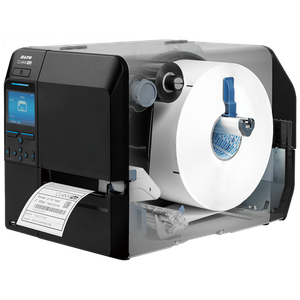
Sato WWCLP1001-WAN 203dpi Industrial Thermal Label Printer
The Sato WWCLP1001-WAN is a workhorse thermal label printer engineered for high-throughput enterprise environments where uptime and output reliability are non-negotiable. Built on the CL4NX Plus platform, this printer delivers 203 dpi resolution at 14 inches-per-second print speed—a balanced pairing that ensures barcode readability and legible text without sacrificing production velocity. The rigid cast aluminum frame with corrosion-resistant materials handles the thermal stresses and environmental variability of logistics centers, manufacturing floors, and warehouse operations. Unlike consumer-grade label printers, the WWCLP1001-WAN (often searched as WWCLP1001 WAN) supports both direct thermal and thermal transfer modes in a single device, eliminating the need for separate hardware when media flexibility is required.
Key Features
- 203 dpi resolution at 14 ips print speed: Delivers crisp barcodes and readable text for GS1 compliance labeling, product serial numbers, and inventory tracking. At this dpi and speed, you're not trading quality for throughput—both remain viable across the 4.09" maximum print width, which covers standard 4x6 shipping labels and most carton-size applications.
- Dual thermal print mode—direct thermal and thermal transfer: Eliminates hardware redundancy. Direct thermal works for temporary labels (shipping tags, warehouse staging labels); thermal transfer handles permanent labels on film, synthetic, and coated stock. One device handles both workflows without reconfiguration between jobs.
- 4.09" maximum print width with media range 0.87" to 5.04": Accommodates standard 4x6 shipping labels, oversized carton labels, and narrow product labels without media adapter trays or mechanical changes. Media rolls support 1" or 3" core sizes up to 10" outer diameter, fitting most warehouse label cartridge systems.
- 2 GB Flash memory and 256 MB SDRAM with 100 MB user-accessible storage: Holds complex label templates, multi-language font sets, and graphics libraries without network dependency. Field technicians can load new label formats directly to the printer during deployments or when workflows change, reducing time to deploy across distributed facilities.
- Tool-free printhead and platen roller replacement: Reduces mean time to repair (MTTR) to under 90 seconds. On high-volume production floors, swapping consumables without wrenches or specialized knowledge minimizes line stoppage and eliminates service call dependencies.
- 3.5" full-color LCD touchscreen: Operator-level configuration without menu diving. Job status, media alerts, and print queue visibility are visible at a glance—critical when managing 50+ printers across a distribution network or when line operators need to troubleshoot label jams without IT escalation.
- Ribbon capacity up to 1,968 feet: Extended production runs mean fewer mid-shift ribbon changes. For high-speed thermal transfer operations in automotive or pharmaceutical labeling, this translates to reduced manual intervention and consistent downtime planning across shift schedules.
- Multiple connectivity—USB 2.0, Ethernet, Wi-Fi, RS-232C, Parallel, Bluetooth 3.0, NFC: Wi-Fi and Ethernet support modern print queuing and cloud-based label design platforms. Legacy serial and parallel interfaces integrate into existing warehouse management systems (WMS) without equipment replacement. Bluetooth 3.0 enables mobile device pairing for ad-hoc label printing from handheld scanners or rugged tablets in receiving areas.
- Operating temperature 5°C to 40°C (41°F to 104°F): Handles unheated shipping docks in winter and ambient warehouse conditions in summer without thermal compensation calibration. Exceeding 40°C degrades print quality and ribbon adhesion; keep this in mind for outdoor staging areas, uncontrolled dock environments, or facilities without climate control in summer months.
- AC 100-240V power input (50/60Hz): Single global power supply for multinational deployments. No separate DC supply or regional voltage converter needed—plug it in anywhere with 100-240V availability.
Integration & Compatibility
The WWCLP1001-WAN integrates into label design workflows via Sato ESim label software (native) or third-party drivers supporting CUPS, Windows, and Linux. Ethernet connectivity enables direct integration into modern WMS platforms (Manhattan, JDA, SAP Extended Warehouse Management). Wi-Fi connectivity allows mobile print job submission from handheld devices, useful for cross-docking operations where label printing needs to happen at multiple dock doors. RS-232C and Parallel ports support legacy WMS installations running on older systems without requiring middleware or gateway hardware. NFC capability enables configuration and job pairing via smartphone, reducing setup friction when deploying printers to new locations.
When to Choose a Different Model
If your workflow requires print speeds above 14 ips (such as high-speed pharmaceutical or cosmetics labeling at 100+ labels per minute), consider higher-speed variants in the Sato CL4NX family. If you need 300 dpi or higher for small-font compliance labels or pharmaceutical track-and-trace (DSCSA) requirements, step up to a 300 dpi model in the same platform. The WWCLP1001-WAN is optimized for moderate-to-high-speed batch labeling; if your operation is primarily single-label, on-demand printing (fewer than 20 labels per hour), a slower desktop model may reduce capital cost.
Frequently Asked Questions
Q: Can the WWCLP1001-WAN print barcodes that will scan reliably in a warehouse environment?
A: Yes. 203 dpi at 14 ips is the industry standard for barcode printing in logistics and fulfillment. GS1-128 and UPC-A barcodes printed at 203 dpi will scan reliably with standard warehouse scanners, assuming proper label stock and ribbon quality. Test with your specific barcode symbology and scanner before full deployment.
Q: What's the difference between direct thermal and thermal transfer mode on this printer?
A: Direct thermal requires heat-sensitive label stock and produces print without ribbon—lower media cost but shorter label lifespan (weeks to months). Thermal transfer uses a ribbon and standard label stock, producing durable labels that resist UV, moisture, and chemicals—suitable for permanent SKU labels, shipping labels exposed to weather, or labels on refrigerated products.
Q: Does the WWCLP1001-WAN work with our existing WMS running on legacy RS-232 connections?
A: Yes. The printer includes RS-232C connectivity, so it can connect directly to older WMS systems without requiring a gateway or middleware. Configure the printer's baud rate and handshaking in the touchscreen menu to match your WMS specifications.
Q: What is the warranty period on the WWCLP1001-WAN?
A: Refer to the manufacturer's standard warranty documentation or your distributor's terms. Sato typically offers 1-year limited hardware warranty; extended plans and on-site support options are available through authorized channels.
Q: Can I use Wi-Fi instead of Ethernet to avoid running network cable across the warehouse?
A: Yes. The WWCLP1001-WAN includes 802.11n Wi-Fi, eliminating the need for Ethernet runs to each printer location. However, ensure your facility has adequate Wi-Fi coverage and low-latency connectivity in the print area; congested or weak signals can cause print delays during high-volume periods.
Q: What is the maximum print width, and does it handle 4x6 labels?
A: Maximum print width is 4.09 inches, so it handles standard 4x6 labels with a small margin. It also supports narrower labels down to 0.87 inches for product labels, shelf tags, or barcode stickers.
Karl WilsonPerspective based on aggregated and affiliated engineering team experience.
The WWCLP1001-WAN hits a critical sweet spot in industrial label printing: 203 dpi at 14 ips covers 80% of warehouse and logistics workflows without forcing you into either a slow desktop printer or an expensive high-speed system. The dual thermal modes—direct and transfer—eliminate the need to buy two devices, which saves capital and floor space in a busy fulfillment center. What makes this printer genuinely useful is the combination of tool-free consumable swaps, 2 GB onboard memory, and legacy port support (RS-232C, Parallel) alongside modern connectivity (Wi-Fi, Ethernet, Bluetooth). That's rare in this class.
Technical Highlights:
- 4.09" print width at 203 dpi: Covers standard 4x6 shipping labels and most carton applications. At 203 dpi, barcode readability is solid for GS1-128 and UPC symbologies at typical scanner ranges (12–18 inches). You're not overbuying resolution here—300 dpi makes sense only if you're printing micro-fonts for pharmaceutical or cosmetics compliance labels.
- 14 ips with 100 MB user storage: Can print ~840 4x6 labels per minute if running continuously, but realistic throughput is lower with label feed pauses and job changes. The 100 MB local storage is enough for 50–100 label template variations, so operators can switch templates without a network call to your WMS—useful when network latency spikes during peak hours.
- Dual thermal modes and 1,968-foot ribbon capacity: In direct thermal mode, consumable cost is purely label stock (no ribbon waste). In thermal transfer mode, you're using ribbon, but it stretches to nearly 2,000 feet, meaning fewer cartridge swaps during 8-hour shifts. That's a real operational win if you're staffing warehouse print stations with part-time labor.
- AC 100-240V single power supply: If you're deploying across regional distribution centers with different electrical standards (50 Hz vs 60 Hz, 110V vs 230V), you buy one power supply part number, not three regional SKUs. Reduces spare inventory and training burden.
Deployment Considerations:
- Operating temperature ceiling is 40°C (104°F). Unheated docks in summer or enclosed shipping areas with poor ventilation can push you over that limit, degrading print quality and ribbon adhesion. If your facility runs hot, confirm climate control or position the printer in a cooler zone.
- Wi-Fi connectivity is convenient, but warehouse environments are RF-noisy (metal racks, RF scanners, WiFi handhelds). Test coverage thoroughly before deploying a fleet across multiple docks. Ethernet is more stable if you can run cabling; Wi-Fi is better for temporary or mobile staging areas.
- The 3.5" touchscreen is genuinely useful for operator-level troubleshooting, but it doesn't replace a laptop for complex label template design or firmware updates. Budget for occasional IT involvement during setup and major template migrations.
Choose the WWCLP1001-WAN if you're running a mid-scale fulfillment or manufacturing operation with mixed label types (temporary shipping labels and permanent product labels), variable throughput (not sustained 100+ labels/minute), and a mix of legacy and modern WMS systems. If you're printing at speeds consistently above 14 ips, or if you need 300 dpi for regulatory labeling, escalate to a faster model in the Sato industrial family.