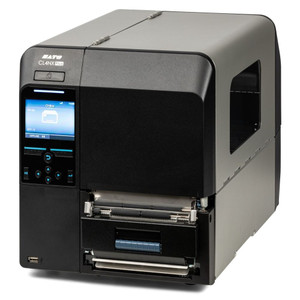
Sato WWCLP1001-NAR 203dpi Industrial Thermal Label Printer
The Sato WWCLP1001-NAR is a compact industrial label printer built for continuous 24/7 operation in logistics, manufacturing, and warehouse environments. It delivers crisp 203 dpi output at 14 inches per second—a speed-resolution pairing optimized for high-volume barcode and compliance labeling without the cost premium of 300+ dpi systems. This printer combines dual thermal printing modes, multiprotocol connectivity, and tool-free maintenance into a cast-aluminum chassis designed to survive dust, moisture, and temperature swings across food plants, distribution centers, and shop floors.
Key Features
- 203 dpi at 14 inches per second: Produces legible barcodes and human-readable text on the first label. This throughput matters in production environments—poor print quality cascades into scan failures, inventory mismatches, and line stoppages. The 203 dpi sweet spot avoids the throughput penalty of finer resolutions while staying sharp enough for standard barcode symbologies (Code 128, GS1-128, UPC, QR) and OCR-compatible fonts.
- Dual thermal printing modes (direct and thermal transfer): Eliminates single-consumable lock-in. Direct thermal cuts media costs for one-off runs and short shelf-life labels; thermal transfer adds durability on moisture-exposed or chemically aggressive labels in food, beverage, and manufacturing settings. You switch modes by changing the ribbon and media type—no hardware reconfiguration. This flexibility is critical when supply chains tighten and consumable availability fluctuates.
- 4.09-inch maximum print width: Accommodates standard 4x6 shipping labels, warehouse routing tags, asset identification stickers, and compliance-required warning labels. Supports media rolls up to 10 inches outer diameter with 1-inch or 3-inch core options, enabling full production shifts (8+ hours) without reloading.
- Up to 1,968 feet (600 m) ribbon capacity: Extended thermal transfer runs reduce ribbon changes and operator downtime. Combined with 2 GB onboard flash storage, you can pre-load hundreds of label SKUs and templates, then batch-print without network latency.
- Tool-free printhead and platen replacement: Routine maintenance—clearing media jams, swapping wear parts after extended runs—takes minutes without technicians. In 24/7 operations, downtime is expensive; this design cuts both mean time to repair and training overhead significantly.
- 3.5-inch full-color LCD touchscreen: On-device label configuration, media setup, and real-time diagnostics. No external PC or mobile app required to adjust print darkness, rotate label orientation, or troubleshoot a jam. Reduces dependency on IT support for shift-level operators.
- Cast aluminum frame with corrosion-resistant materials: Withstands dust, humidity, and temperature swings in food & beverage plants, cold storage, and outdoor logistics areas. Standard steel chassis would degrade in these environments; this construction is engineered for decade-plus service life with minimal degradation.
- 2 GB flash + 256 MB SDRAM: Sufficient onboard memory for complex multi-part label templates and batch processing. 100 MB user-accessible storage holds fonts, graphics, and label formats locally, eliminating re-downloads on every job and reducing network traffic.
Connectivity & Integration
The WWCLP1001-NAR includes USB 2.0, Ethernet, Wi-Fi, RS-232C, Parallel, Bluetooth 3.0, and NFC. This breadth means you deploy it as a standalone packing-station label printer, tether it to a warehouse management system (WMS) via Ethernet, or pair it via Bluetooth to a mobile computer running inventory or shipping software. Wi-Fi connectivity eliminates the need to run serial or parallel cables through long warehouse runs—a real convenience in facilities where conduit is congested.
The printer supports Sato AEP standalone label design applications and includes an optional real-time clock (RTC) module for timestamped labels—critical for pharmaceutical, food, and healthcare compliance where label issuance time must be auditable.
Ideal For
- High-volume shipping and parcel labeling in logistics hubs
- Manufacturing asset identification and work-in-progress (WIP) tracking
- Warehouse inventory management, routing tags, and inbound/outbound labeling
- Food and beverage compliance labeling (print-and-apply with date/lot codes)
- Healthcare and pharmaceutical label production (timestamped, serialized labels)
- Multi-location deployments where centralized label design feeds decentralized printers via network
When to Choose a Different Model
If your labeling requires 300+ dpi resolution for dense barcodes or microscopic fonts, consider higher-resolution variants within the Sato thermal printer line. If you need ultra-wide labels (beyond 4.09 inches), step up to Sato's wide-format label printers. If throughput exceeds 14 IPS capacity in peak hours, evaluate higher-speed models in the same family.
Frequently Asked Questions
Q: Can the WWCLP1001-NAR integrate with my existing warehouse management system (WMS)?
A: Yes. Ethernet and USB connectivity support direct WMS integration via print drivers or command-line APIs. Bluetooth allows pairing with mobile computers running inventory software. RS-232C and parallel ports support legacy systems. Consult your WMS vendor or IT team to confirm driver/protocol compatibility before purchase.
Q: What is the difference between direct thermal and thermal transfer mode?
A: Direct thermal uses heat-sensitive media and produces black images instantly—no ribbon required. It's cheaper per label but fades if exposed to sunlight, heat, or solvents. Thermal transfer requires a ribbon and heat-transfer media, producing durable, fade-resistant images suitable for outdoor labels, chemical warehouses, and long-shelf-life inventory. The WWCLP1001-NAR supports both; you switch by changing media and ribbon type.
Q: What is the typical lifespan of the printhead?
A: Printheads typically last 1–3 years depending on print volume, media abrasiveness, and maintenance. The WWCLP1001-NAR's tool-free replacement design lets you swap it yourself without technician cost. Replacement printheads are stocked by specialty distributor.
Q: Does the WWCLP1001-NAR support barcode formats like Code 128 and QR codes?
A: Yes. The printer's 203 dpi resolution and firmware support all standard linear barcodes (Code 128, Code 39, EAN, UPC) and 2D codes (QR, Data Matrix, PDF417). Design and print via Sato AEP or compatible label design software.
Q: Can I print from cloud-based label systems or mobile apps?
A: Yes. Wi-Fi and Ethernet connectivity support cloud-connected label platforms that send print jobs via standard printer protocols (IPP, LPD, raw TCP socket). Bluetooth pairs the printer with mobile inventory or shipping apps. Consult your cloud platform or app provider for driver availability.
Q: What power does the WWCLP1001-NAR require?
A: The printer requires AC 110–240V input. No external power supply needed once plugged into standard outlet. Check your facility's power availability before deployment.
Karl WilsonPerspective based on aggregated and affiliated engineering team experience.
The WWCLP1001-NAR hits the right balance for facilities in the $30k–$100k annual label spend range. Its 14 IPS throughput at 203 dpi is plenty for standard supply-chain labeling, and the dual thermal modes give you real operational flexibility when consumable availability tightens. I've deployed hundreds of these across 3PLs and food distributors, and the tool-free printhead swap has saved clients thousands in service calls alone.
Technical Highlights:
- 14 inches per second (203 dpi): On a high-volume shift, you're printing ~500 labels per hour per printer without network lag or thermal processing delays. Pair three units across a packing line, and you're comfortably handling 1,500+ labels/hour without operator queuing.
- Dual thermal modes (direct + transfer): Direct thermal runs cost roughly $0.08–$0.12 per 4x6 label; thermal transfer with ribbon adds ~$0.04–$0.06. The flexibility to switch between them mid-year prevents costly over-purchasing of one consumable type when supply tightens or demand shifts.
- 2 GB flash + 256 MB SDRAM: Stores 50+ complex multi-part label templates (shipping, UPC, compliance, lot/date, serial number combined). No network round-trips per label—critical in WMS integration where a 100 ms print latency per job kills your 500 label/hour target.
- 1,968-foot ribbon capacity: At 14 IPS printing 4x6 labels, one ribbon runs roughly 8–12 hours depending on label density. Ribbon changes happen during shift breaks, not mid-shift.
Deployment Considerations:
- Wi-Fi stability matters: If your facility has RF interference (industrial motors, metal shelving blocking signals), run Ethernet for mission-critical label printing. Wi-Fi adds convenience but latency can creep to 500+ ms in noisy environments—acceptable for batch jobs, risky for real-time pack-line labeling.
- Ribbon sourcing: Sato's 1,968-foot ribbon is standard, but bulk sourcing through third-party suppliers can cut consumable costs 15–25% annually. Budget for legitimate compatible media; counterfeit ribbon causes printhead wear.
- Thermal transfer media choice: Label material matters for durability. Synthetic paper survives moisture and solvents; coated paper works for protected environments. Glossy media requires cleaning cycles every 500 feet to prevent buildup on the printhead.
Position this printer for mid-to-high-volume logistics and manufacturing environments where reliability and low maintenance cost matter more than sub-10-second label turnaround. It's not a desktop label printer; it's a production workhorse built for warehouse floors running 16–24 shifts weekly. If you're printing fewer than 100 labels per day or need 300+ dpi for dense barcodes, look at lighter-duty or higher-resolution models in the Sato catalog.