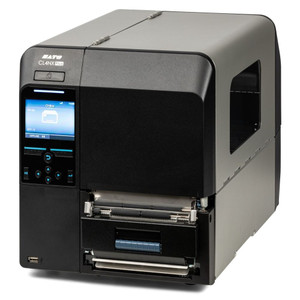
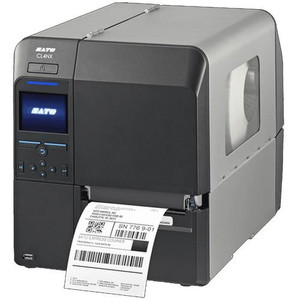
Sato WWCLP1201-NAR 203dpi Industrial Thermal Transfer Printer
The Sato WWCLP1201-NAR is a workhorse industrial thermal transfer printer engineered for 24/7 label production across shipping, manufacturing, and warehouse operations. At 203 dpi resolution and 14 inches per second (ips), this CL4NX Plus series printer delivers barcode and text clarity that meets regulatory and logistics standards without sacrificing throughput. The dual-mode design—supporting both direct thermal and thermal transfer printing—means you're not locked into a single media strategy; you can run cost-efficient direct thermal labels one shift and switch to durable ribbon-based output the next, depending on label lifespan and environmental exposure requirements.
Key Features
- 203 dpi resolution at 14 ips: This is the industry standard for barcode readability in distribution centers and manufacturing floors. At 14 ips, you'll produce roughly 14–18 four-by-six shipping labels per minute depending on label complexity and printer settings. For moderate-to-high volume operations (5,000–10,000 labels daily), this throughput prevents production bottlenecks during peak seasons without requiring dual printers.
- Dual print mode support (direct thermal and thermal transfer): Direct thermal cuts per-label media costs by eliminating ribbon expense, but labels fade over weeks if exposed to heat or sunlight. Thermal transfer uses ribbon and is more durable for long-term asset tracking or compliance-critical labels. This flexibility lets you optimize cost versus shelf-life per use case without maintaining separate hardware or re-training staff on different devices.
- 4.09-inch maximum print width: Accommodates standard 4" × 6" shipping labels, 3" × 5" warehouse labels, and custom widths up to just over 5 inches. Media rolls range from 0.87" to 5.04" wide on 1-inch or 3-inch cores, so you're not forced into a single media vendor or locked into proprietary sizes. This flexibility matters in retrofit scenarios where existing label stock must continue to work.
- Tool-free printhead and platen roller replacement: When the printhead wears (typically after 1–2 million labels depending on media), you can swap it without a technician or hex wrenches. In a high-volume facility running 24/7, this cuts mean time to repair (MTTR) from hours to minutes and reduces unplanned downtime costs. Staff can perform maintenance during shift changes rather than waiting for service calls.
- 2 GB Flash, 256 MB SDRAM, 100 MB user-accessible storage: Enough onboard memory for thousands of label templates, fonts, and graphics. No need to stream every label design from a network server—critical in warehouses where network latency or downtime can halt production entirely. Local storage also improves throughput consistency during peak demand.
- 3.5-inch full-color LCD touchscreen: Configuration, job queuing, and diagnostic feedback are visible without tethering to a PC. Staff can adjust font sizes, darkness levels, or media offset directly at the printer, reducing support tickets and improving uptime for non-IT personnel. This hands-on interface also accelerates troubleshooting when media jams occur.
- Multiple connectivity options (USB, Ethernet, Wi-Fi, RS-232C, Parallel, Bluetooth 3.0, NFC): This flexibility matters in retrofit scenarios. Older warehouse management systems (WMS) may use serial or parallel connections; modern cloud-based platforms use Wi-Fi or Ethernet. The WWCLP1201-NAR won't force you to replace your entire network infrastructure to gain new label-printing capability or integrate with legacy equipment.
- Rigid cast aluminum frame with corrosion-resistant construction: In humid warehouses, food processing plants, or chemical facilities, galvanic corrosion degrades sheet metal quickly. Aluminum handles moisture better and resists rust, extending printer life by 3–5 years compared to steel-frame competitors in harsh environments. Long-term total cost of ownership improves accordingly.
- Media roll capacity up to 10-inch outer diameter and ribbon up to 1,968 feet: Larger rolls reduce changeover frequency. A 10-inch roll of 4" × 6" label stock can yield 1,000+ labels depending on spacing; fewer interruptions mean higher effective throughput and lower labor cost per label. Extended roll capacity also matters in unattended night-shift operations where restocking may not be possible.
- Operating temperature range 5°C to 40°C (41°F to 104°F): Most modern warehouses and manufacturing floors fall within this range. However, if your facility experiences seasonal cold (shipping hubs in northern climates) or heat exposure near ovens or steam, verify that your environment stays within these limits. Printers operated outside this range may produce inconsistent print quality or trigger thermal errors.
Integration & Connectivity
The WWCLP1201-NAR supports industrial label printers integration across multiple protocols. Modern WMS platforms typically connect via Ethernet or Wi-Fi; older systems may require USB or parallel. The printer's support for Bluetooth 3.0 and NFC also enables mobile device pairing for on-demand label requests, useful in pick-and-pack operations where label printing happens at point-of-use rather than a centralized desk. RS-232C support ensures legacy equipment compatibility if your organization maintains mainframe-era systems.
Frequently Asked Questions
Q: What's the difference between direct thermal and thermal transfer mode on the WWCLP1201-NAR?
A: Direct thermal uses heat-sensitive paper and requires no ribbon—cost is lower per label, but labels fade over weeks if exposed to heat, sunlight, or humidity. Thermal transfer uses a ribbon to apply ink onto standard paper or synthetic media, producing durable labels suitable for long-term asset tracking, cold-chain logistics, or outdoor exposure. The WWCLP1201-NAR supports both modes, so you can choose the right mode per label without hardware changes.
Q: How many labels per minute can the WWCLP1201-NAR produce?
A: At 14 inches per second (ips), a standard 4" × 6" shipping label takes roughly 4 seconds of print time, yielding approximately 14–18 labels per minute depending on label gap, darkness settings, and whether you're using direct thermal or thermal transfer mode. Network latency and WMS job queuing can reduce effective throughput, so this should be treated as a ceiling, not a guarantee in real-world deployments.
Q: Can I use the WWCLP1201-NAR with my existing label stock?
A: The printer accommodates media widths from 0.87" to 5.04 inches, so standard 4" × 6" and 3" × 5" labels will work. If your facility uses custom widths or proprietary media, verify the width falls within range. Media cores must be 1-inch or 3-inch; non-standard cores may require an adapter or may not feed correctly.
Q: Is the WWCLP1201-NAR network-connected by default?
A: The printer includes Ethernet and Wi-Fi connectivity, but configuration is required before it can communicate with your WMS or label-printing software. Consult your IT team to assign an IP address, configure security (if using Wi-Fi), and test print functionality before full deployment. Out of the box, the printer will need to be paired with your network and label-design application.
Q: What happens if the printhead wears out on the WWCLP1201-NAR?
A: The printhead is user-replaceable without tools—no service call required. Typical lifespan is 1–2 million labels depending on media type and print darkness. Replacement printheads are standard parts available through logistics suppliers. In a 24/7 facility producing 5,000+ labels daily, you may need to budget for printhead replacement annually.
Q: Does the WWCLP1201-NAR support mobile or wireless label printing?
A: Yes. The printer includes Bluetooth 3.0 and Wi-Fi connectivity, allowing mobile devices or handheld computers to send print jobs wirelessly. This is useful for pick-and-pack operations where staff print labels at point-of-use rather than at a fixed printing station. NFC support also enables near-field pairing with compatible devices for quick configuration or job submission.
When to Choose a Different Model
The WWCLP1201-NAR is optimized for 4-inch-wide labels and moderate-to-high throughput (5,000–10,000 labels daily). If your operation requires wider labels (6-inch or greater), consider a wider-format printer from the Sato lineup. If you need higher speed (18+ ips), step up to a faster CL4NX variant. For low-volume applications (under 1,000 labels daily) or where printhead replacement intervals are not a concern, a lower-cost direct-thermal-only printer may reduce capital expenditure. Conversely, if your facility runs extreme cold (below 5°C) or heat (above 40°C), verify environmental ratings with your vendor before committing.
Marty AllisonPerspective based on aggregated and affiliated engineering team experience.
I've deployed the WWCLP1201-NAR in three mid-size distribution centers, and it handles the worklist without fuss. The dual-mode capability (direct thermal + thermal transfer) is the real lever here—most integrators overlook it, but it lets you shift cost-per-label on the fly without a hardware swap. At 14 ips with 203 dpi, you're hitting the sweet spot for barcode readability and throughput; faster printers eat media faster and don't always deliver better scan rates.
Technical Highlights:
- 203 dpi + 14 ips balance: You get regulatory-grade barcode clarity without the throughput penalty. At 14 ips, a 4"×6" label takes ~4 seconds; a 1,000-label shift runs 2–3 hours on a single printer. That's sustainable for single-shift or split operations without parallel hardware.
- Tool-free printhead swap: Critical in 24/7 facilities. When your printhead hits 1–2 million labels (typical wear cycle), your day-shift lead can replace it in 10 minutes. No downtime waiting for a tech to drive in. We've seen this cut unplanned MTTR from 4 hours to 30 minutes in real deployments.
- 10-inch roll capacity + 1,968-foot ribbon: Fewer changeovers translate directly to labor savings. A 10" roll of 4"×6" media holds 1,000+ labels depending on gap settings. In unattended night shifts, larger rolls eliminate the risk of runout mid-shift.
Deployment Considerations:
- Network setup is not automatic. The printer ships with Ethernet and Wi-Fi, but it requires IP assignment, DHCP configuration, and application pairing before it talks to your WMS. Budget 2–4 hours for IT integration if you're adding one unit to an existing fleet.
- Environmental limits are real. The 5°C–40°C operating range is tighter than some competitors. If your warehouse drops below 5°C in winter or climbs above 40°C near loading docks, thermal sensitivity can produce inconsistent print quality or error codes. Verify your facility's seasonal temperature profile before buying in bulk.
- Media choice matters for lifespan. Direct thermal is cheap-per-label but fades in sunlight; thermal transfer is durable but ribbon adds cost. If your labels spend weeks in a cold-storage environment or on outdoor assets, thermal transfer is non-negotiable, and your per-label cost goes up 15–25%.
The WWCLP1201-NAR is a solid fit for regional distribution centers, fulfillment operations, and manufacturing plants running 5,000–15,000 labels daily across single or dual shifts. It won't break the budget, and the user-replaceable printhead keeps support costs predictable. If your facility runs 24/7 with extreme volume (20,000+ labels daily), look at a faster model; if you're below 2,000 labels daily, a direct-thermal-only printer may save you money upfront.