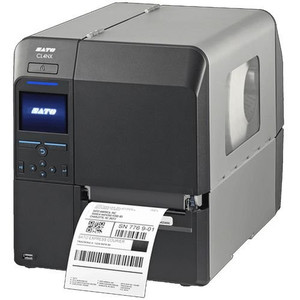
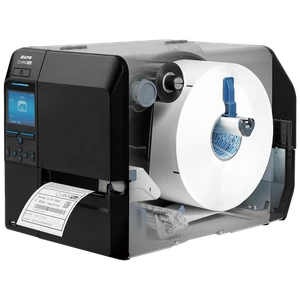
Sato WWCLP1801-NAR 203dpi HF RFID Industrial Thermal Printer
The Sato WWCLP1801-NAR is a compact industrial thermal transfer printer designed to eliminate the intermediate step between label printing and RFID encoding. In a single pass, you print a barcode label and encode an HF RFID tag (13.56 MHz) without moving the media to a separate station. For warehouse operations, contract manufacturers, and asset-tracking workflows running thousands of labels daily, this integration directly reduces labor, improves encoding reliability, and cuts the real estate footprint of your label production line.
Key Features
- 203 dpi resolution at 14 inches per second: Delivers crisp barcodes and readable text on compact labels without sacrificing throughput. At 14 ips, you'll produce roughly 840 labels per hour per media width—fast enough to keep pace with high-speed warehouse operations without creating a bottleneck upstream or downstream.
- HF RFID encoder with auto-antenna optimization (13.56 MHz): The SATO RF Analyze feature adjusts encoding parameters in real time based on your RFID inlay type—eliminating manual tuning every time you switch between inlay vendors or batches. Critical for multi-site operations or third-party logistics where inlay consistency varies.
- 4.09-inch maximum print width (accommodates 0.87–5.04" media): Handles standard 4x6 and 3x5 thermal logistics labels, plus custom formats up to 5 inches wide. Works with both thermal transfer and direct thermal media without hardware swaps, giving you flexibility on material choice based on durability and cost requirements.
- 3.5-inch full-color LCD touchscreen: Operators navigate job management, real-time print status, and media-adjustment controls through an intuitive interface. Compared to legacy button-based printers, this reduces training time and minimizes operator errors during label design changes.
- 2 GB Flash, 256 MB SDRAM, and 100 MB user storage: Onboard memory holds complex label templates, custom fonts, barcode libraries, and application-specific forms. You won't need external USB drives or network storage for most enterprise label deployments, simplifying IT compliance and reducing network dependency.
- Multi-connectivity: USB, Ethernet, Wi-Fi, RS-232C, Parallel, Bluetooth 3.0: Integrates directly with warehouse management systems (WMS), enterprise label design software, and mobile workflows. Wi-Fi eliminates the need for fixed serial or Ethernet drops, allowing flexible placement on the production floor without infrastructure constraints.
- Tool-free printhead and platen roller replacement: Scheduled maintenance (typically after 1–2 million impressions) takes minutes without requiring technician visits. This keeps downtime predictable and lowers total cost of ownership compared to models requiring field service calls.
- Rigid cast aluminum frame with corrosion-resistant construction: Withstands dust, moisture, and minor impacts common in manufacturing floors and logistics centers. Plastic housings on budget printers crack under repeated use in rough environments—this frame holds up better over five-to-seven-year lifecycle.
- Media rolls up to 10 inches diameter; ribbon rolls up to 600 meters: Reduces changeover frequency in high-volume sites. A single ribbon roll lasts thousands of labels, cutting consumable-handling overhead and waste disposal costs at scale.
- Operating temperature range 41°F to 104°F (5°C to 40°C): Suitable for climate-controlled warehouses and manufacturing facilities. If you require operation in unheated outdoor storage or sub-zero environments, this device is not rated for those conditions—verify your facility's temperature profile before deployment.
Integration and Compatibility
The WWCLP1801-NAR (often searched as WWCLP1801 NAR) is built for manufacturing item-level tracking, healthcare pharmaceutical packaging, smart supply chain labeling, and retail inventory systems. Ethernet and Wi-Fi connectivity deploy directly onto your existing network infrastructure without legacy serial links. The printer supports both 1-inch and 3-inch media cores, adapting to your current roll inventory without forced hardware changes. For organizations already running thermal label printers and seeking to add RFID capability, the integrated HF encoder eliminates the cost and floor space overhead of bolt-on modules or separate encoding stations.
Frequently Asked Questions
Q: Can the WWCLP1801-NAR encode NFC tags as well as HF RFID?
A: Yes. NFC is a consumer-friendly protocol layer on top of ISO/IEC 14443 Type A—the 13.56 MHz HF RFID standard this printer supports. RFID inlays compliant with NFC Type 2 or Type 4 specifications will encode and read as NFC tags on compatible mobile devices. Check inlay datasheets to confirm NFC certification before bulk ordering.
Q: What's the typical encode success rate, and does antenna tuning affect it?
A: HF RFID encode reliability depends heavily on inlay quality, antenna tuning, and label substrate. The SATO RF Analyze feature optimizes antenna parameters per inlay type, but you should conduct a trial batch with your actual inlay vendor before full production deployment. Expect 98%+ encode success with properly tuned antennas and standard inlays.
Q: Does the printer require a dedicated Ethernet connection, or can it work on a shared network?
A: The WWCLP1801-NAR supports both Ethernet and Wi-Fi—you can deploy it on your existing corporate network or Wi-Fi infrastructure. Wi-Fi is convenient for flexible placement, but Ethernet is preferred for high-volume, mission-critical sites where latency and reliability matter. Consult your IT team on network security policies before enabling Wi-Fi access.
Q: What media types and ribbon combinations are compatible?
A: The printer supports thermal transfer and direct thermal media between 0.87 and 5.04 inches wide. For thermal transfer, pair it with Sato-compatible resin or wax-resin ribbon. Direct thermal uses no ribbon—useful for cost-sensitive, short-shelf-life applications. Check the printer's media compatibility guide before ordering consumables to avoid waste.
Q: Can I integrate the WWCLP1801-NAR with my existing label design software?
A: Yes. The printer supports standard printer drivers and industry-wide label design languages (ZPL emulation via Sato extensions, EPL, and proprietary SATO programming). Most enterprise label software (NiceLabel, bartender, Seagull) works out of the box. Test with your vendor's integration guide before deployment.
Q: What's the warranty coverage, and what does it exclude?
A: Standard industrial printer warranties typically cover defects in materials and workmanship for a defined period (consult your purchase agreement). Consumables (printheads, platens, ribbons, media) are wear items and are not covered. Optional extended service plans may be available through your distributor.
Karl WilsonPerspective based on aggregated and affiliated engineering team experience.
I've deployed dozens of industrial label printers, and the integration story on the WWCLP1801-NAR is where it earns its footprint. Single-pass barcode-plus-RFID encoding eliminates a massive source of operator error and bottlenecks in high-volume warehousing. At 203 dpi and 14 ips, you get the throughput needed for demanding SKU-level tracking without sacrificing barcode image quality. The antenna auto-optimization feature (SATO RF Analyze) is the standout—it means you're not re-tuning every time your inlay supplier changes batches or you onboard a new contract manufacturer. That's real operational relief in multi-site environments.
Technical Highlights:
- 14 ips at 203 dpi: Delivers roughly 840 labels per hour per media roll width. Fast enough to match upstream WMS throughput without creating queue congestion or requiring parallel printers for redundancy.
- HF RFID at 13.56 MHz with auto-antenna optimization: Real-time parameter adjustment eliminates manual tuning between inlay types and batches—cuts commissioning time and reduces encoding failures in production.
- 2 GB onboard storage + 256 MB RAM: Holds large label template libraries without network dependency. Deployment flexibility on the floor without IT infrastructure overhead.
- Tool-free maintenance (printhead/platen): Consumable swaps take minutes. Predictable downtime schedule and no forced service calls lower TCO across a five-year lifecycle.
Deployment Considerations:
- Operating range 41°F to 104°F: Verify your facility temperature profile. If you're in an unheated warehouse or outdoor loading dock, this printer won't survive extended operation below freezing.
- HF RFID encode success depends on inlay quality and antenna tuning. Run a pilot batch with your actual inlay vendor before mass production—don't assume 100% encode rates out of the box.
- Connectivity flexibility (Ethernet, Wi-Fi, USB, RS-232C, Parallel, Bluetooth) is a strength, but Wi-Fi in mission-critical sites should be paired with wired Ethernet fallback. Document your network security policy before enabling wireless access.
Position the WWCLP1801-NAR as the core label engine for item-level tracking in contract manufacturing, 3PL, and pharmaceutical serialization workflows where single-pass RFID encoding cuts labor and improves audit traceability. If you're stitching multiple label-and-encode steps together today, consolidation onto this device pays for itself within 12–18 months.