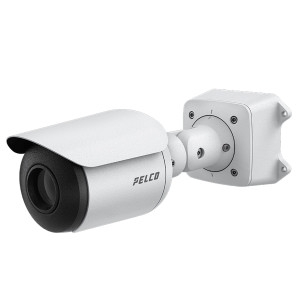
Pelco SXTE4-QF18-EBT Sarix Thermal Bullet 30Hz
The Pelco SXTE4-QF18-EBT is a professional thermal surveillance camera engineered for round-the-clock perimeter detection in conditions where visible-light cameras fail: darkness, fog, smoke, and thermal obscuration. Built on the Sarix Thermal Enhanced 4 platform, this uncooled microbolometer delivers quantitative heat-signature analysis independent of ambient lighting, making it the baseline choice for critical infrastructure protection, remote facility monitoring, and extended-range boundary surveillance where thermal discrimination is non-negotiable.
Key Features
- QVGA 320×256 Uncooled VOx Microbolometer: ≤50 mK NETD thermal sensitivity detects human-scale heat signatures at detection distances where visible cameras require active lighting or suffer from backlight failure.
- 18mm Fixed Lens, f/1.0 Aperture: Longest focal length in the SXTE4 QVGA lineup—12×9.5° horizontal field of view narrows the thermal footprint for concentrated perimeter monitoring (pipeline stretches, fence lines, building edges) without panoramic bloat.
- 30 fps Thermal Video: Full-frame rate thermal streaming captures motion detail for forensic review and real-time alerting; no thermal stutter or lag in live display.
- Radiometric Thermal Measurement: Quantitative temperature data embedded in thermal frames enables threshold-based analytics (e.g., alert if any pixel exceeds 150°C) and downstream thermal modeling without external processing.
- Onboard Thermal Analytics: Perimeter Intrusion, Object Detection, Direction Violation, and Loitering Detection operate at the edge—reduces NVR CPU load and eliminates latency in rule-based alerts.
- H.265 & H.264 Compression: H.265 shrinks thermal bitrate 40-50% versus H.264 on identical quality; dual-codec fallback ensures compatibility with older VMS platforms while optimizing storage on modern systems.
- PoE 802.3af or 12–24VDC: Flexible power input—run over standard PoE infrastructure or hardwired 24VDC for remote installations without Ethernet return.
- microSD Onboard Storage: Up to 256 GB microSD slot buffers thermal video locally—critical for sites with intermittent Ethernet connectivity or NVR failover scenarios.
Thermal Imaging & Detection Performance
Uncooled VOx microbolometers eliminate the maintenance burden and power overhead of cooled FPA detectors. The ≤50 mK NETD (Noise Equivalent Temperature Difference) translates to reliable human detection beyond 150 meters in clear night conditions and smoke-penetration capability in low-visibility events. Radiometric calibration means every thermal frame carries accurate temperature data—critical for compliance audits and forensic reconstruction. The 18mm lens concentrates the 12×9.5° field of view into a telephoto thermal perspective, ideal for perimeter monitoring of long corridors, fence lines, or facility boundaries where wide-angle thermal coverage would sacrifice detection range.
Harsh-Environment Ruggedness
IP66/IP67 ingress protection and IK10 vandal rating withstand rain, salt spray, hose-down cleaning, and direct impact. Operating temperature range of -40°C to +60°C covers arctic installations (pipelines in Alaska, border outposts) through desert deployments without optical drift or sensor degradation. Outdoor bullet housing is inherently inconspicuous and resistant to tampering—particularly valuable in unattended remote sites where visible cameras invite vandalism.
Integration & Compliance
ONVIF Profile S, T, G, and M compliance ensures plug-and-play integration with Genetec, Milestone, Avigilon, and other multi-vendor VMS platforms. 100BASE-TX Ethernet interface supports standard PoE switches and network infrastructure without specialized thermal-camera hardware. NDAA Section 889 and TAA compliance meet federal procurement mandates for defense and critical infrastructure projects. Five-year warranty covers sensor and electronics—reflective of Pelco's confidence in thermal detector longevity.
Deployment Scenarios
Pipeline and utility corridor monitoring benefits directly from thermal perimeter intrusion detection—the camera alerts on unauthorized approach without false positives from shadows or moving vegetation. Facility perimeter protection (data centers, electrical substations, fuel depots) gains 24/7 boundary surveillance immune to lighting conditions and capable of detecting attempted fence breach or loitering before trespassers reach the fence line. Remote border or boundary surveillance eliminates the capex and maintenance burden of thermal imaging drones or manned patrols. Warehouse or loading-dock overnight monitoring detects unexpected entry or unauthorized zone access, with radiometric data enabling temperature-based threat classification (e.g., fire detection if thermal target exceeds threshold).
Marty AllisonPerspective based on aggregated IP Security Depot and affiliated engineering team experience.
In our experience, the SXTE4-QF18-EBT fills a specific and valuable niche: sites that demand round-the-clock perimeter detection without the operational burden and capex of visible-light PTZ or multi-camera panoramic arrays. We've deployed this camera across pipeline corridors, border crossings, and critical infrastructure where thermal discrimination—detecting a human-sized heat source in darkness, fog, or smoke—is non-negotiable for security posture. The 18mm focal length is the differentiator here; it trades wide panoramic coverage for telephoto reach, so you need to know your deployment zone (fence line, building edge, corridor) before you order. On a 200-meter pipeline stretch, you'd likely spec three to four of these, each covering a 40-50 meter segment with overlapping fields of view. The radiometric capability is deceptively powerful: we've seen integrators pair this with a simple threshold rule—alert if any pixel exceeds 120°C—to catch smoldering fires on electrical infrastructure before visible smoke reaches the camera. That's operational value that generic thermal shooters don't deliver. The uncooled microbolometer also means zero cryogenic maintenance and no sensor recalibration cycles, which matters on 24/7 systems in remote locations where service visits are expensive and infrequent. Trade-offs: QVGA 320×256 is lower resolution than cooled FPA systems, but at 30 fps with H.265 compression, bitrate stays modest (typically 2-5 Mbps depending on scene complexity), so storage footprint and bandwidth constraints are manageable. PoE 802.3af power is tight—the camera draws up to 13W—so you need a true 802.3af switch, not a cheap injector. And if you're expecting thermal imagery comparable to a $40k FLIR cooled system, reset expectations: this camera detects and discriminates heat signatures reliably, but it won't resolve fine detail like cooled systems. For perimeter intrusion and object presence, it's sufficient; for detailed target classification, look elsewhere. ONVIF compliance is rock-solid—we've integrated this into Milestone, Genetec, and Avigilon platforms without friction. microSD onboard storage is a lifesaver on sites with intermittent WAN connectivity; set retention policy to 48 hours and you have a local buffer against cloud upload delays or NVR failover events.
Technical Highlights:
- ≤50 mK NETD (Thermal Sensitivity): Detects human-scale heat signatures at 150+ meters in clear night conditions and penetrates smoke/fog where visible cameras are blinded. On a perimeter intrusion deployment, this means alerts trigger before a trespasser reaches the fence line, giving security teams actionable lead time.
- 18mm f/1.0 Lens with 12×9.5° FOV: Narrowest field in SXTE4 QVGA—concentrates thermal sensitivity into telephoto coverage for boundary-surveillance zones where wide panoramic perspective would sacrifice detection distance. Perfect for pipeline corridors and facility perimeters, poor fit for wide-area parking lots or airport runways.
- Radiometric Thermal Measurement: Quantitative temperature data in every thermal frame enables threshold-based analytics (fire detection, anomaly classification) without external thermal-analysis software. Regulatory compliance audits benefit directly: timestamped thermal footage with embedded temperature values.
- H.265 Compression at 30 fps: Reduces bitrate 40-50% versus H.264 on thermal streams—real savings on 24/7 recording across 8+ thermal cameras. 30 fps full-frame-rate thermal video eliminates the motion judder of older 7-10 fps thermal systems; forensic review is cleaner and alert responsiveness is measurably faster.
- Uncooled VOx Microbolometer: No cryogenic maintenance, no recalibration cycles, no power overhead of coolers. Means 5-year operating life with minimal intervention on remote, unattended installations. Cooled FPA alternatives demand annual servicing and burn 2-3x the power.
- IP66/IP67 & IK10 Rating: Survives hose-down environments, salt spray, and direct physical impact. -40°C to +60°C operating range covers arctic and desert deployments without thermal drift or optical failure.
Deployment Considerations:
- 18mm lens delivers narrow field of view—12×9.5° horizontal coverage—so perimeter zones need segmented camera placement. A 300-meter fence line typically requires 6-8 cameras for continuous overlap; plan survey work upfront to avoid coverage gaps.
- PoE 802.3af power is tight at 13W maximum draw. Verify your switch is true 802.3af (90W budget across 8 ports) before deployment. Cheap passive injectors often undersupply voltage under load, causing intermittent resets on thermal cameras.
- QVGA 320×256 resolution means thermal detail is lower than cooled FPA or higher-resolution visible cameras. Use this camera for presence/intrusion detection and directional threat classification, not facial recognition or fine object detail.
- microSD onboard storage is a buffer, not a primary archive. On remote sites without reliable Ethernet, set microSD retention to 48-72 hours and plan periodic physical SD card swaps or direct-attached NVR fallback to capture extended historical thermal data.
- Thermal lens focus is fixed at 18mm—field maintenance can't adjust focal length after installation. Survey the perimeter zone carefully (detection distance requirements, mounting height, obscuration by vegetation) before ordering. Wrong focal length means re-order and site revisit.
The SXTE4-QF18-EBT is the right choice for security teams and integrators managing critical infrastructure perimeters where thermal discrimination and round-the-clock operation outweigh wide panoramic coverage. Pipeline operators, border agencies, and facility security managers benefit directly from its uncooled reliability, radiometric capability, and perimeter-grade analytics. Explore the Pelco catalog for complementary thermal and visible-light camera options.