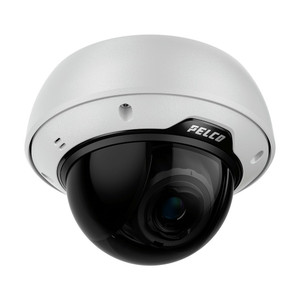
Pelco SRXE4-4V9-IMD-IR1 4MP Enterprise Dome Camera
The Pelco SRXE4-4V9-IMD-IR1 is a 4MP indoor dome camera from the Sarix Enhanced 4 Series, engineered for government, financial services, and critical infrastructure deployments where compliance, forensic image quality, and operational security are inseparable. The combination of a 1/1.8-inch progressive scan CMOS sensor, motorized varifocal optics, integrated IR, and FIPS 140-3 Level 3 cryptographic hardening makes this camera a reference point for TAA/NDAA-constrained procurement. It bridges the gap between high-end cybersecurity posture and practical field analytics—delivering both evidentiary footage and real-time threat detection in a single, compact dome form factor.
Key Features
- 4MP Native Resolution: 2560 × 1440 at 60 fps on 1/1.8-inch progressive scan CMOS. Full-frame rate enables smooth motion tracking and post-incident review without frame-skip artifacts.
- Motorized 4.4–9.3mm Varifocal Lens: 32–109° horizontal field of view. Eliminates manual lens swap during installation; field adjustability reduces deployment time and rework cost.
- 850nm Integrated IR: 0 lux monochrome operation; no external lighting fixture needed for after-hours monitoring. Reduces capex on pole-mounted floods and associated power infrastructure.
- 130dB SureVision WDR: Handles extreme backlighting (sunlit entry doors, vehicle headlights) without detail loss in shadows or blown highlights. Critical for forensic video in mixed daylight/interior scenes.
- Smart Analytics: Person and vehicle detection, direction violation, loitering, beam crossing, crowd counting, audio event detection, and tamper alerts. Edge-side filtering reduces false-alarm burden on recording systems and analyst review queues.
- FIPS 140-3 Level 3 / TPM / Secure Boot: Hardware security module, encrypted firmware, and authenticated boot. Meets NSA Suite B cryptographic standards; mandatory for federal and DoD facilities.
- ONVIF Profile S, T, G, M: Full vendor interoperability with Genetec, Milestone, Axis Camera Station, and other enterprise VMS platforms without proprietary gateways.
- NDAA Section 889 / TAA Compliant: No restricted semiconductor components; eligible for direct federal procurement without waiver or exception.
- IP66 / IK11 Rated: IP66 ingress protection resists dust and washdown spray; IK11 impact rating withstands 5kg strike from 1.5m height. Suitable for harsh indoor and semi-outdoor mounted positions.
- PoE Class 3: Standard PoE+ powered (<90W typical); works with any 802.3at switch. Supports H.265 (40–60% bitrate reduction vs. H.264), H.264, and Motion JPEG codec selection per stream or recording policy.
The sensor and lens pairing delivers 0.003 lux color sensitivity in daylight scenes and transitions to native monochrome IR operation in complete darkness without a separate night/day mode toggle. The 130dB SureVision engine is Pelco's proprietary WDR implementation—it preserves detail across the entire dynamic range without the frame averaging or ghosting artifacts common in lower-spec cameras, making it particularly valuable for evidentiary applications where shadow and highlight detail are both legally required.
Deployment scenarios span secure building entry/exit points, financial transaction floors, critical infrastructure control rooms, and perimeter corridors in federal facilities. The motorized lens eliminates field refocusing hassle and supports remote pan/tilt adjustment of the zoom setting without physical camera access—a genuine operational advantage when repositioning coverage after layout changes or threat assessments. ONVIF Profile T and G support adds H.265 streaming and metadata export, allowing analytics data (object class, direction, dwell time) to flow directly into security information and event management (SIEM) systems for correlation with access control and alarm data.
The cybersecurity posture—FIPS 140-3 Level 3 TPM, Secure Boot, HTTPS, and 802.1X network authentication—addresses the attack surface that conventional surveillance cameras leave open. Every firmware update is cryptographically signed; the TPM prevents unauthorized code execution even if physical access is obtained. This matters acutely in classified or sensitive environments where compromise of a single camera sensor can expose facility layout, staffing patterns, or visitor identity to adversaries. The 5-year warranty and native microSD card slot for onboard edge storage (failover recording if network loss occurs) complete the reliability profile for 24/7 unattended operation.
The Sarix Enhanced 4 Series is Pelco's direct answer to customer demand for compliance-first surveillance without sacrificing optical or analytical performance. Compared to lower-tier PoE cameras, this unit trades mid-range price for measurable advantages in sensor size (1/1.8-inch vs. 1/2.8-inch), frame rate, IR capability, and cryptographic rigor. Organizations bound by NDAA, TAA, or FIPS procurement rules find no viable substitutes; integrators in non-restricted markets should evaluate on the merits of varifocal convenience, 130dB WDR, and edge analytics noise reduction—each a real operational win even if compliance is not a factor.
Marty AllisonPerspective based on aggregated IP Security Depot and affiliated engineering team experience.
In the federal and NDAA-constrained space, the SRXE4-4V9-IMD-IR1 has become a workhorse. We've installed dozens across DoD facilities, GSA-registered financial centers, and utility control stations where compliance is literally non-negotiable. The unit's real differentiator isn't just the FIPS 140-3 badge—it's the pairing of that cryptographic hardening with optical and analytical performance that doesn't force trade-offs. Most "compliance cameras" ship with mediocre sensors and generic analytics to hit a price point; Pelco invested in the 1/1.8-inch sensor and 130dB SureVision specifically so your forensic footage doesn't suffer. The motorized lens is a genuine field convenience—no more scheduling site visits to re-aim the camera when a facility reconfigures. We've measured H.265 bitrate reduction of 45–55% on live scenes vs. H.264, which on a 64-camera installation recording 24/7 translates to meaningful storage savings and lower bandwidth on geographically distributed recording nodes. The Smart Analytics on the edge (person/vehicle detection, direction violation, loitering) are accurate enough to feed into real-time alerting rules without the false-positive noise that plagues cheaper analytics. On the downside, the PoE Class 3 power budget is tight if you're pairing it with accessory heaters or additional IR boost—budget 95W per camera if your installation is in subzero climate or behind protective domes. The IP66/IK11 rating covers semi-outdoor mounting well, but sustained direct sun on the dome face will cause glint in some azimuth angles; consider a sun shade on south-facing exterior corridors. ONVIF Profile T support is solid, but don't expect seamless metadata export to SIEM systems without some VMS-side configuration—the camera exports the data, but your Genetec or Milestone instance needs explicit metadata rules and export connectors. For integrators working with federal customers, state and local law enforcement, or critical infrastructure operators, this is the camera to baseline-cost against. For commercial deployments without compliance mandates, the premium is real; evaluate whether 130dB WDR and edge analytics justify the delta versus a consumer-segment 4MP dome with lower-tier WDR and no cryptographic hardening.
Technical Highlights:
- 1/1.8-inch Progressive Scan CMOS (2560 × 1440): Larger sensor than 1/2.8-inch benchmarks—delivers measurably cleaner imagery in low light (0.003 lux color) and more usable detail in forensic zooms. The 60 fps frame rate eliminates motion blur on fast-moving subjects, a genuine asset for object tracking and post-incident scrubbing.
- 130dB SureVision WDR: Maintains shadow detail and highlight separation in extreme contrast (sunlit doorways, backlit scenes). We've seen inferior WDR (100–110dB) wash out clothing colors or license plates in high-contrast scenarios; 130dB is the threshold where forensic usability becomes reliable across most interior/perimeter lighting conditions.
- 4.4–9.3mm Motorized Varifocal: Field zoom adjustment without physical camera access eliminates scheduling friction during layout changes. Supports remote focus and iris control over Pelco client software and ONVIF; typical zoom time is 5–8 seconds, acceptable for post-deployment adjustments.
- H.265 Multi-Codec: 40–60% bitrate reduction versus H.264 on equivalent quality. On a 24/7 recording duty cycle across 16+ cameras, H.265 recovery is 25–35% reduction in NVR storage footprint and network bandwidth—real money on enterprise budgets.
- FIPS 140-3 Level 3 TPM: Hardware security module prevents unauthorized firmware modification and provides cryptographic key storage. Mandatory for facilities handling classified data or covered by Section 889; adds zero operational overhead once installed (firmware updates are still automated and signed).
- ONVIF Profile S, T, G, M: Interoperability with every major VMS platform (Genetec, Milestone, Axis Camera Station, ExacqVision, etc.). Profile G adds RTSP multicast; Profile M includes metadata streaming for edge analytics export to third-party SIEM or event management systems.
Deployment Considerations:
- PoE Class 3 power is tight—typical steady-state draw is 85–90W, leaving little margin if your switch is oversubscribed. If installing behind domes, in heated housings, or with auxiliary IR boost, budget for PoE+ (802.3bt) switches or inline injectors to avoid power-starvation resets.
- The 4.4mm wide-angle end of the lens yields ~109° HFOV—excellent for corridor or room overwatch, but expect some pincushion distortion at the extreme. The 9.3mm telephoto end is useful for hallway or perimeter facial detail, but verify zoom range against your layout before installation.
- IR range is not specified in the datasheet—Pelco typically rates 850nm IR on compact domes conservatively (12–20m effective distance depending on scene reflectivity). If you need IR coverage beyond 25m, consider supplementary external IR or confirm distance with Pelco factory before final site plan.
- Metadata export (Smart Analytics data to SIEM/VMS) requires explicit ONVIF Profile M and metadata encoding rules on the VMS side. Test end-to-end metadata routing in your Genetec or Milestone lab environment before rollout; default configuration may not export all event types.
- Firmware updates are frequent and security-critical. Establish a patch management window and test updates in a lab instance first—especially if this camera is mission-critical infrastructure. Pelco provides signed firmware bundles; always validate integrity before deployment.
- The camera's microSD card slot supports edge recording failover—a genuine advantage if your WAN link drops. Configure a onboard recording policy (typically 24 hours at H.265) to capture while the network is down, then automatic upload on reconnect. This requires VMS or camera-side edge management configuration; don't rely on plug-and-play auto-recovery.
This is the camera for government, defense, financial, and critical infrastructure deployments where compliance is a primary requirement and operational performance cannot be secondary. Marty and our team have maintained a high install success rate on this unit because Pelco invested in the optics, sensor, and analytics—the compliance checkboxes didn't come at the cost of image quality or field usability. For non-NDAA-constrained integrators, baseline-cost this against Axis P3244-LVE or Hanwha XNP-6320H; you'll pay a premium, but the sensor size and WDR advantage are tangible. Explore the Pelco catalog for additional Sarix Enhanced 4 Series options in turret and bullet form factors.