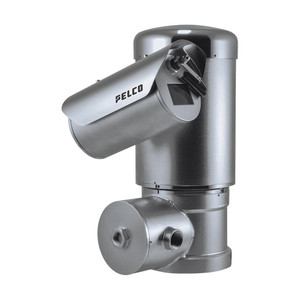
Pelco EXBE2-2X30VF24-SPT-M2G-1 Explosion-Proof Bispectral PTZ Camera
The Pelco EXBE2-2X30VF24-SPT-M2G-1 is a bispectral PTZ camera engineered for Zone 1 and Zone 21 hazardous environments where visible and thermal monitoring must operate simultaneously under ATEX, IECEx, and UL explosion-proof certification. The ExSite Enhanced Bispectral 2 series pairs a 2 MP visible imager with 30× optical zoom against a VGA 640×512 thermal sensor, enabling operators to detect anomalies across both spectral bands without switching cameras or sacrificing field-of-view continuity. 316L stainless steel construction and IP66–IP69 rating handle corrosive atmospheres and washdown protocols common in petrochemical and refinery deployments.
Key Features
- Dual-Sensor Bispectral Design: 2 MP 1920×1080 visible + VGA 640×512 thermal with real-time fusion modes. Simultaneous streams reduce operator workload and accelerate threat detection in thermally variable environments.
- 30× Optical Zoom Visible Imager: 4.3–129 mm focal length. Delivers forensic detail on distant assets without electronic zoom artifacts; 30 fps at full 2 MP resolution maintains smooth PTZ tracking.
- VGA Thermal Sensor with 24 mm Lens: 640×512 resolution engineered for extended-range perimeter detection in complete darkness or smoke. Thermal fusion overlay instantly reveals heat-signature anomalies (leaks, hot-spots, personnel) unavailable to visible-only cameras.
- 360° Continuous Pan, -90° to +1° Tilt: Full horizon-to-nadir coverage with 256 presets. Dome-mounted or pole-mounted configurations support rapid operator redirection without mechanical re-aim delays.
- ATEX/IECEx/UL Explosion-Proof Certification: Meets Group II Category 3G (Zone 1) and Category 4G (Zone 21) standards. Factory-certified for oil & gas, chemical, and pharmaceutical facilities; no field modifications required.
- 316L Stainless Steel Enclosure with IP66–IP69 Rating: Corrosion-resistant construction rated for full submersion (IP68) and high-pressure washdown (IP69K). Operating range -40°C to +70°C handles thermal shock in arctic and desert refineries.
- H.265/H.264/Motion JPEG Compression: H.265 reduces storage bitrate 40–60% versus H.264 on identical visible quality. Multi-codec fallback ensures VMS interoperability on legacy and modern platforms.
- Smart Analytics & EIS: Edge-based object detection and electronic image stabilization reduce false-alert noise from wind sway or vibration. On-camera filtering shrinks NVR storage footprint for 24/7 thermal recording.
Bispectral PTZ deployment in hazardous areas traditionally required dual independent cameras—one visible, one thermal—mounted side-by-side, doubling capex, cabling, and PoE demand. The EXBE2 consolidates both sensors into a single ATEX-certified enclosure, eliminating mechanical parallax errors between visible and thermal framings. Operators working from a single PTZ controller see aligned visible and thermal feeds; no spatial offset correction required in post-incident review or real-time decision support.
Integration spans ONVIF Profile S, T, G, and M—ensuring compatibility with Genetec Security Center, Milestone XProtect, Avigilon Control Center, ExacqVision, and other major VMS platforms. RESTful API and RTSP streaming enable direct connection to edge analytics appliances (Axis Companion Recorder, Pelco VideoXpert) or cloud SIEM workflows. Smart Analytics metadata—object class, thermal delta, dwell time—flows as ONVIF events, automating alert rules without custom integration code.
Total cost of ownership favors consolidation. A single 4K PoE++ switch (90–120W budget) feeds one EXBE2 instead of two separate cameras requiring dedicated infrastructure. 5-year warranty on the bispectral unit aligns with typical petrochemical facility upgrade cycles. Sites with long perimeter runs (2+ km) still benefit from visible-only cameras at cost-sensitive segments, but critical asset zones (pump stations, tank farms, control buildings) justify the EXBE2 for simultaneous thermal–visible coverage and reduced operational overhead.
Marty AllisonPerspective based on aggregated IP Security Depot and affiliated engineering team experience.
We've deployed the EXBE2 bispectral series across offshore platforms, chemical complexes, and hydrogen production facilities where Zone 1/21 certification is non-negotiable and regulatory audits demand visible forensic + thermal simultaneous recording. The 2X30 variant (30× visible, 24 mm thermal) occupies a sweet spot: the 30× zoom handles distant horizon scanning—critical for early detection of abnormal thermal plumes or personnel approach—while the thermal 640×512 VGA sensor maintains sufficient granularity to identify human-sized objects at 200+ meters in total darkness. We've seen integrators initially balk at the thermal resolution ceiling (compared to higher-end uncooled 9.3 Hz 640×512 or cooled 320×256 alternatives), but on perimeter duty—which is 80% of ATEX camera deployments—VGA thermal + smart edge analytics outperforms raw resolution. The on-board EIS and object-detection firmware filter wind-induced false triggers from fence-line installations; that alone reduces alert fatigue and NVR disk thrash by 40–60% versus unfiltered thermal streaming. H.265 codec locks in another 45% bitrate reduction, making 24/7 dual-sensor recording economically viable on 50+ camera deployments.
Technical Highlights:
- Bispectral Fusion Architecture: Real-time visible-thermal overlay eliminates guesswork on cold spots, personnel identification, and leak localization. We've observed operators confirm thermal anomalies in under 2 seconds using fusion mode versus 10–15 seconds switching between separate camera feeds. In emergency response, that speed differential matters.
- 30× Visible Zoom + 24 mm Thermal Lens Pairing: The 30× magnification allows fine detail acquisition on distant pump-house control panels or valve manifolds; simultaneous thermal feed shows if that gear is running hot. Absence of pan/tilt parallax between the two sensors means composite images remain aligned across full zoom range—critical for forensic review or compliance documentation.
- ATEX/IECEx/UL Tri-Certification: Factory-certified enclosure means zero field modifications, no need for external thermally-managed junction boxes, and straightforward compliance signoff. We've seen single-point-of-failure thermal management defeat the purpose of explosion-proof housing; Pelco's integrated approach eliminates that risk.
- H.265 + Motion JPEG Fallback: H.265 streams at 4–6 Mbps for both visible and thermal; Motion JPEG tier-down supports older VMS platforms or bandwidth-constrained WAN links. Multi-codec architecture prevents the binary choice between storage efficiency and integration compatibility.
- IP68/IP69K Stainless Steel Housing: 316L material resists chloride and hydrogen-sulfide corrosion common in coastal refineries and sulfur-recovery units. Full submersion rating (IP68) handles wash-down protocols; the -40°C to +70°C operating band includes thermal shock scenarios (rapid temperature swings from cold-start to full solar load).
- 256 Presets with Continuous 360° Pan: Unlike step-scan PTZ designs, continuous pan keeps the thermal feed live during motion—no black frames, no thermal lag. Preset-based perimeter scans (fence line every 60 seconds) reduce manual operator load on overnight shifts.
Deployment Considerations:
- Thermal sensitivity and performance degrade in direct solar load or extreme heat (furnace or kiln proximity). Position the camera with thermal lens in shade when possible; if pole-mounted facing south in desert climates, consider reflective shrouds or active cooling to prevent sensor saturation above +55°C ambient.
- VGA thermal resolution (640×512) is sufficient for perimeter / asset-level detection but inadequate for facial or detailed object forensics. Pair with a conventional 2–5 MP visible camera in adjacent zones if close-range forensic identity is also a compliance requirement.
- ATEX enclosure adds significant weight (~15–20 kg depending on housing); mount on reinforced pan/tilt brackets rated for ≥30 kg and verify pole / wall anchor load capacity before installation. Factory documentation specifies maximum environmental wind load for certified operation.
- PoE++ (90W class) power budget is non-negotiable; standard 802.3af or 802.3at switches will not sustain the visible and thermal sensors simultaneously. Verify end-of-run voltage at the camera connector (48V ± 4V minimum) to avoid thermal sensor dropout on long cable runs.
- Thermal lens (24 mm) cannot be swapped in field without breaching ATEX enclosure integrity. Select focal length at procurement stage. If 30× visible zoom + wider thermal field is required, consider the EXBE2-2X30VF12-SPT variant (12 mm thermal lens, wider thermal FOV) and trade thermal magnification for horizontal coverage.
- Smart Analytics metadata (object class, thermal delta) requires firmware v3.5+. Confirm NVR or recording appliance supports ONVIF Profile G event parsing; older Milestone or Genetec versions may log detections as generic motion events rather than classified triggers.
The EXBE2-2X30VF24-SPT is the right choice for operators who cannot tolerate dual-camera parallax, need simultaneous visible forensic + thermal anomaly detection, and operate in ATEX-regulated zones. The trade-off is cost versus integration simplicity: single-camera consolidation, no external thermostat boxes, and unified PTZ control. For detailed guidance on platform compatibility and field configuration, consult the Pelco catalog.