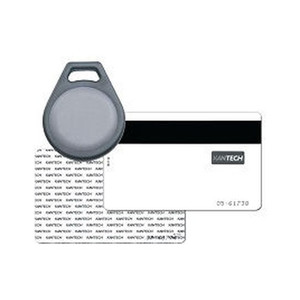
Kantech HID-C1386/GG 26-bit Wiegand Proximity Card
The Kantech HID-C1386/GG is a dye-sublimated HID ISOProx II proximity card engineered for secure access control deployments across corporate facilities, multi-tenant buildings, and industrial campuses. Encoded in industry-standard 26-bit Wiegand format, this credential integrates natively with Kantech access control platforms and compatible third-party readers that support standard proximity authentication. The card's durability and standardized format make it a reliable choice for organizations managing large-scale credential issuance and replacement cycles.
Key Features
- 26-bit Wiegand Format: Industry-standard encoding ensures compatibility across Kantech systems and most third-party proximity readers. No proprietary format lock-in.
- HID ISOProx II Technology: Proven proximity chip delivers consistent read range and authentication reliability in indoor access control deployments.
- Dye-Sublimated Construction: Full-color surface printing enables custom branding, photo identification, or department color-coding while maintaining card structural integrity and read performance.
- Batch Credential Issuance: Minimum 100-card order quantity supports rapid deployment for new facility openings, large team onboarding, or credential replacement programs.
- No Custom Encoding Required: Ships ready for direct encoding into your Kantech issuance workflow — no special setup or proprietary software licensing for card programming.
- Compact Form Factor: Standard credit-card dimensions integrate seamlessly into existing badge holders, lanyards, and credential management infrastructure.
The HID-C1386/GG proximity card operates at typical indoor read distances (3–12 inches, depending on reader hardware) and requires no on-card power source — the card is purely passive and maintenance-free once issued. This simplicity reduces operational overhead compared to active badge systems or multi-technology credentials that require battery replacement or firmware updates.
Kantech access control platforms (including the KT-400, microK, and third-generation NetBox controllers) recognize 26-bit Wiegand credentials natively, eliminating format conversion or compatibility middleware. Organizations standardizing on proximity-only deployments benefit from reduced reader cost and straightforward credential lifecycle management. Dye-sublimated printing supports both monochrome ID text and full-color corporate logos, enabling professional appearance and rapid visual identification in high-traffic facilities.
Bulk ordering (100-card minimum) accommodates organizations planning credential inventory for ongoing issuance, replacement due to loss or attrition, or seasonal workforce expansion. Many integrators maintain on-site stock of blank cards pre-encoded with facility master codes, enabling same-day credential issuance for visitors, temporary contractors, or emergency access scenarios. The card's durable construction handles repeated wallet wear, exposure to hand sanitizer and cleaning chemicals, and standard office environment stresses without degradation of read reliability.
For deployments requiring photo identification or multi-credential stacking (e.g., proximity card + barcode + magnetic stripe on the same blank), dye-sublimated media supports thermal printing of additional data without compromising the HID chip. This flexibility is particularly valuable in healthcare, government, and large corporate environments where a single physical credential serves multiple authentication and identification purposes.
Marty AllisonPerspective based on aggregated IP Security Depot and affiliated engineering team experience.
We've specified and distributed thousands of proximity credentials across Kantech deployments, and the HID-C1386/GG is the workhorse card for organizations committed to 26-bit Wiegand without proprietary format lock-in. The real operational advantage isn't glamorous — it's standardization. When you ship 500 replacement cards to a facility manager mid-contract, they can be encoded and deployed within hours using the same Kantech issuance tools already in place. No vendor consultations, no firmware patches, no compatibility surprises. The dye-sublimated surface is a legitimate quality-of-life improvement too: full-color printing eliminates the need for a separate thermal transfer step, and the cards withstand the typical office punishment (coffee spills, dropped badge holders, pocket wear) without delamination or read failure. In our experience, card read failures due to physical degradation are rare with dye-sublimated HID media — most failures occur because readers are out of alignment or powered down, not because the card itself failed. That's a meaningful difference when you're managing credential logistics across 20+ sites.
Technical Highlights:
- 26-bit Wiegand Encoding: The industry's most common proximity format ensures the card works not only with Kantech readers but also with legacy and third-party systems using standard Wiegand data lines. This eliminates single-vendor credential dependency — a major advantage if your site architecture spans multiple access control platforms.
- HID ISOProx II Chip: Passive RFID proximity technology with no battery or external power requirement means the card has a theoretical 10+ year lifespan (limited by physical wear, not electronics). Read range is typically 3–12 inches depending on reader tuning; outdoor proximity readers may require closer card placement due to environmental interference.
- Dye-Sublimated Construction: One-step thermal printing process (versus card + laminate + print) reduces lead time for custom credential orders and eliminates the risk of laminate separation or peeling. Full-color photo ID, barcode, and magnetic stripe can be printed simultaneously on the same blank.
- 100-Card Minimum Order: Reflects the economics of dye-sublimation media and professional credential issuance workflows. Ordering in smaller quantities is not an option — budget accordingly for initial stock and replenishment cycles.
- No Proprietary Encoding Software: Kantech controllers encode Wiegand credentials using standard access control management tools (KT Suite or equivalent). You do not need special card manufacturer software or subscription licenses to program cards — that cost and complexity is eliminated.
Deployment Considerations:
- Read Range Varies by Reader Hardware: Standard indoor proximity readers work at 3–12 inches; outdoor or high-interference environments may reduce this to 2–6 inches. Always test reader placement and card performance before large-scale deployment. Readers mounted behind thick glass or metal may require closer approach distance.
- Bulk Ordering Discipline: The 100-card minimum means you need to forecast credential demand before placing an order. Plan for ~10–15% excess inventory to account for loss, damage, and replacement churn. Organizations without inventory discipline often end up over-ordering or facing stock-outs mid-cycle.
- Dye-Sublimation Lead Time: Custom printing (logos, employee photos, barcode) adds 5–10 business days to delivery. Blank cards ship faster. Coordinate with your credential design team early if you plan color printing or complex layouts.
- Card Encoding Workflow: Ensure your Kantech issuance station (card encoder + reader) is configured and tested before cards arrive. A misconfigured encoder can programmatically corrupt the entire batch, wasting inventory and delaying deployment.
- Proximity-Only Limitation: 26-bit Wiegand is read-only — credentials cannot store employee data or mutate state. If your deployment requires smart-card features (stored permissions, cryptographic verification, offline access), evaluate multi-technology or smart-card alternatives instead.
The Kantech HID-C1386/GG is the right choice for organizations standardizing on proximity technology, committed to Kantech platforms, and operating at scale (100+ cards per order). For smaller facilities, single-card issuance, or hybrid technology environments, proximity may not be the optimal path. Integrators and facility managers should evaluate whether proximity meets their security policy (read-only credentials, short transmission range, no encryption) before standardizing on this format. More details are available in the Kantech catalog.