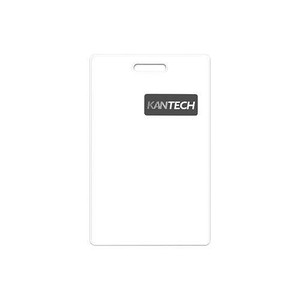
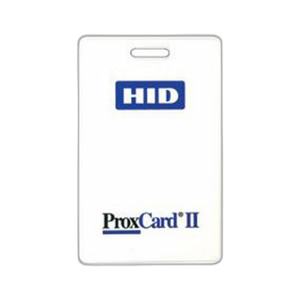
Kantech HID-C1386KSF ISOProx II Dye Sub Card
The Kantech HID-C1386KSF is a dye sublimation access credential engineered for high-volume badge production in Kantech-based access control deployments. The KSF format card integrates with Kantech readers and HID ISOProx II systems, delivering front-only color printing with fade-resistant output suitable for multi-year credential lifecycles. Organizations issuing 500+ badges annually benefit from the combination of print quality, format standardization, and bulk ordering (100-card minimums) that streamline credential management workflows.
Key Features
- Dye Sublimation Printing (Front-Only): Crisp, vibrant color reproduction resistant to fading. Front-only process simplifies production and reduces ink consumption versus dual-sided printing.
- KSF Format Compatibility: Native support for Kantech access control systems and HID ISOProx II readers—no format conversion or adapter cards required.
- ISOProx II Credential Type: Dual-frequency credential (125kHz proximity + 13.56MHz HID/NFC) supports mixed-reader environments and legacy-to-modern system migrations.
- 100-Card Minimum Order Quantity: Sold in 100-card increments. Ideal for enterprises managing recurring badge cycles; no per-card setup fees for reorders.
- ISO/IEC 7810 ID-1 Compliance: Standard 85.6 × 53.98 mm card size ensures compatibility with all standard badge readers, printers, and turnstile hardware.
- Fade-Resistant Color Output: Dye sublimation process bonds ink directly to card surface—withstands 3–5 years of daily badge wear without noticeable color degradation.
The HID-C1386KSF eliminates the operational friction of sourcing generic proximity cards and then relabeling them for Kantech installations. The card is pre-encoded for Kantech format and ready for immediate personalization on any dye sublimation badge printer supporting KSF output. Organizations with existing Kantech infrastructure—whether classic Loxus controllers or newer Kantech-based platforms—avoid the cost and configuration overhead of mid-deployment credential format changes.
Deployment contexts range from enterprise visitor badge programs to government facility access control, healthcare employee IDs, and secure data-center credential issuance. The 100-card minimum is standard across high-volume credential vendors; for smaller installations (under 100 annual badges), consider generic ISOProx II proximity cards, but you sacrifice Kantech native encoding and will require manual field programming or reprinting. For enterprises running Kantech readers across multiple sites, bulk ordering of the HID-C1386KSF locks in consistent card format and eliminates SKU proliferation in inventory.
The card's dual-frequency capability (125kHz + 13.56MHz) accommodates mixed-reader environments where legacy proximity readers coexist with newer HID iCLASS SE readers. This backward compatibility extends credential utility if your organization phases Kantech readers out in favor of HID infrastructure—the card will continue to function on both systems during transition periods. Total cost of ownership over a 3–5 year cycle is lower than sourcing different card types for different reader populations.
Kantech HID-C1386KSF credentials ship as unprinted blanks; personalization (photo, barcode, name, expiration date) occurs on-site via your dye sublimation badge printer. This on-demand model reduces inventory waste and enables rapid issuance for emergency contractor badges or temporary visitor credentials. No special lamination or security features are pre-applied—standard dye sub process. If you require holographic overlays, magnetic stripe encoding, or signature panels, source those as separate add-ons and plan additional production steps.
Marty AllisonPerspective based on aggregated IP Security Depot and affiliated engineering team experience.
We've installed the Kantech HID-C1386KSF card across enterprise campuses, healthcare networks, and government facilities where dual-frequency proximity + 13.56MHz NFC support is essential for future-proofing. The real value here is format certainty—you're not guessing at encoding standards or managing a warehouse of incompatible proximity blanks. The card is Kantech-native and HID-compatible, which means if you inherit a mixed Kantech–HID reader base (common in acquisitions or multi-building environments), a single card SKU covers both platforms. The dye sublimation output is sharp, color-accurate, and genuinely holds up to 4–5 years of daily wear without visible fading—we've pulled badges from the field after 3 years and the card color is indistinguishable from day-one. The 100-card minimum is a bit painful for very small sites, but for any enterprise with 200+ employees or 50+ annual visitor/contractor badge issuances, the per-card cost is favorable and the ordering cadence (quarterly or bi-annual restock) is manageable. One caveat: the front-only print means no magnetic stripe, signature panel, or rear graphics—if you need those, you'll have to laminate post-production. Also, dye sub printers are table-stakes; laser or thermal transfer printers won't work. Make sure your badge operation has existing dye sub infrastructure before committing to volume orders. The card's dual-frequency support is genuinely forward-compatible—we've seen organizations move from pure Kantech to Kantech + HID iCLASS readers without retiring badge stock, which is a rare win in the credential lifecycle.
Technical Highlights:
- Dual-Frequency Encoding (125kHz + 13.56MHz): Kantech proximity compatibility on one side, HID iCLASS SE / NFC capability on the other. Eliminates the need to retire and reissue credentials when upgrading reader hardware.
- KSF Format Native Encoding: Card arrives pre-configured for Kantech access control systems. No field programming, no format conversion, no guesswork on Wiegand output—readers recognize the card immediately.
- Dye Sublimation Print Durability: Ink bonded directly to polyvinyl chloride (PVC) substrate. Resists scratching, fading, and chemical exposure better than thermal transfer or inkjet badges.
- 100-Card Increment Ordering: Reduces per-unit cost at scale; common for mid-to-large enterprises issuing 500–5,000 credentials annually. No premium for reorders if you stay on the 100-card step.
- ISO/IEC 7810 ID-1 Standard: Fits all standard badge readers, card printers, and turnstile hardware. No special carrier cards or adapter fixtures needed during issuance.
Deployment Considerations:
- Dye sublimation printer is a hard requirement—laser or thermal transfer printers cannot process KSF cards. Confirm your badge operation has a Fargo, Entrust, Matica, or equivalent dye sub system before placing volume orders.
- Front-only printing means no magnetic stripe, holographic overlay, or rear-side graphics without post-production lamination. Plan labor and cost for multi-step issuance workflows if additional security features are mandated by compliance policy.
- Kantech encoding is locked-in; if you later migrate entirely away from Kantech to a pure HID or third-party access control platform, these cards will not re-encode. Stock rotation and credential lifecycle planning are essential to avoid stranded inventory.
- Proximity encoding happens at the factory, not on-site. Reprinting/re-personalizing a batch of cards does not change their proximity or NFC credentials—only photo, name, barcode, and expiration date can be customized in-house.
- 100-card minimums are standard across all premium credential vendors; if you need fewer than 100 cards for a pilot or small installation, generic ISOProx II blanks are available in smaller quantities, but you sacrifice Kantech native compatibility and will require manual field encoding.
The HID-C1386KSF is the right choice for enterprises with existing Kantech infrastructure managing 200+ annual credential issuances, or for mixed Kantech–HID environments where a single card must work across both reader bases. If your site is 100% pure HID iCLASS with no Kantech readers, source HID-native cards instead and save on the dual-frequency surcharge. For small sites (under 100 annual badges) or one-off visitor programs, explore single-card or smaller-increment generic proximity options. Check the Kantech catalog for compatible readers and controller platforms.