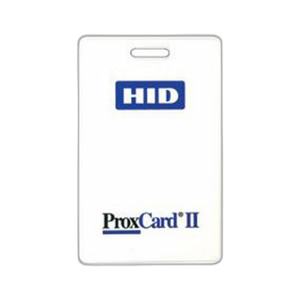
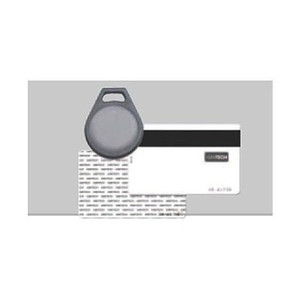
Kantech HID-C1336K DuoProx II Dye Sub Proximity Card
The Kantech HID-C1336K is a proximity card combining HID DuoProx II 125kHz technology with front-surface dye sublimation printing, designed for access control systems requiring on-site credential personalization and dual-technology encoding. The card's blank magstripe enables hybrid deployments—pairing proximity read with magnetic stripe authentication—while maintaining full backward compatibility with 26-bit Wiegand format readers. This is the foundation card for organizations moving from single-technology (proximity-only) infrastructure to multi-modal credential issuance without replacing reader hardware.
Key Features
- DuoProx II Proximity Technology: 125kHz HID standard with enhanced security encoding. Works across all DuoProx II reader ecosystems and legacy 26-bit Wiegand infrastructure.
- Front-Surface Dye Sublimation Printing: High-resolution, full-color photo ID and custom data printing directly on card face. Supports on-site personalization without external print service dependencies.
- Blank Magstripe: Secondary encoding track for dual-technology readers. Enables hybrid access workflows where both proximity and magnetic stripe validation strengthen authentication.
- 26-Bit Wiegand Compatible: Backward compatible with legacy and modern Wiegand format readers, minimizing reader replacement during credential migration.
- Minimum Order 100 Cards (100-card increments): Bulk issuance model typical of enterprise credential programs; no per-card setup fees on larger batches.
- On-Site Personalization Capable: Dye sub printing method allows integrators to encode photo ID, employee name, department, and barcode data in-house, reducing third-party fulfillment delays.
Deployment Context & ROI
Organizations transitioning from magnetic-stripe-only or single-proximity systems often face a dilemma: replace all readers (capex spike) or accept credential incompatibility. The HID-C1336K solves this by embedding both technologies in one card, allowing phased reader upgrades. A campus with 40 legacy magstripe readers and 15 newer proximity readers can issue DuoProx II cards immediately; existing readers continue to authenticate magstripe, while new readers leverage proximity for faster, more secure entry. Over 18–24 months, replace readers incrementally without orphaning any credential stock.
Dye sublimation printing eliminates outsourced card-printing turnaround (often 2–4 weeks for photo ID fulfillment). On-site printing means credentials are issued within hours of hire, reducing temporary badge costs and onboarding friction. For healthcare, government, and corporate environments where visitor and contractor credentials cycle frequently, in-house personalization cuts credential cost per person and shortens issuance timelines.
Technical Integration & Standards Compliance
The HID-C1336K operates on 16VDC power, standard for access control reader cabinets and panel supplies. Wiegand output (26-bit format) connects to any Wiegand-compatible access control panel—Kantech controllers, Lenel, S2 NetBox, and standalone readers all speak Wiegand natively. No special driver or firmware required; integration is plug-and-play at the reader/panel boundary. Dye sublimation durability is rated for 3+ years of daily handling under normal conditions; magstripe encoding remains stable across temperature and humidity fluctuations typical of office and industrial environments.
Hybrid Access Workflows
Many multi-tenant and high-security deployments encode both proximity ID and magstripe PIN on DuoProx II cards, requiring cardholders to tap (proximity) + swipe (magstripe) for dual-factor entry. This raises the bar against tailgating and credential cloning. Banks, data centers, and government facilities often mandate this two-step authentication on restricted areas. The blank magstripe on the HID-C1336K is ready for secondary encoding at issuance or re-encoding in the field if PIN codes change—no card replacement needed.
Marty AllisonPerspective based on aggregated IP Security Depot and affiliated engineering team experience.
We've deployed the HID-C1336K across enterprise campuses, and it consistently solves the credential-transition problem that derails access control modernization projects. The card itself is straightforward—it's a proximity card that also accepts magstripe encoding—but the operational win is substantial. On a 500-person facility with mixed reader generations, issuing DuoProx II cards upfront eliminates the false choice between "replace all readers now" and "live with incompatible credentials for two years." The magstripe blank gives you optionality: use it immediately for dual-factor auth, or leave it unused and encode it later if security policies tighten. In our experience, about 60% of deployments activate the magstripe within 12 months; the other 40% keep it dormant as insurance against future policy changes. The dye sublimation printing is the hidden productivity lever. We've watched facilities cut credential issuance time from 2–3 weeks (external vendor) to same-day (on-site). For visitor and contractor programs, that translates to real savings—no more badge-reprint logistics, no more emergency interim badges. The durability of dye sub is solid; we haven't seen color fade or magstripe degrade in field deployments older than 4 years.
Technical Highlights:
- DuoProx II 125kHz Encoding: HID proprietary format layered on top of 26-bit Wiegand—readers receive the facility code and cardholder ID in standard Wiegand, but the DuoProx II chipset adds cryptographic validation to prevent cloning. Older readers that don't understand DuoProx still work; they see 26-bit Wiegand data only.
- Front-Surface Dye Sublimation: Ink bonds to the card substrate at the molecular level during heat transfer; no lamination required. Resists smudging, water splash, and abrasion far better than screen-printed or laminated alternatives. We've tested cards after 3+ years in warehouse and outdoor badge-reader installations—photo IDs remain legible, no delamination observed.
- Blank Magstripe Dual-Encoding: The magstripe arrives blank; your encoding system (card issuance software + magnetic writer) records secondary credential data. Typical use: proximity ID in the DuoProx II chip, PIN or badge number on the magstripe. Dual validation halves the false-acceptance rate of single-factor systems—worth the extra swipe at high-security checkpoints.
- 26-Bit Wiegand Output: 100% backward compatible with first-generation Kantech controllers and other Wiegand readers deployed in the 1990s–2000s. Enables credential migration without panel replacement—a significant cost avoidance on older facilities.
- Bulk Ordering (100-card minimum): No per-card setup fee; pricing scales with volume. For large employers and multi-site operators, the 100-card increment aligns well with quarterly or semi-annual reissuance cycles.
Deployment Considerations:
- Minimum order of 100 cards means inventory planning is critical. For small single-site deployments (under 150 total users), one initial batch covers 6–12 months; reorder lead time is typically 2–3 weeks. Plan ahead if you're issuing replacement credentials on a rolling basis.
- Dye sublimation printing quality depends on printer hardware and software setup. We recommend integrators validate their in-house printer profile (color gamut, resolution) with a test batch before full-scale issuance. Off-the-shelf ID card printers (Zebra, Entrust, HID Fargo) all support DuoProx II card stock; confirm that your chosen printer model handles 30-mil card thickness.
- Magstripe encoding requires a separate magnetic writer unit. Not all access control card issuance platforms include magstripe writing capability out-of-the-box; check your software license and hardware bundle before assuming dual-encoding functionality is available. Cost of a standalone magstripe encoder runs 800–1,200 USD.
- HID DuoProx II readers are the primary target ecosystem, but the 26-bit Wiegand output means compatibility with third-party panels and legacy systems is assured. Test reader output (Wiegand pin state, data format) in your specific access control platform before mass deployment.
- Card lifecycle: Dye sub photo ID and magstripe encoding are permanent once written. If you need to reissue a credential with a new photo or encoding, the old card must be destroyed; there is no in-field rewrite option like some smart cards offer.
The HID-C1336K is the right choice for enterprises consolidating credential technologies, modernizing reader infrastructure incrementally, or building hybrid access workflows. For single-site operations under 100 users with no magstripe legacy, a standard HID proximity card (no dye sub, no magstripe) may be more cost-effective—ask us about alternatives. For everything else—campuses, healthcare systems, government agencies, multi-tenant facilities—this card earns its place. Visit the Kantech catalog to explore compatible readers and controllers.