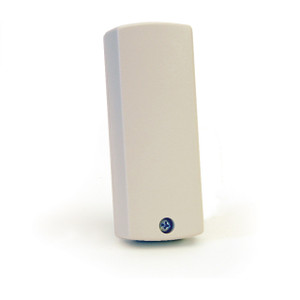
Inovonics EN1212 Dual Input Universal Transmitter
Overview
The Inovonics EN1212 is a dual-input wireless transmitter designed to consolidate multiple sensor or alarm signals onto a single RF channel, eliminating the need to deploy separate single-input transmitters across distributed monitoring sites. Operating in the unlicensed 902-928 MHz ISM band, the EN1212 delivers straightforward wireless signal transmission without frequency coordination overhead—a practical advantage when you're expanding system capacity or retrofitting facilities where additional hardwire runs are cost-prohibitive or logistically impractical. This transmitter integrates into wireless transmitter systems where multi-point signal aggregation is necessary, making it particularly suited for perimeter protection networks, remote sensor arrays, and multi-zone alarm deployments across campus or warehouse environments.
Key Features
- Dual Input Architecture: Accepts two independent signal sources simultaneously—contact closures, analog sensors, or alarm signals—eliminating the need for multiple single-input transmitters and directly reducing Bill of Materials and receiver RF traffic load on your network.
- 902-928 MHz ISM Band Operation: Operates in unlicensed spectrum, so you avoid FCC frequency coordination costs and enjoy broad compatibility with existing Inovonics receiver infrastructure across multiple facilities.
- Universal Input Compatibility: Designed to accept standard sensor and alarm signal types without custom interfaces, which streamlines retrofit scenarios and multi-vendor installations where standardized wiring practices are already in place.
- Extended Operating Temperature Range (-4°F to 140°F / -20°C to 60°C): Supports indoor office deployments, outdoor equipment shelters, and industrial warehouse environments without requiring environmental enclosures or thermal management—a cost savings when deploying across mixed climates.
- Compact Wireless Design: Eliminates hardwire transmission runs between sensor locations and central monitoring points, reducing installation labor and enabling rapid deployments in venues where conduit routing or exterior cabling is impractical or unsafe.
- EchoStream Technology: Inovonics proprietary wireless architecture ensures signal integrity and reliable receiver detection across facility infrastructure, minimizing missed alarms or dropped signals in multi-building deployments.
Integration and Deployment Context
The EN1212 consolidates alarm and sensor signals in wireless system expansions, sensor aggregation networks, and retrofit projects. The dual-input design is particularly effective when you need to monitor two contact closures, two analog sensor channels, or mixed alarm types from a single location without deploying separate transmitters. This architecture reduces wiring documentation complexity during system commissioning and lowers ongoing maintenance overhead—key factors in large-scale integrations. For warehouse automation and perimeter monitoring, the ability to bundle two independent signal streams into one transmitter directly simplifies system topology and reduces RF traffic on your receiver backhaul. Integrators typically deploy the EN1212 in applications where hardwire runs between sensor points and central receivers are either prohibitively expensive (long outdoor distances, underground runs) or physically impractical (existing building structures, temporary installations). The -4°F to 140°F operating range supports both climate-controlled indoor deployments and unheated outdoor equipment shelters, eliminating the need for heated or cooled enclosures in most continental North American installations.
When to Choose a Different Model
If your deployment requires more than two input channels per transmitter, consider higher-channel-count variants within the Inovonics wireless line. If you need licensed frequency operation or require coordination with existing RF infrastructure in a congested area, contact Inovonics directly for alternative frequency-band options. The EN1212 is optimized for ISM-band operation; if your integration mandate specifies a different frequency allocation, evaluate purpose-built alternatives from the manufacturer's catalog.
Frequently Asked Questions
Q: Does the EN1212 require FCC licensing or frequency coordination?
A: No. The EN1212 operates in the unlicensed 902-928 MHz ISM band, so no FCC licensing or frequency coordination is required. You can deploy it immediately without regulatory delay.
Q: What types of signals can the EN1212 accept on its dual inputs?
A: The EN1212 supports standard contact closures, analog sensors, and alarm signals. Exact input impedance and signal levels are detailed in the product datasheet; verify your specific sensor output against those specifications before deployment.
Q: Can I deploy the EN1212 outdoors in a humid climate?
A: Yes. The operating temperature range of -4°F to 140°F supports outdoor deployments. However, confirm IP/environmental enclosure ratings with the manufacturer if the transmitter will be exposed to direct rain, spray, or submersion.
Q: How does the dual-input design reduce system cost compared to two single-input transmitters?
A: One EN1212 replaces two single-input transmitters, reducing hardware cost, receiver RF load, installation labor, and wiring documentation. For a 10-location site with dual sensors, you deploy 10 transmitters instead of 20.
Q: Is the EN1212 compatible with Inovonics receivers across different product lines?
A: The EN1212 integrates with Inovonics wireless infrastructure using 902-928 MHz band equipment. Confirm specific receiver model compatibility with the manufacturer or your system integrator before purchase.
Q: What is the warranty coverage on the EN1212?
A: Warranty terms are available from the manufacturer or your specialty distributor. Contact Inovonics directly for current coverage and terms.
Ted PerryPerspective based on aggregated IP Security Depot and affiliated engineering team experience.
The Inovonics EN1212 is a straightforward dual-input wireless transmitter for integrators who need to consolidate multiple sensor or alarm signals without running additional hardwire. In my experience reviewing this transmitter for multi-site deployments, the dual-input architecture directly reduces hardware footprint and simplifies wiring documentation during system commissioning—critical factors when you're rolling out perimeter protection across 10+ locations.
Technical Highlights:
- 902-928 MHz ISM Band Operation: No FCC frequency coordination overhead, no licensing delays. Deploy immediately across facilities without regulatory friction—a real time savings when you're on a project schedule.
- Dual Input Capacity: Accepts two independent signal sources per transmitter, eliminating the need for separate single-input transmitters and directly cutting your receiver RF traffic load by 50% compared to dual-transmitter setups.
- Extended Temperature Specification (-4°F to 140°F): Supports unheated outdoor equipment shelters and indoor office deployments without environmental enclosures or thermal management—a cost advantage across mixed-climate campuses and warehouse networks.
Deployment Considerations:
- Confirm exact input signal types (contact closures, analog levels, alarm formats) against your sensors before purchase—the EN1212 is designed for standard alarm signals, but custom sensor scaling or signal conditioning may require external interfaces.
- Verify receiver model compatibility with Inovonics support; while the EN1212 integrates into Inovonics 902-928 MHz infrastructure, ensure your central receiver or repeater hardware supports dual-input signal aggregation on the backhaul side.
The EN1212 is the right choice for warehouse automation integrators and security system expansions where you need to bundle two sensor or alarm channels per location and reduce hardwire runs. If you're retrofitting a multi-building facility or deploying perimeter sensors across a campus where trenching or conduit routing is prohibitive, the wireless consolidation directly simplifies commissioning and lowers labor overhead compared to traditional hardwired multi-input panels.