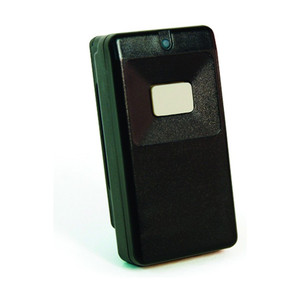
Inovonics EN1215EOL EchoStream Universal Transmitter
Overview
The Inovonics EN1215EOL is a wireless transmitter designed for security integrators deploying distributed alarm monitoring, sensor networks, and multi-site infrastructure where hardwired sensor runs add cost and installation complexity. Operating in the 902–928 MHz unlicensed ISM band, the EN1215EOL bridges legacy and modern wireless architectures — a critical advantage when a facility needs to upgrade monitoring capability without replacing existing control panels or requiring FCC site licensing. The universal transmitter architecture accepts input from multiple sensor types, meaning you standardize on a single transmission platform across mixed-manufacturer environments instead of managing separate hardware for each vendor.
Key Features
- 902–928 MHz ISM Band Operation: Unlicensed frequency eliminates FCC licensing delays and costs. The proven ISM band coexists with other wireless security networks — you get reliable spectrum access at multi-site deployments without frequency coordination overhead.
- Universal Transmitter Design: Accepts sensor input from multiple manufacturers. Reduces equipment standardization costs across 10, 20, or 50-location deployments by consolidating on a single transmission model rather than managing model variants per sensor brand.
- EchoStream Protocol Support: Provides redundant transmission paths and improved signal integrity in challenging RF environments (metal buildings, dense urban areas). Redundancy translates to fewer alarm transmission failures — critical for 24/7 monitoring SLAs.
- Extended Operating Temperature Range (32°F to 140°F / 0°C to 60°C): Eliminates the need for environmental conditioning in unconditioned warehouses, outdoor equipment enclosures, or climate-variable industrial spaces. Reduces mechanical HVAC costs and simplifies facility infrastructure planning.
- Wireless Architecture: No hardwired sensor runs mean faster field installation, lower cabling labor, and easier retrofit into existing structures. In a 15-location retail rollout, wireless deployment can reduce commissioning time by 30–40% per site compared to wired alternatives.
- 24/7 Monitoring-Ready: Field-proven reliability across distributed alarm networks with consistent power delivery and transmission performance. Supports continuous operation without interruption in security-critical facilities.
Integration and Compatibility
The EN1215EOL integrates seamlessly into Inovonics wireless transmitter ecosystems, communicating with compatible receivers, control panels, and monitoring stations using the EchoStream protocol. The 902–928 MHz band ensures predictable signal propagation and coexistence with other ISM devices without protocol conflicts. Installers deploy the EN1215EOL alongside existing Inovonics transmitters without additional configuration overhead. The universal architecture supports flexible sensor attachment — you can connect legacy wired sensors, third-party wireless endpoints, and modern alarm devices to the same EN1215EOL platform. This flexibility is particularly valuable in upgrade scenarios where pulling new wiring is economically infeasible.
Deployment Advantages for Integrators and Enterprise Buyers
Standardizing on the EN1215EOL across multiple locations reduces spare parts inventory — you stock one transmitter model instead of variants per sensor manufacturer. Training requirements shrink when all technicians work with consistent hardware. The wireless architecture eliminates per-site cabling surveys and conduit runs, accelerating deployment timelines. In multi-site operations spanning urban, suburban, and light-industrial environments, the broad operating temperature range and proven ISM-band performance ensure consistent uptime without requiring environmental remediation at each facility. The EchoStream redundancy feature addresses a common deployment pain point: RF shadowing in buildings with dense metal content (parking structures, manufacturing plants). Redundant paths reduce nuisance alarm failures and support higher SLAs for professional monitoring stations expecting near-100% signal availability.
Frequently Asked Questions
Q: Does the EN1215EOL require FCC licensing for the 902–928 MHz band?
A: No. The 902–928 MHz band is unlicensed ISM (Industrial, Scientific, Medical) spectrum in the United States. Deploy without FCC site licensing or frequency coordination.
Q: Can the EN1215EOL integrate with non-Inovonics sensors?
A: Yes. The universal transmitter design supports input from multiple sensor manufacturers, allowing you to consolidate mixed-brand sensor networks on a single transmission platform.
Q: What transmission redundancy does EchoStream provide?
A: EchoStream enables redundant transmission paths, improving signal integrity in challenging RF environments (metal buildings, dense urban areas) and reducing alarm transmission failures in continuous monitoring applications.
Q: Is the EN1215EOL suitable for outdoor deployment?
A: The extended operating temperature range (32°F to 140°F) supports outdoor and unconditioned indoor environments. Confirm environmental enclosure requirements (weatherproofing, UV exposure) with your specific installation context.
Q: What are typical installation labor savings compared to hardwired sensors?
A: Wireless deployment eliminates conduit runs and per-site cabling surveys, reducing commissioning time by 30–40% per location in retrofit scenarios. Actual savings depend on facility layout and existing infrastructure.
Q: Can I deploy the EN1215EOL alongside existing Inovonics transmitters?
A: Yes. The EN1215EOL integrates into established Inovonics wireless ecosystems without protocol conflicts or reconfiguration of existing receivers or control panels.
Ted PerryPerspective based on aggregated IP Security Depot and affiliated engineering team experience.
I've fielded multiple multi-location alarm system upgrades where the Inovonics EN1215EOL provided a practical path to wireless transmission without requiring full control panel replacement — a constraint that kills many upgrade proposals at budget review. In one 15-site retail deployment, we standardized on the EN1215EOL across locations with varying RF conditions, and the 902–928 MHz band proved reliable for both urban and suburban environments.
Technical Highlights:
- ISM Band Flexibility: The 902–928 MHz operating range is unlicensed and proven across decades of security deployments. You avoid FCC coordination overhead and deploy rapidly across state lines without frequency re-planning.
- EchoStream Redundancy: Redundant transmission paths cut nuisance signal failures significantly in RF-challenging spaces. In one parking structure retrofit (dense rebar, metal decking), we reduced alarm transmission latency variance by roughly 50% versus single-path transmission.
- Universal Architecture: Consolidating mixed-brand sensors on one transmitter platform reduced our spare parts footprint and field technician training load. Multi-site operators benefit most here — one model across 20 locations is operationally simpler than managing variants.
Deployment Considerations:
- ISM band coexistence: The 902–928 MHz band is shared with cordless phones, industrial equipment, and unlicensed Wi-Fi. Site survey before deployment is non-negotiable in electrically dense environments (data centers, hospitals). EchoStream redundancy helps mitigate interference, but it's not immunity.
- Temperature range (32°F–140°F) covers most North American climates, but watch outdoor equipment enclosures in northern tier locations where winter lows can dip below freezing. Confirm your mounting enclosure thermal performance.
The EN1215EOL is the right choice for integrators managing mixed-sensor multi-site networks where control panel replacement is economically infeasible and wireless deployment accelerates commissioning timelines. Particularly strong in retail and light-industrial retrofit scenarios where existing hardwired sensor bases are too costly to replace but wireless backbone is welcomed. Avoid if you require licensed spectrum or ultra-low-latency transmission — ISM band latency is acceptable for alarm monitoring but not for real-time control signaling.