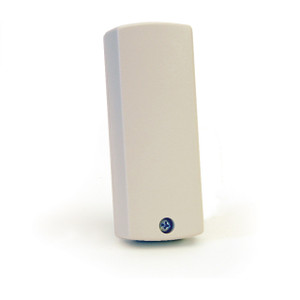
Inovonics EN1210EOL EchoStream Wireless Transmitter
The EN1210EOL is a wireless transmitter built for professional security integrators deploying sensor networks across distributed properties. Operating in the unlicensed 902–928 MHz ISM band, it delivers long-range signal penetration through walls and structural materials — a genuine advantage when retrofitting facilities where cable runs are impractical or expensive. The transmitter integrates end-of-line (EOL) supervision, meaning your control panel continuously monitors whether each EN1210EOL is present and reporting, rather than discovering a failed unit during an alarm event.
Key Features
- 902–928 MHz ISM Band Transmission: Unlicensed frequency eliminates FCC licensing burden and works in jurisdictions with equivalent ISED allocations. The ISM band also provides better wall penetration than higher frequencies, so you'll get stronger signal strength through concrete, brick, and metal-frame construction than you would with, say, 2.4 GHz devices competing with Wi-Fi and Bluetooth.
- EchoStream Wireless Protocol: Inovonics' proprietary protocol optimized specifically for security sensor networks and alarm transmission, ensuring reliable delivery without the overhead of general-purpose wireless stacks. This matters when you need consistent latency for door/window sensors or motion detectors tied to alarm systems.
- End-of-Line Supervision: Built-in EOL reporting tells your control panel the transmitter is alive and communicating. Technicians performing system tests or routine maintenance can verify active device count without physically checking every sensor location — reduces commissioning time and catches dead units before they become a liability.
- Temperature Operating Range: –4°F to 140°F (–20°C to 60°C): Covers climate-controlled indoor spaces and moderate outdoor enclosures. If you're mounting this in an unheated warehouse in a cold climate or an exterior enclosure in summer heat, confirm your specific site conditions fall within this range. Outside this window, reliability degrades.
- Flexible Sensor Integration: Supports both sensor loop connections and discrete alarm reporting, allowing configuration for door/window sensors, motion detectors, and hardwired peripheral devices. This flexibility is valuable when retrofitting existing wiring or mixing sensor types on a single system.
- Compact Form Factor: Space-efficient design supports flush-mount and surface-mount installation, reducing the footprint required in control panel enclosures or sensor locations.
- Long-Range Signal Propagation: The 902–928 MHz band combined with Inovonics' antenna design delivers reliable coverage across multi-building campuses and large warehouses without requiring repeaters in many installations — though RF site surveys are still essential to confirm signal strength at receiver locations, particularly in buildings with extensive metal framing.
Integration and Compatibility
The EN1210EOL operates within the Inovonics EchoStream ecosystem, pairing with compatible Inovonics control panels, repeaters, and networked receivers. Before deployment, verify your control panel firmware supports EchoStream protocol — older panels or firmware revisions may not recognize this transmitter. Integrators should also confirm 902–928 MHz frequency licensing or authorization requirements for their specific jurisdiction; the band is unlicensed in the United States and supported under ISED rules in Canada, but regional variations exist elsewhere.
Installation follows standard security system wiring practices. The EN1210EOL can integrate into existing door/window loops, motion detector circuits, or standalone alarm reporting configurations. Plan RF site surveys to confirm signal strength at receiver locations, especially in buildings with structural steel, copper shielding, or dense concrete — these materials attenuate 902–928 MHz signals more than drywall or wood-frame construction.
EOL supervision integrates seamlessly with panel-based system status monitoring, enabling technicians to verify active device count during commissioning and catch communication failures during routine maintenance. This is far less labor-intensive than manual checks across distributed sensor locations.
Frequently Asked Questions
Q: Does the EN1210EOL require FCC licensing to operate?
A: No. The 902–928 MHz ISM band is unlicensed in the United States and Canada under ISED rules. Check local regulations for other jurisdictions before deployment outside North America.
Q: What's the typical transmission range of the EN1210EOL?
A: Range depends heavily on building construction, antenna orientation, and receiver sensitivity. Plan RF site surveys to confirm signal strength at receiver locations, particularly in concrete or metal-frame buildings. The ISM band generally penetrates structures better than higher frequencies, but specific distance claims require on-site testing.
Q: Can I use the EN1210EOL with non-Inovonics control panels?
A: The EN1210EOL is designed for Inovonics control panels and third-party systems supporting EchoStream wireless protocol. Verify compatibility with your specific panel model and firmware version before ordering.
Q: What does end-of-line (EOL) supervision do?
A: EOL supervision confirms the transmitter is present and communicating with your control panel. Instead of discovering a failed unit during an alarm event, your panel continuously monitors active devices, so technicians can identify communication failures during routine testing.
Q: Can the EN1210EOL be used outdoors?
A: The operating temperature range of –4°F to 140°F supports outdoor enclosures in temperate climates. However, the EN1210EOL itself is not environmentally sealed for direct rain or submersion. Mount it inside weatherproof enclosures designed for outdoor use, and verify local equipment standards for outdoor installations.
Q: Do I need to perform an RF site survey before installing the EN1210EOL?
A: Yes. Building materials, metal framing, and structural density affect 902–928 MHz propagation. Conduct an RF survey to confirm receiver locations will maintain reliable signal strength, especially in facilities with concrete, steel, or extensive shielding.
Ted PerryPerspective based on aggregated IP Security Depot and affiliated engineering team experience.
The EN1210EOL is a solid choice for integrators retrofitting large campuses or warehouses where running hardwired sensor loops would be prohibitively expensive. The 902–928 MHz ISM band offers genuine advantages: unlicensed operation, excellent wall penetration, and minimal RF congestion compared to crowded 2.4 GHz bands. End-of-line supervision is the real differentiator here — it eliminates the discovery-during-alarm-event problem that plagues wireless deployments without active heartbeat monitoring.
Technical Highlights:
- ISM Band (902–928 MHz) + EchoStream Protocol: Unlicensed frequency eliminates licensing friction, and the proprietary protocol is tuned for security sensor latency, not general-purpose data throughput. You avoid Wi-Fi/Bluetooth interference that would degrade performance on 2.4 GHz.
- EOL Supervision: Built-in continuous monitoring tells your panel which transmitters are alive. Technicians catch dead units during commissioning and routine maintenance, not during an actual alarm — real operational savings on support calls and site revisits.
- Temperature Range (–4°F to 140°F): Covers most HVAC-conditioned indoor installations and moderate outdoor enclosures, but confirm your specific site conditions. Outside this window, reliability is not guaranteed, so outdoor locations in extreme climates need active environmental controls or relocation to equipment shelters.
Deployment Considerations:
- RF Survey Non-Negotiable: 902–928 MHz signals are attenuated significantly by concrete, steel framing, and metal-clad buildings. Conduct an RF site survey before installation to confirm receiver locations will maintain reliable signal strength. Skipping this step is the #1 cause of intermittent connectivity complaints in wireless security deployments.
- Firmware Verification: Confirm your control panel firmware version actually supports EchoStream protocol. Older Inovonics panels or panels from other vendors may not recognize the EN1210EOL, even if the hardware connections are correct. Verify compatibility during pre-sale engineering, not after installation.
- No Environmental Sealing: The EN1210EOL itself is not sealed for outdoor use. If you need outdoor deployment, mount it in a weatherproof enclosure and verify the enclosure maintains the operating temperature range. Moisture ingress into connector terminals is a common failure mode in field deployments.
Best fit: Large warehouse retrofits, multi-building campuses, and retrofit projects where running new cable is impractical. If you need coverage across dozens of sensors and your site has concrete or steel construction, this transmitter will pay for itself in installation labor savings — but only if you perform RF site surveys upfront.