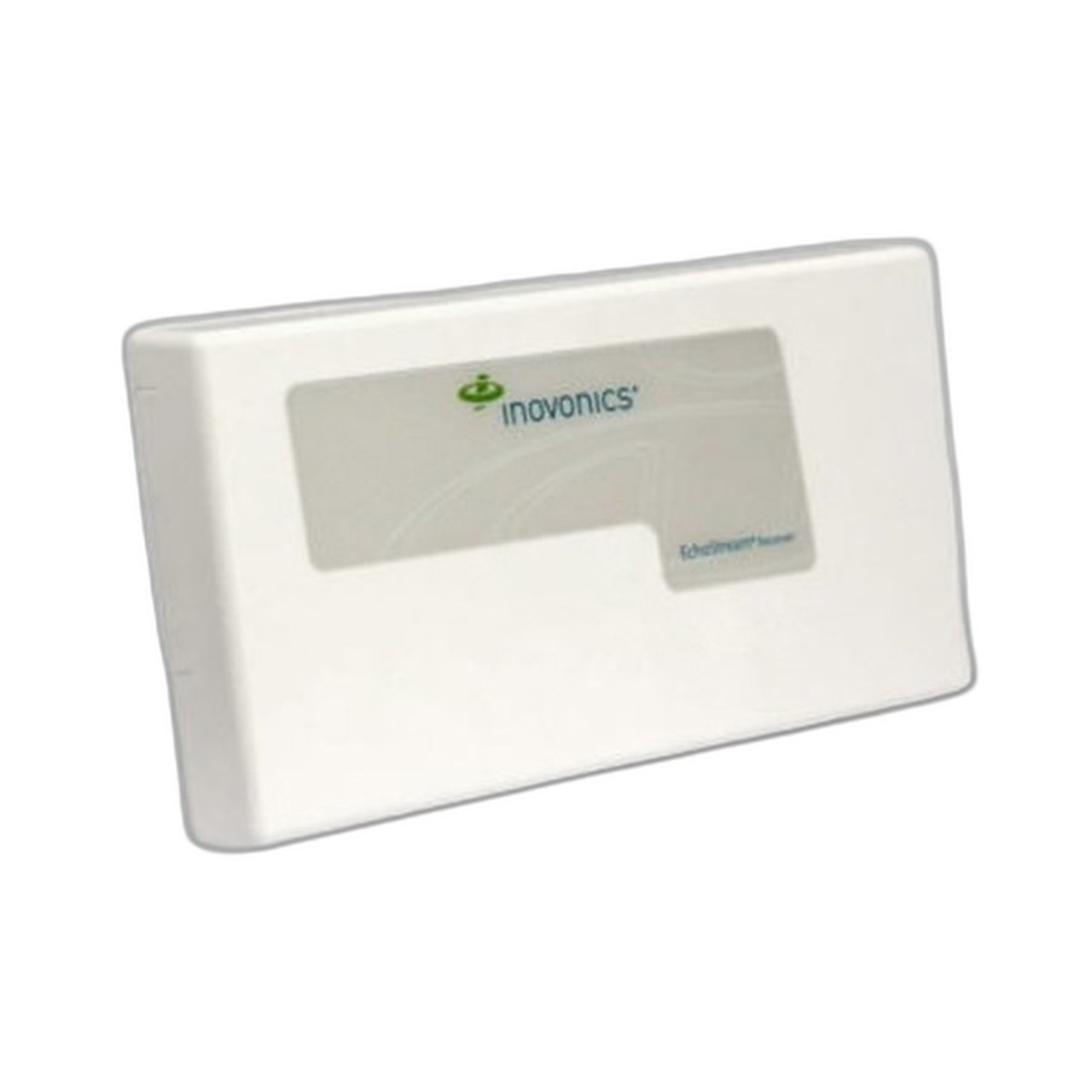
Inovonics EN4000 EchoStream Universal Serial Receiver
Overview
The Inovonics EN4000 is a universal serial receiver designed for wireless systems operating in the 902–928 MHz frequency band. This device serves as a central consolidation point for wireless signal acquisition and serial data transmission, enabling integrators to expand system capacity and extend wireless coverage across multi-zone security and automation deployments. The EN4000 supports the EchoStream wireless protocol, providing flexible receiver architecture without requiring proprietary gateway hardware in many installations.
Key Features
- 902–928 MHz ISM Band Operation: Unlicensed frequency allocation provides excellent propagation through walls, ceilings, and structural elements typical in commercial and residential facilities. This frequency band also ensures coexistence with other wireless devices without licensing requirements or interference coordination burden—a genuine advantage when deploying across multiple building types or campuses.
- Universal Serial Interface: Direct serial connectivity eliminates the need for proprietary gateways. The receiver connects directly to control panels, automation controllers, and monitoring systems, reducing deployment complexity and allowing flexible routing of received signals to third-party software platforms, fire alarm systems, and building automation controllers.
- EchoStream Protocol Support: Compatible with the broader Inovonics wireless ecosystem, allowing you to build mixed-protocol systems where wired and wireless devices coexist without conflict or additional translation hardware.
- Expandable Multi-Receiver Architecture: Support for multiple EN4000 units enables increased receiver density and geographic coverage distribution. This topology isolates wireless traffic from primary control panels, improving system reliability and diagnostic capability—particularly valuable in retrofit installations or large campuses where running sensor cables is impractical.
- Compact Form Factor: Space-efficient design suitable for control room, panel, or rack-mount installations without requiring significant environmental modification. No oversized enclosure means flexible placement options in existing security closets or equipment rooms.
- Plug-and-Play Serial Configuration: Standard serial protocol reduces deployment time and technical complexity. Configuration and commissioning do not require specialized software or vendor-specific tools beyond basic terminal access.
Integration & Compatibility
The EN4000 integrates with any control system supporting serial input, including legacy panels and modern building automation platforms. Serial output enables you to route received wireless signals to third-party monitoring stations, fire alarm systems, or software-based management platforms without proprietary middleware. The receiver's architecture supports isolation of wireless traffic from wired sensor networks—a useful design pattern in large installations where signal load distribution improves overall system performance and diagnostic clarity.
Typical Applications
Security integrators deploy the EN4000 in wireless sensor networks requiring central receiver consolidation. Common scenarios include multi-building campuses where distributed receivers handle geographic coverage, retrofit installations where running new sensor cables is cost-prohibitive or architecturally infeasible, and systems requiring future expansion without panel replacement. The receiver topology is particularly effective in warehouses, manufacturing facilities, and logistics hubs where wireless perimeter sensors, access points, and environmental monitors benefit from offloaded processing and isolated signal paths.
Frequently Asked Questions
Q: Can I use multiple EN4000 receivers in the same installation?
A: Yes. The EN4000 supports expandable architecture, allowing you to deploy multiple units for increased receiver density and geographic coverage distribution across large facilities or multi-building campuses.
Q: What control systems does the EN4000 work with?
A: The EN4000 connects to any control panel or management system with a serial interface. Common integrations include fire alarm panels, building automation controllers, and monitoring station software via standard serial protocols.
Q: Does the 902–928 MHz frequency require licensing?
A: No. The 902–928 MHz band is an unlicensed ISM (Industrial, Scientific, Medical) frequency band in North America. No FCC licensing or frequency coordination is required.
Q: What is the typical wireless range of the EN4000?
A: Range depends on antenna type, terrain, and building materials. The 902–928 MHz frequency provides strong propagation through walls and structural elements typical in commercial installations, but exact range should be verified during site survey and testing.
Q: Can I integrate the EN4000 with third-party software platforms?
A: Yes. Serial output allows flexible routing of received signals to third-party software platforms, fire alarm systems, and monitoring stations. No proprietary gateway is required.
Q: Is the EN4000 suitable for outdoor deployments?
A: The EN4000 is a receiver designed for indoor installation. Confirm environmental specifications with the manufacturer for any outdoor antenna or mounting applications.
Ted PerryPerspective based on aggregated IP Security Depot and affiliated engineering team experience.
I've integrated the Inovonics EN4000 receiver into several multi-site security deployments where distributed receiver architecture was needed to consolidate wireless sensor load across large facilities without requiring a complete panel replacement. The EN4000 brings genuine flexibility to wireless system design—particularly valuable when retrofitting older installations or expanding capacity across campuses where running new wired sensor cables would be prohibitive.
Technical Highlights:
- 902–928 MHz ISM Band Operation: Unlicensed frequency allocation eliminates licensing coordination overhead and coexists cleanly with other wireless devices. Building penetration is strong—walls, ceilings, and structural elements don't create dead zones the way higher frequencies do.
- Universal Serial Architecture: Direct serial interface means no proprietary gateway middleware required. You connect to any control system with a serial port: fire alarm panels, building automation controllers, monitoring station software. That flexibility alone justifies the deployment in mixed-vendor environments.
- Expandable Multi-Receiver Topology: Deploy multiple EN4000 units to isolate wireless traffic load from your primary panel. This improves both performance and diagnostic visibility—you can troubleshoot wireless signal issues without affecting wired sensor circuits.
Deployment Considerations:
- The EN4000 is a receiver only—you'll need compatible wireless transmitters (sensors, access points) to pair with it. Confirm your existing or planned wireless devices support EchoStream protocol.
- Serial configuration reduces complexity, but you still need to verify baud rate, flow control, and protocol settings match your control panel's expectations. Budget time for commissioning even though it's straightforward.
- Range varies with antenna, terrain, and building materials. The 902–928 MHz band propagates well, but run a site survey and range test before final deployment in challenging RF environments (metal structures, dense signal congestion).
The EN4000 excels in warehouse automation, campus security, and retrofit scenarios where you need receiver distribution without infrastructure overhaul. It's a solid technical choice for integrators building wireless systems that must coexist with wired legacy panels and third-party software platforms.