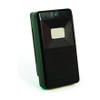
Inovonics EN1235SF Wireless Panic Button
Overview
The Inovonics EN1235SF is a fixed-mount wireless panic button designed to integrate into security systems that require rapid, on-demand emergency alerting. Operating on the unlicensed 902–928 MHz Industrial, Scientific, Medical (ISM) band, the EN1235SF transmits panic signals to compatible security receivers without requiring hardwired connections. This device is purpose-built for environments where personnel need immediate access to emergency signaling—control rooms, reception desks, building entrances, and other staffed positions where response time matters. The single-button design eliminates confusion during high-stress situations: one press triggers the panic function; no secondary controls or menus to navigate.
Key Features
- Single-Button Operation: One dedicated panic trigger means faster, more reliable activation under stress. No accidental menu navigation or secondary functions to interfere with the emergency signal.
- 902–928 MHz Wireless Transmission: Operates in the unlicensed ISM band, the same frequency range used by many wireless security systems. Eliminates the need for dedicated alarm wiring, cutting installation labor and allowing placement in areas where running cable is impractical or expensive.
- Fixed Installation Design: Permanently mounted to a wall, desk, or console. The panic button stays where it is during normal operations, ensuring it's always accessible when needed and preventing accidental displacement or loss.
- Direct Emergency Alert Signaling: Transmits panic commands to networked security monitoring systems and receivers, triggering immediate alarm escalation and alert dispatch to security personnel or monitoring centers.
- Frequency Compliance: The 902–928 MHz band is unlicensed in most jurisdictions, simplifying deployment and eliminating licensing requirements. Verify local regulations before installation.
- Wireless Topology Simplifies Infrastructure: No hardwired connection means no alarm wire routing, no conduit planning, and faster repositioning if security needs change. Particularly valuable in older buildings or spaces where drilling and running cable is prohibitively expensive.
Integration & Compatibility
The EN1235SF must be paired with a security system or receiver that supports 902–928 MHz wireless reception and panic button protocols. Before deployment, verify that your security panel, receiver module, or wireless hub can receive and process EN1235SF panic transmissions. Integration typically involves configuring the receiver to recognize the panic button's wireless identifier and assigning the signal to appropriate monitoring zones or alert escalation paths. The single wireless signal approach keeps the button reliable; unlike multi-button devices, there's no mode confusion or function selection that could delay emergency response.
Deployment Considerations
Fixed mounting ensures the button remains in place and is not misplaced. Install at a height and location where authorized personnel can reach it quickly during an emergency—typically 48–60 inches above the floor at a staffed station. Test wireless transmission range from the intended location to your receiver; walls, metal structures, and high-RF-noise environments can reduce range. Because the EN1235SF is a transmit-only device, there is no feedback indicator showing whether the signal was received. Integration with a monitored security system that provides visual or audible confirmation (alarm tone, panel lights, central station acknowledgment) ensures accountability and reassurance that the panic was registered.
When to Choose a Different Model
If you require a portable panic pendant that can be worn or carried by mobile personnel, consider a mobile panic transmitter variant within the Inovonics wireless panic button family. If your security infrastructure does not support 902–928 MHz reception, or if your monitoring center requires a hardwired connection with guaranteed delivery confirmation, a hardwired panic button with direct alarm circuit output may be more appropriate. Consult your security system documentation or your security system integrator to confirm compatibility before purchase.
Frequently Asked Questions
Q: Does the EN1235SF work with my existing security system?
A: The EN1235SF requires a security system or receiver that supports 902–928 MHz wireless panic button signals. Check your security panel documentation or contact your system vendor to confirm compatibility before purchase.
Q: What is the wireless transmission range of the EN1235SF?
A: Typical range is 100–300 feet in open space, but walls, metal structures, and radio interference can reduce this significantly. Always test from your intended mounting location to your receiver before finalizing installation.
Q: Can I move the EN1235SF to a different location after installation?
A: Yes. Because it is wireless, there are no wires to disconnect or reconnect. Simply unmount it from one location, test transmission range to your receiver from the new location, and remount. No reconfiguration of the device itself is required.
Q: Does the EN1235SF have a backup battery or low-battery indicator?
A: Battery and status indicator details are not provided in the available specifications. Refer to the product datasheet or contact the manufacturer for battery type, replacement intervals, and low-battery warning behavior.
Q: Is the EN1235SF compliant with NDAA or government procurement regulations?
A: No certification information is provided in the available specifications. If government or NDAA compliance is required, contact the manufacturer or your specialty distributor for compliance documentation.
Q: What happens if the wireless signal doesn't reach my receiver?
A: The panic button will transmit, but if the receiver is out of range or blocked, the signal will not be received. This is why testing transmission range and placement from your intended location is critical before deployment. Consider a wired panic button if wireless range is unreliable in your environment.
Ted PerryPerspective based on aggregated IP Security Depot and affiliated engineering team experience.
The Inovonics EN1235SF fills a straightforward but critical role: endpoint panic transmission without hardwired infrastructure. In deployment planning, think of this device as a wireless trigger that eliminates cable runs to a staffed emergency station. Operating on 902–928 MHz, the EN1235SF reduces installation complexity in buildings where running alarm wiring is expensive or impractical.
Technical Highlights:
- Single-Button Design: One function, one press—eliminates the risk that personnel will activate the wrong command or get confused navigating a multi-button interface during an emergency. Cognitive load matters when seconds count.
- 902–928 MHz Unlicensed ISM Band: No licensing, no frequency coordination, and compatibility with many existing wireless security systems. Reduces licensing overhead and speeds deployment approval, particularly in multi-building or multi-tenant environments.
- Fixed Installation Form Factor: Permanent mounting means the button is always in place and always accessible. Unlike portable panics, there's no risk of the device being left behind, lost in a drawer, or stored in a vehicle. The EN1235SF stays on the wall where it belongs.
Deployment Considerations:
- Range is finite: test transmission from your intended mounting location to the receiver before finalizing placement. Walls, metal filing cabinets, and RF noise from wireless networks, microwave ovens, or industrial equipment can degrade range. 100–300 feet in open air is typical, but real-world installations are rarely open air.
- The EN1235SF is transmit-only—there is no return signal confirming the receiver got the panic. Always integrate with a security system that provides audible or visual confirmation of the alarm state. If you silence the alarm without checking the panel, you won't know if the signal was actually received.
- Receiver compatibility is non-negotiable. Verify before purchase that your security panel or wireless hub is certified to receive EN1235SF panic signals on 902–928 MHz. A mismatch means the button transmits into a void.
The EN1235SF is the right choice for staffed control rooms, reception areas, and executive offices where rapid wireless panic alerting is required but hardwired installation is prohibitively expensive. Pair it with a monitored security system that provides immediate local and remote confirmation, and you have a low-labor, high-reliability emergency trigger.