HES PBL-1-4-L2 Latching Panic Button 12V/24V DC
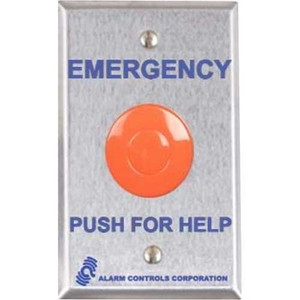
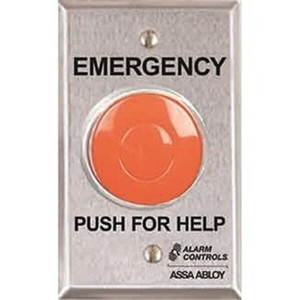
The HES PBL-1-4-L2 is a latching panic button designed for emergency manual activation in security-critical environments. Housed in a distinctive red plate for unambiguous visual identification, the device holds its activation state until personnel manually reset it — a critical operational behavior for coordinated lockdown and emergency response procedures. The dual-contact relay (1 N/O + 1 N/C) supports both trigger and status feedback circuits, integrating cleanly with 12V and 24V DC access control, door strike, and alarm monitoring systems in schools, healthcare facilities, corporate campuses, and secure government installations.
Key Features
- Latching Mechanism: Activation state persists until manual reset. Prevents accidental deactivation and ensures personnel awareness during emergency response.
- Dual-Contact Relay: 1 Normally Open (N/O) + 1 Normally Closed (N/C) configuration. Enables simultaneous activation and status feedback on separate circuits.
- Red Plate Identification: High-contrast red finish for immediate visual recognition in panic or low-visibility scenarios.
- Voltage Compatibility: Operates on 12V and 24V DC systems. Works with most institutional access control platforms without additional conditioning.
- Standard Box Mount: Fits into standard electrical enclosures. No specialized mounting hardware or cutout modifications required.
- Dual-Platform Integration: Compatible with HES door control systems and third-party access control and alarm panels via standard relay wiring.
- US Manufactured: Sourced domestic, factory-new, with genuine product documentation and support.
The latching behavior is the operational cornerstone of this device. Unlike momentary panic buttons that deactivate immediately upon release, the PBL-1-4-L2 holds the emergency signal active until a trained person physically resets it. In a classroom lockdown or hospital code scenario, this prevents the door strike from unlocking prematurely and ensures the alarm monitoring panel continues to show an active condition until the emergency response coordinator confirms all-clear.
The dual-contact relay design eliminates the need for external relays or contact conversion logic. The N/O contact triggers the door strike or solenoid lock; the N/C contact simultaneously closes a status circuit that feeds the main alarm panel, allowing the control system to log the panic event and alert staff. Integration is straightforward: power the button from the 12V or 24V bus, wire the N/O contact to the strike, and wire the N/C to the alarm input. Existing HES installations support the PBL-1-4-L2 natively; non-HES systems require only standard relay wiring knowledge.
Installation is non-invasive. The button mounts into any standard single-gang electrical box without drilling or routing conduit. Once mounted and wired, it requires minimal maintenance — the mechanical latch is robust and rated for high-cycle activation in educational and healthcare environments where multiple emergency drills occur annually. Reset is manual; there is no automatic timeout, which is by design.
The red plate is not decorative: it satisfies wayfinding and ADA signage conventions in emergency procedures. Staff training materials, evacuation drills, and building code compliance typically reference the color-coded location of panic buttons; the HES PBL-1-4-L2's red finish maps directly to those expectations and reduces response latency when time matters most.
Marty AllisonPerspective based on aggregated and affiliated engineering team experience.
We've deployed the HES PBL-1-4-L2 in K-12 lockdown systems, hospital code-blue integration, and corporate access control architectures where latching panic activation is a regulatory or operational requirement. The defining strength is the latching behavior paired with the dual-contact relay. In a school setting, a teacher presses the button during an active threat; the strike locks and the main panel sees an active alarm condition. The button stays in the latched (activated) state even if the teacher's hand slips or a student bumps it — critical reassurance that the lock remains engaged until administration confirms all-clear and manually resets the button. We've also seen it used in healthcare environments where a panic press triggers both the door strike (securing a treatment area) and simultaneously signals the nurse station via a dedicated alarm relay, so responders know exactly where the panic originated. The latching design eliminates false-positive fatigue because the signal is deliberate and persistent, not fleeting.
On the integration side, the dual-contact relay is a game-changer. Most panic buttons offer only a single N/O contact; you then have to wire external relays or use the access control system's relay logic to drive both a strike and an alarm panel. The PBL-1-4-L2 bakes in that relay — one N/O for the strike, one N/C for the alarm. This reduces wiring complexity and failure points, especially in retrofits where running new circuits is expensive or disruptive. On a 50-button campus installation, that's 50 fewer external relays to power, cool, and maintain.
One legitimate caveat: latching is not suitable for every application. If your use case requires the button to deactivate automatically after a set time (e.g., temporary lock-down for a specific duration), you will need to add a timer relay upstream or use an access control platform with programmed timeout logic. The PBL-1-4-L2 itself has no electronic timeout — it is purely mechanical until manually reset. Clarify that in your design review.
Technical Highlights:
- Dual-Contact Relay (1 N/O + 1 N/C): Eliminates the need for external relays in most architectures. One contact drives the strike; the other signals the alarm panel. Cleaner wiring, fewer points of failure, lower total installed cost on multi-button deployments.
- Latching Mechanism: Activation persists until manual reset — critical for coordinated emergency response where you need visual and electrical confirmation that all actors are responding to the same condition. Prevents accidental deactivation during chaotic scenarios.
- 12V / 24V DC Compatibility: Works across the majority of institutional access control platforms without additional power conditioning or isolation relays. Fits into existing infrastructure.
- Red Plate (Visual Identification): Maps to emergency procedure signage and ADA wayfinding conventions. Reduces response latency by enabling staff to quickly locate the panic button during training and actual events.
- Standard Electrical Box Mount: No custom bracket or enclosure modification required. Installation time measured in minutes, not hours — valuable in retrofit or emergency-response upgrades.
Deployment Considerations:
- Latching design means the button will not automatically reset after a timed duration. If your security policy requires automatic reset or a defined lockdown window, you must add a timer relay or use the access control system's programmable logic to manage the release cycle.
- Manual reset is by design — it ensures the button remains in an activated state until a trained administrator confirms the all-clear. Train staff on reset procedures as part of emergency drills. Designate a specific role (e.g., security director, principal) responsible for resetting the panic system after an event.
- Dual-contact wiring allows you to drive a strike and an alarm circuit simultaneously, but verify your power supply has sufficient capacity to energize both the strike solenoid and any alarm relay coils during activation. Undersized 12V supplies often cause voltage sag and incomplete activation.
- The red plate is weather-sealed for indoor use. If you are installing outside a climate-controlled space (e.g., a porch or loading dock), verify IP rating requirements — contact HES for outdoor-rated variants if needed.
- In healthcare and education, verify that the button location and wiring comply with local fire codes and ADA accessibility standards. Some jurisdictions require panic buttons to be mounted at a specific height (typically 42–48 inches) and within a clear reach envelope.
The HES PBL-1-4-L2 is the right choice for integrators and end-user security teams deploying latching panic systems in K-12 schools, healthcare facilities, government buildings, and corporate campuses where coordinated emergency response and persistent activation state are operational requirements. Its dual-contact relay and latching mechanism reduce system complexity and wiring cost on large deployments. Pair it with HES door strikes and control panels for native integration, or interface it with third-party access control systems via standard 12V/24V relay circuits. Explore the full HES catalog for compatible door hardware and control architecture options.